The Royal Palace complex in Kandy is the most tangible remnant of the Kandyan Kingdom, Sri Lanka's last independent monarchy. Spread across several interconnected structures to the north of the Temple of the Tooth Relic (Dalada Maligawa), the complex tells roughly 500 years of royal history — from its founding in the fourteenth century to the British takeover in 1815. Today, parts of the complex function as museums and government offices, while the surviving architecture offers a rare window into Kandyan court life.
What is the history of the Royal Palace of Kandy?
The origins of the palace trace back to King Vickramabahu III of Gampola (1357–1374), who chose the site of Senkadagala — modern Kandy — on the advice of a Brahmin who deemed it an auspicious location for a new capital. That earliest structure was known in court language as Maha Wasala or Maligawa (the latter term later becoming synonymous with the Temple of the Tooth).
Over the centuries, fire, war, and political upheaval repeatedly damaged or destroyed the palace. King Vimala Dharma Suriya I (1592–1603) made significant improvements during his reign. When the Portuguese attacked the Kingdom of Kandy under King Senarat (1603–1634), the palace was largely destroyed. King Rajasinghe II, who came to the throne in 1637, undertook a thorough rebuilding, and his successors — including the final king, Sri Vikrama Rajasinha (1798–1815) — continued to add and refine structures within the compound.
The section of the palace facing the Natha Devale shrine is generally regarded as the oldest surviving portion, carrying architectural traces that pre-date most of the later reconstructions. The story of Ehelepola Nilame, one of the kingdom's most powerful chiefs, is closely bound to the final turbulent years of this court.
After the British formally assumed control of Kandy in 1815, the palace was converted into the official residence of Sir John D'Oyly, the first British Government Agent, and his successors continued to use it in that capacity. Only the front entrance and a handful of buildings remain intact today; the rest are preserved under the Central Cultural Fund and the Department of Archaeology.
What are the main structures inside the Royal Palace complex?
The complex is not a single building but a group of distinct structures, each with its own function in Kandyan court life. Understanding each one helps visitors read the site more clearly.
Raja Wasala (King's Palace)
The Raja Wasala is the principal building — a long, symmetrical structure entered through a central doorway flanked by a formal flight of steps. The interior hall is decorated with stucco and terra-cotta work characteristic of late Kandyan craftsmanship. Two long wings extend from the central block, each lined with rooms and fronted by a verandah facing an inner courtyard.
Palle Wasala (Lower Palace)
The Palle Wasala served as the harem quarters of the Kandyan kings. Architecturally it echoes the Raja Wasala, though its scale is more domestic. A main doorway leads to a small anteroom before the central building opens up. In 1942, the British colonial administration converted the Palle Wasala into what became the National Museum of Kandy, which it remains today, maintained by the Department of National Museums. The museum's collection includes regalia, royal artefacts, ivory carvings, and traditional Kandyan jewellery.
Meda Wasala (Queens' Chambers)
Situated to the north of the Palle Wasala, the Meda Wasala is smaller in scale but similar in architectural character. It historically served as the queens' private residential quarters. The building is currently occupied by the Kandy district office of the National Department of Archaeology.
Wadahindina Mandappe (Audience Hall Pavilion)
This open pavilion was the formal setting where the king received Adigars (senior ministers) and foreign envoys. Positioned between the Raja Wasala and the Magul Maduwa (the Audience Hall used for state ceremonies), it was a critical node in the Kandyan court's hierarchy of spaces. The building now serves as the museum dedicated to Raja, the celebrated Maligawa tusker whose painted likeness still appears on many Kandy souvenirs.
Where is the Royal Palace of Kandy located?
The complex sits immediately to the north of the Dalada Maligawa (Temple of the Tooth Relic) on the northern bank of Kandy Lake. The proximity is deliberate: the Kandyan kings kept the Sacred Tooth Relic and the royal residence physically adjacent as a statement of divine authority. The entire precinct — palace, temple, and the surrounding devales (subsidiary shrines) — forms a unified sacred and political landscape.
For visitors doing a Kandy city tour, the palace complex is typically combined with the Dalada Maligawa, the Natha Devale, and Kandy Lake in a single half-day circuit.
When is the best time to visit the Royal Palace of Kandy?
The palace and its associated museums are open year-round, though the compound is most atmospheric in the mornings before tour groups arrive in force. The most significant time to visit is during the Esala Perahera Festival, held annually in July or August, when the entire palace precinct comes alive with processions that depart from — and return to — the Dalada Maligawa next door. Accommodation books out weeks in advance during Perahera, so planning early is essential.
Kandy's hill-country climate is generally cooler and wetter than the coastal lowlands. The driest and most comfortable months for sightseeing are January through April and again from July to September.
What should visitors know before going?
- Dress modestly. The palace precinct adjoins an active religious site; shoulders and knees should be covered. Sarongs are usually available for hire at the Dalada Maligawa entrance.
- Photography. Photography rules vary between buildings; check signage at each entrance, particularly inside the National Museum.
- Guided context. The buildings are sparsely labelled in English; a knowledgeable local guide significantly enriches a visit.
- Separate entry fees. The National Museum of Kandy (Palle Wasala) charges its own entry fee, separate from any Dalada Maligawa ticket. Check current fees at the respective entrances on the day of your visit.
- Getting there. The complex is walkable from central Kandy and from most hotels near the lake. Tuk-tuks are available from the Kandy bus and train stations.
How does the Royal Palace relate to other Kandyan heritage sites?
The palace is one anchor of a broader cultural landscape. The Natha Devale immediately opposite the palace is one of the oldest surviving structures in Kandy, pre-dating most of the royal buildings. The Vishnu Devale and Kataragama Devale are within a short walk. Further afield, the ancient hydraulic civilisation centred on Polonnaruwa represents an earlier chapter of Sri Lankan royal urbanism that directly influenced Kandyan court traditions.
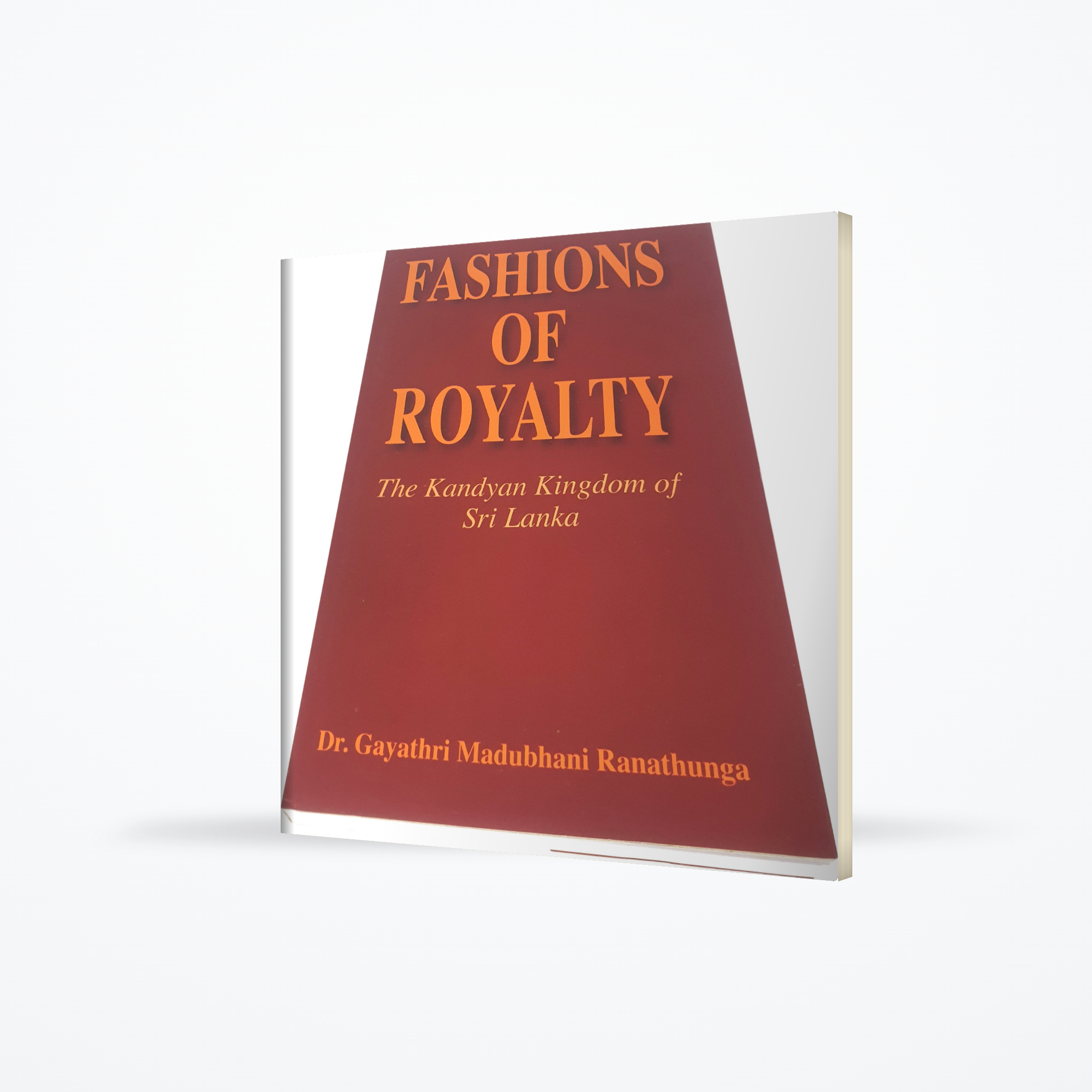
For visitors wanting to understand Kandyan material culture in depth, the book Fashions of Royalty: The Kandyan Kingdom of Sri Lanka provides detailed scholarship on court dress, regalia, and ceremonial objects — many of which are on display in the National Museum of Kandy housed in the Palle Wasala.
Nearby places
16 places within about 25 km, nearest first.
- Aluth Sahal Mangallayaunder 1 km
- Esala Perahera Festivalunder 1 km
- Kandy Lakeunder 1 km
- Kandy Lake Clubunder 1 km
- Paththirippuwaunder 1 km
- Temple of the Tooth Relicunder 1 km
- The Nanumura Ceremonyunder 1 km
- International Buddhist Museumunder 1 km
- Jayatillake Mandapayaunder 1 km
- Raja Museumunder 1 km
- E.L. Senanayake Children Park Kandyunder 1 km
- Natha devalayaunder 1 km
- Randoli Peraheraunder 1 km
- Ulpangeunder 1 km
- Maha Vishnu Devalayaunder 1 km
- Malwatta Chapterunder 1 km
Related reading
6 pages on closely related subjects.