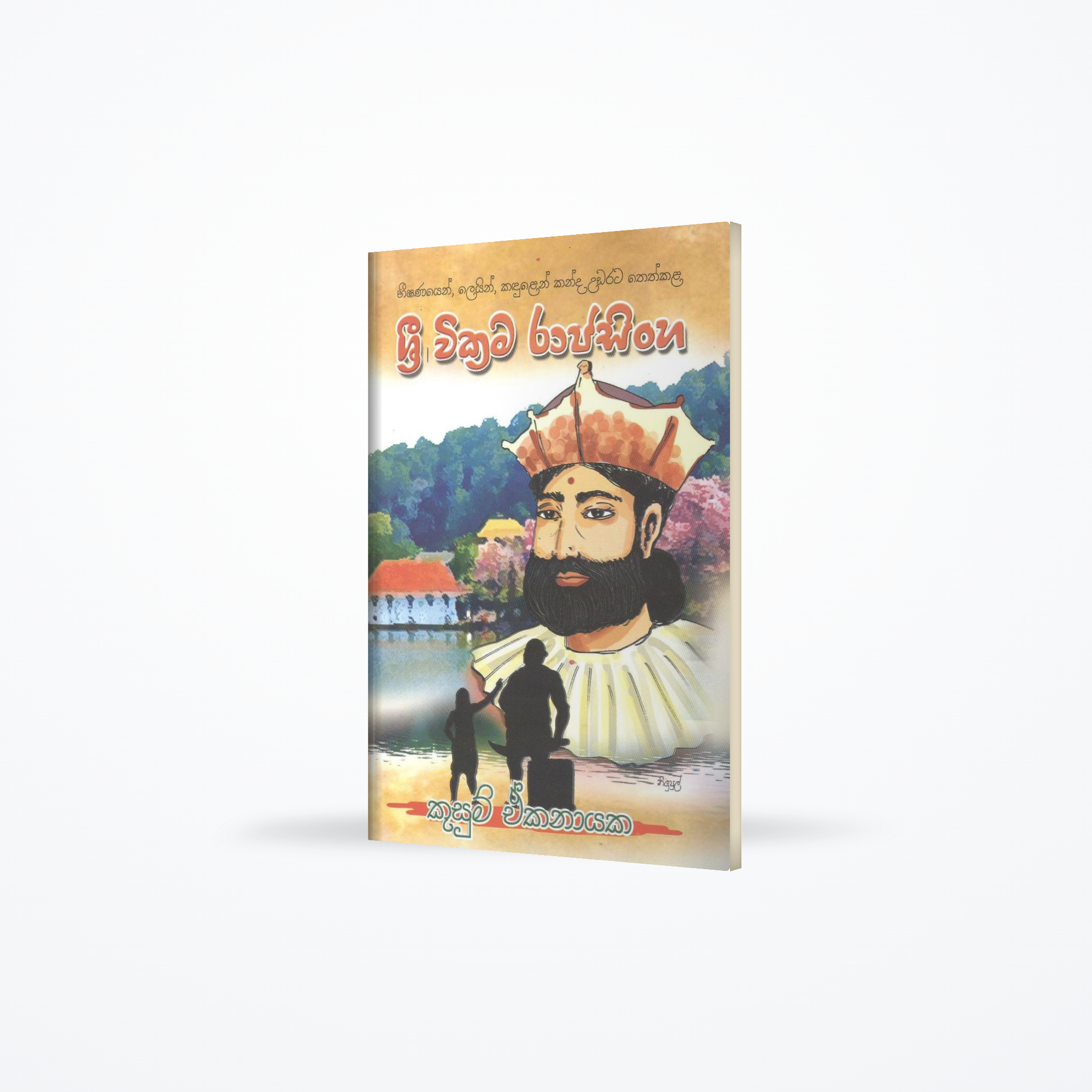
King Sri Vickrama Rajasinghe ruled the Kandyan Kingdom from 1798 to 1815, making him the last independent monarch in Sri Lankan history. His reign closed the final chapter of over two millennia of uninterrupted royal governance, ending with the Kandyan Convention of 1815 and the island's absorption into the British Empire. Understanding his story is essential to understanding modern Kandy — its lake, its fortified city plan, and the complex politics that shaped the colonial transition.
Who was King Sri Vickrama Rajasinghe?
Born into the Nayakkar dynasty of South Indian origin, Sri Vickrama Rajasinghe ascended the Kandyan throne through a lineage that had ruled since the mid-eighteenth century. The Nayakkar kings had been accepted by the Kandyan nobility partly because they upheld the Sinhala Buddhist traditions of the kingdom, even though they were ethnically Tamil and originally Hindu. Sri Vickrama Rajasinghe continued this practice, positioning himself as a devout patron of the Temple of the Sacred Tooth Relic — the institution that legitimised Kandyan kingship.
His court was sophisticated and culturally active, but politically volatile. The Kandyan nobility, particularly the powerful Ehelepola Nilame, grew increasingly resentful of royal authority. These internal fractures would prove fatal to the kingdom's independence.
What did Sri Vickrama Rajasinghe build in Kandy?
Despite the turbulence of his reign, the king left a lasting architectural mark on Kandy. His most celebrated project is Kandy Lake — known in Sinhala as Kiri Muhuda, or "sea of milk" — which he ordered constructed around 1807. The lake was created by damming the Kothmale Oya, flooding the valley that surrounds the lower city. It gave Kandy's skyline the serene, reflective quality that distinguishes the city today.
The lake also served a practical defensive purpose: it made the royal palace and the Temple of the Sacred Tooth Relic harder to approach from the south. A small island near the lake's edge, originally used as the king's private bathing pavilion, still stands. The entire lakeside promenade remains one of the most pleasant walks in the hill country.
Sri Vickrama Rajasinghe also undertook significant improvements to the royal palace complex and the Cloud Wall (Walakulu Bamma) that edges the lake road — a decorative battlement that gives the waterfront its distinctive silhouette.
What caused the fall of the Kandyan Kingdom?
The kingdom's collapse was the result of converging pressures: British military ambition, internal rebellion, and a nobility that had grown to distrust its own king. After Sri Vickrama Rajasinghe executed members of the Ehelepola family as punishment for the chief minister's defection, the remaining Kandyan aristocracy decided to approach the British.
In March 1815, British forces under Lieutenant General Robert Brownrigg marched on Kandy largely unopposed, aided by the very chiefs who had pledged loyalty to the crown. The king was captured near Mahaweli Ganga and sent into exile in Vellore, South India, where he died in 1832 without ever returning to Sri Lanka. He was around 33 years old at the time of his capture.
The Kandyan Convention, signed on 2 March 1815 between the British and the Kandyan chiefs, formally ceded sovereignty. It guaranteed the protection of Buddhist institutions — a promise that would later be contested and that contributed to the Uva Rebellion of 1817–1818.
How did his reign shape the Esala Perahera?
Sri Vickrama Rajasinghe was an active patron of the Esala Perahera Festival, the grand annual procession centred on the Temple of the Sacred Tooth Relic. The pageant's elaborate contemporary form — with elaborately caparisoned elephants, Kandyan dancers, and torch-bearers — owes much to the royal patronage of the Nayakkar period, including his reign. He understood that the perahera was not merely a religious event but a public declaration of royal authority and Buddhist piety.
Where can visitors explore sites connected to Sri Vickrama Rajasinghe?
Most of the landmarks associated with the last king are concentrated within the UNESCO-listed Sacred City of Kandy. A Kandy city tour typically covers the key sites:
- Kandy Lake (Kiri Muhuda): The king's most visible legacy. The lakeside path circles the water and passes the Cloud Wall and the small island pavilion.
- Temple of the Sacred Tooth Relic (Sri Dalada Maligawa): The holiest Buddhist site in Sri Lanka, and the institution around which Kandyan kingship was organised. The king made significant contributions to the temple complex.
- Kandy National Museum: Housed in the former royal palace building adjacent to the temple, the museum holds royal regalia, furniture, and artefacts from the Kandyan period, including items associated with the last king's court.
- Udawattakele Forest Reserve: The forest above the city served as a royal retreat during the Kandyan period. It remains a peaceful, walkable sanctuary above the lake.
What is the broader historical significance of his reign?
Sri Vickrama Rajasinghe's reign sits at a hinge point in South Asian colonial history. The fall of Kandy in 1815 gave Britain control of the entire island of Ceylon for the first time — previous European powers (the Portuguese and the Dutch) had controlled only the coastal lowlands. The Kandyan highlands had never been colonised until that moment.
For Sri Lanka's independence movement in the twentieth century, 1815 became a date of symbolic weight, much as 1948 (formal independence) would later be. Historians debate whether Sri Vickrama Rajasinghe was a capable ruler undone by treacherous nobles, or whether his own harsh governance accelerated the kingdom's demise. The truth lies somewhere between both readings.
What is beyond dispute is that the built heritage he left — the lake, the fortified city plan, the royal patronage of Buddhist institutions — shaped the Kandy that visitors explore today. The city was designated a UNESCO World Heritage Site in 1988, with the Sacred City's integrity rooted partly in the urban framework the last king helped to define.
Is there a connection between Sri Vickrama Rajasinghe and the Sinharaja Forest?
The Kandyan kings historically controlled the forested interior of the island, and the dense rainforest belt of the south-west — now protected as the Sinharaja Forest Reserve — fell within the broader sphere of Kandyan authority. Royal edicts protecting timber and forest land were a feature of Kandyan administration, though specific royal engagement with Sinharaja during Sri Vickrama Rajasinghe's reign is not documented in detail.
How is his memory preserved in Sri Lanka today?
Sri Vickrama Rajasinghe does not occupy the same heroic space in Sri Lankan popular memory as earlier kings such as Dutugamunu or Parakramabahu. His Nayakkar ancestry, his eventual capture, and his role in the circumstances that led to colonisation have made his legacy complicated. Yet his architectural contributions are inseparable from modern Kandy, and scholars of Sri Lankan history increasingly treat his reign with nuance — acknowledging both his cultural patronage and the political failures that ended an era.
The Kandy National Museum remains the best starting point for anyone who wants to understand his court in depth. Academic treatments, including Sinhala-language publications available locally in Kandy, explore the period in considerable detail.