Sri Lanka's history as a crossroads of the ancient world drew merchants, pilgrims, and settlers from across Asia, the Middle East, and beyond. Among the less-documented of these communities are the Jews who passed through — and in some cases put down roots on — the island once known to Arab traders as Serendib. Their story is brief in the written record but significant as evidence of just how cosmopolitan this small island was in the pre-colonial era.
How far back does the Jewish presence in Sri Lanka go?
The earliest credible references to Jews in Sri Lanka date to around the 9th century, though the precise origins of their settlement remain unclear. The island sat at the junction of the Indian Ocean trade network, with ships moving spices, gems, and textiles between the Arabian Peninsula, the Indian subcontinent, and Southeast Asia. Jewish merchants were active participants in this broader trading world, and Sri Lanka's natural harbours and rich exports — including Ceylon black pepper and precious stones — made it a logical stop or even a base of operations.
The 10th-century Arab traveller Abu Zeid al-Hasan of Siraf in Persia provided one of the earliest written references to a Jewish population in Sri Lanka, noting their considerable numbers. While his account lacks granular detail, it implies an established community rather than a handful of itinerant traders — people who had organised themselves sufficiently to be visible and notable to a foreign observer.
What did medieval travellers record about Jews in Sri Lanka?
The most cited medieval reference comes from Benjamin of Tudela, a Sephardi Jewish traveller from Navarre in present-day Spain. Writing in the 12th century, Benjamin documented his extensive journeys across the Mediterranean, the Middle East, and the broader Indian Ocean world. In accounts associated with his travels in the region, he reported encountering a Jewish community numbering around 3,000 — a figure that, if reasonably accurate, would indicate a well-established and economically active group.
Benjamin of Tudela is generally regarded as a reliable chronicler for his era, cross-referencing with other contemporary sources where they survive. His mention of a substantial Jewish community in this part of the world aligns with what is known about Jewish mercantile networks in the Indian Ocean during the Fatimid and later periods, when Jewish traders from Cairo and Aden maintained commercial relationships stretching as far as the Malabar Coast of India and beyond.
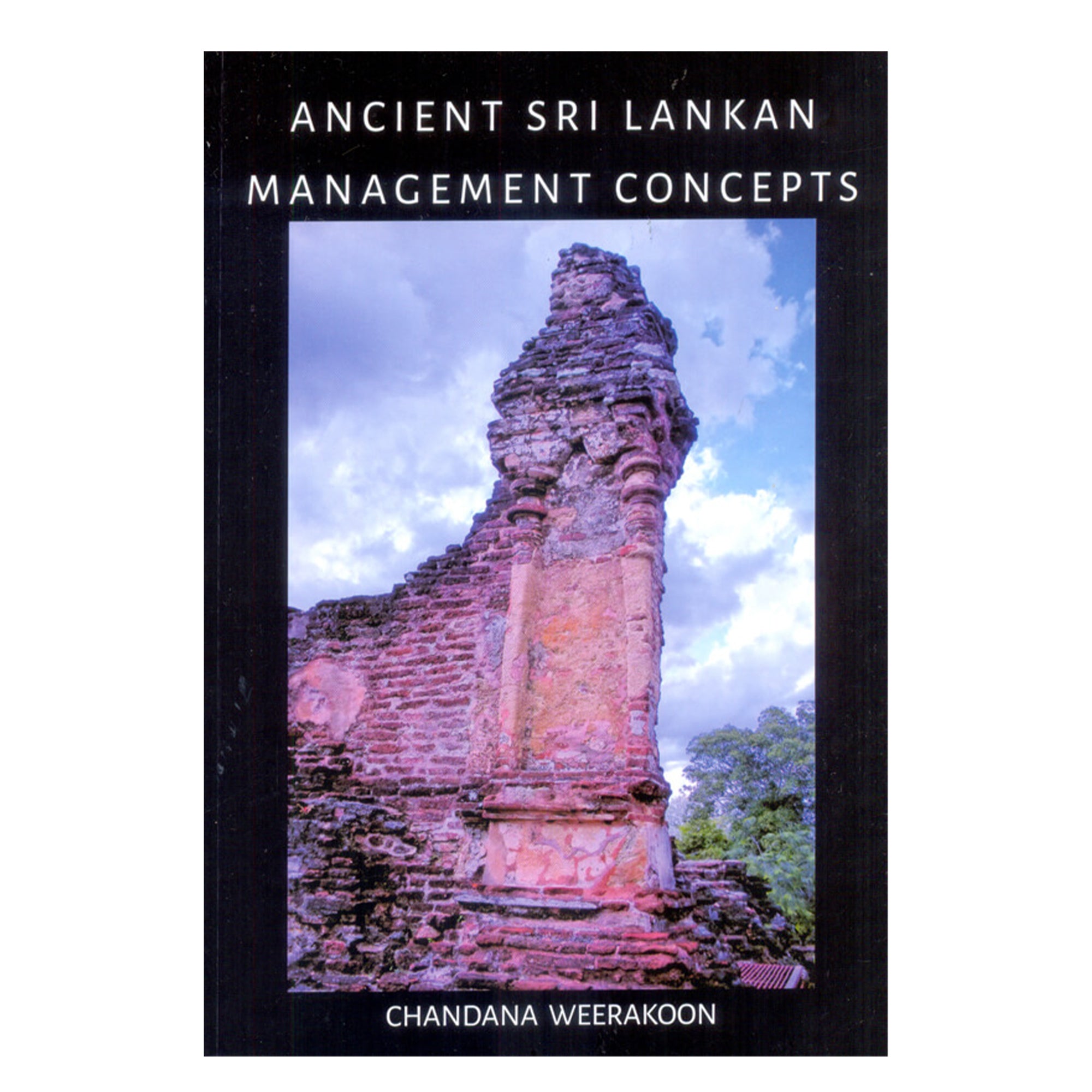
The medieval port city of Polonnaruwa, which served as the Sri Lankan capital during part of this period, was itself a sophisticated urban centre with documented contact with foreign traders and envoys. It is plausible that Jewish merchants operating in the broader region would have had dealings with the island's commercial centres during this era.
What role did geography play in attracting Jewish traders?
Sri Lanka's position at the southern tip of the Indian subcontinent made it almost unavoidable for ships travelling between the Persian Gulf, the Red Sea, and the Far East. The island's exports — gems, cinnamon, pearls, and spices — were high-value commodities that commanded significant margins in distant markets. Jewish trading networks, which by the medieval period had established sophisticated long-distance commercial relationships documented in sources such as the Cairo Geniza letters, were naturally drawn to such hubs.
The Geniza documents — a remarkable archive of medieval Jewish correspondence and commercial records discovered in a Cairo synagogue — confirm that Jewish merchants were active across the Indian Ocean trade routes during the 10th to 13th centuries. While specific references to Sri Lanka in these documents are rare, the broader pattern of trade they describe is entirely consistent with Jewish commercial activity in Serendib.
Why did the Jewish community in Sri Lanka decline?
Pinpointing a single cause for the decline of the Jewish community in Sri Lanka is difficult, in part because the historical record becomes even thinner after the 12th century. Several factors likely contributed over the following centuries.
- Shifting trade routes: As the Indian Ocean trade network evolved — particularly with the entry of European powers from the late 15th century onward — established mercantile communities sometimes relocated to new centres of commercial gravity.
- Colonial disruption: The Portuguese, Dutch, and British colonial periods transformed Sri Lanka's economy and social structure significantly. Communities that had thrived under the relatively open conditions of the pre-colonial era sometimes found the new order less hospitable.
- Small size and assimilation: Without strong institutional structures such as a synagogue or rabbinical leadership, small diaspora communities tend to assimilate into the surrounding population over generations. The absence of a critical mass may have made the Sri Lankan Jewish community particularly vulnerable to gradual dissolution.
What is the Jewish community in Sri Lanka like today?
The contemporary Jewish presence in Sri Lanka is minimal. The establishment of the State of Israel in 1948 accelerated a broader pattern of Jewish emigration from diaspora communities across Asia and the Middle East, and Sri Lanka was no exception. Today, only a small number of Jewish families and individuals remain on the island, with no permanent synagogue or formal communal institution in operation.
This contrasts with some other Asian countries — notably India, where communities such as the Bene Israel of Mumbai and the Cochin Jews maintained continuous traditions over many centuries, partly due to larger numbers and stronger institutional structures. Sri Lanka's Jewish community, never as large or as institutionally rooted, did not survive in the same way.
Why does this history matter for understanding Sri Lanka?
The historical Jewish presence in Sri Lanka is a useful reminder that the island's diversity has always been more complex than a simple Buddhist-majority narrative might suggest. At various points in its history, Sri Lanka hosted Arab traders, Chinese envoys, Malay soldiers, Indian Tamil labourers, Persian merchants, and — as these accounts indicate — Jewish commercial communities. Each group left traces, whether in material culture, genetics, place names, or the documentary record.
For travellers interested in the deeper layers of Sri Lankan history, this multicultural past offers a richer frame through which to understand everything from ancient port ruins to the spice trade that shaped the island's economy for centuries. Sites associated with Sri Lanka's mercantile heritage, particularly along the western and southwestern coasts, carry echoes of this long history of international exchange.
Understanding that Sri Lanka was, for much of its pre-modern history, an open and cosmopolitan society — not an isolated backwater — also helps explain the sophistication of its ancient cities, the quality of its craftsmanship, and the breadth of its recorded contacts with the wider world.
Where can I learn more about Sri Lanka's multicultural history?
Primary sources on Jews in Sri Lanka remain scattered across Arabic, Hebrew, and European archives, and the field has attracted relatively little dedicated academic attention compared with, say, the Jewish communities of India. Benjamin of Tudela's travel accounts are available in several modern scholarly editions and provide useful context for the broader Indian Ocean world of the 12th century. The British Library holds manuscript collections that touch on medieval Indian Ocean trade and may interest researchers pursuing this subject further.
Within Sri Lanka itself, the National Museum in Colombo offers the broadest overview of the island's historical contacts with foreign civilisations, and the ancient cities of the Cultural Triangle — Anuradhapura, Sigiriya, and Polonnaruwa — situate the medieval period in tangible physical form.
Related reading
7 pages on closely related subjects.