Flemingia strobilifera is a shrub native to Sri Lanka, known in English as wild hops and belonging to the pea family, Fabaceae. It is recorded in Sri Lanka's national flora register as a species of Least Concern, with no edible parts noted for human use.
What does Flemingia strobilifera look like?
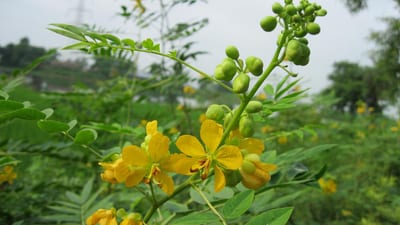
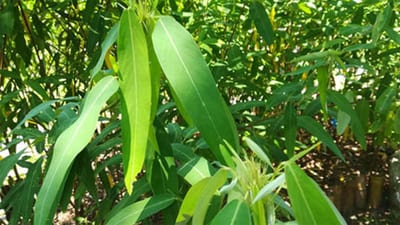
This is a shrub growing to about 1 to 4 metres in height. Its leaves are 1-foliolate, meaning each leaf bears a single leaflet, which is somewhat leathery in texture and ranges from ovate to elliptic or broadly lanceolate in shape, tapering to an acuminate or acute tip. At the base the leaflet is broadly wedge-shaped, rounded, or slightly heart-shaped. The upper surface is smooth and hairless, while the underside is softly hairy.
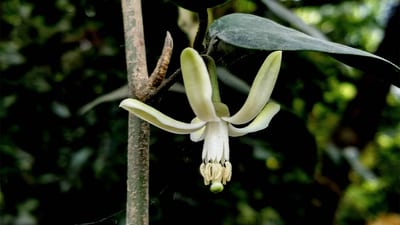
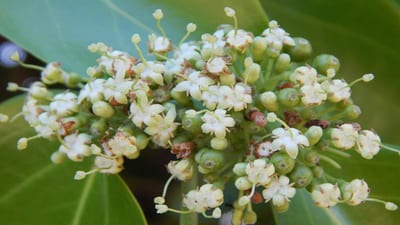
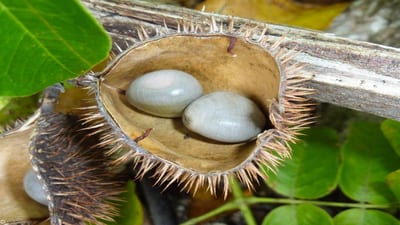
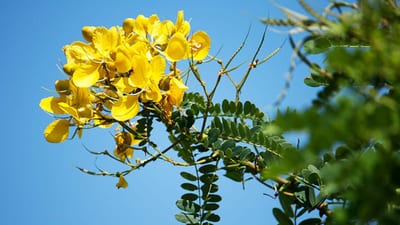
Flowers appear in panicles arising both from the leaf axils and at the branch tips, arranged in small clusters of two to four blooms, coloured white or purple. The fruit is an oblong, somewhat swollen pod containing one or two seeds, and the seeds themselves are mottled in pattern.
Where does Flemingia strobilifera grow?
The species is native to Sri Lanka. As a member of Fabaceae, a family whose many woody and herbaceous members are widespread across the tropics and subtropics of Asia and beyond, wild hops fits a broadly similar pattern of distribution, though its specific Sri Lankan range is not detailed in this record.
What is its conservation status?
Under the National Conservation Status list of Sri Lanka (2012), Flemingia strobilifera is classified as Least Concerned. This designation indicates the species is not presently considered at risk of extinction within the island.
Can Flemingia strobilifera be eaten?
No edible parts are recorded for this species. It should not be treated as a food plant.
Recorded facts at a glance
| Attribute | Recorded detail |
|---|---|
| Scientific name | Flemingia strobilifera |
| Family | Fabaceae |
| English name | Wild hops |
| Status in Sri Lanka | Native |
| Conservation status (NCS 2012) | Least Concerned |
| Edible parts | None |
| Life form | Shrub, 1–4 m tall |
| Leaves | 1-foliolate; leaflets subcoriaceous, ovate to broadly lanceolate |
| Inflorescence | Axillary and terminal panicles; cymules 2–4 flowered; flowers white or purple |
| Fruit | Oblong, somewhat turgid, 1–2 seeded |
| Seeds | Mottled |