Erythroxylum moonii is a native Sri Lankan shrub in the family Erythroxylaceae, known locally as Batakirilla (බටකිරිල්ල). It is listed as Near Threatened on Sri Lanka's National Conservation Status list (2012), making it a species of conservation interest among the island's native flora.
What does Erythroxylum moonii look like?
Erythroxylum moonii grows as a shrub or small tree reaching up to 5 metres in height. Its leaves are elliptic-lanceolate, measuring 3.5–9 cm long and 1.2–2.8 cm wide, with an obtusely caudate-acuminate tip and an acute base. The leaf margins are entire, and the surface is opaque or dull on one side while shining on the other, with both surfaces described as shining beneath.
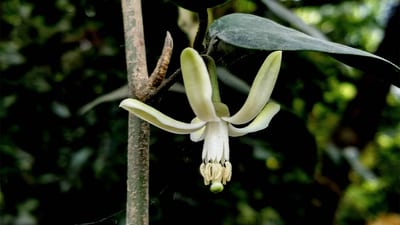
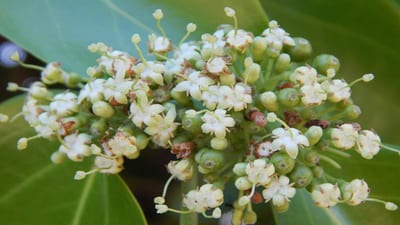
The flowers are white, borne in the leaf axils in groups of one or two, and are dimorphous in form. The fruit is a drupe, ellipsoid-oblong and slightly falcate in shape, with a furrowed, glabrous, green and shining surface. Each drupe contains a single seed.
Is Erythroxylum moonii native to Sri Lanka?
Erythroxylum moonii is recorded as native to Sri Lanka. Members of the genus Erythroxylum are typically shrubs or small trees found across tropical regions, and several species in this family produce small axillary flowers and single-seeded drupes similar to those described here.
What is its conservation status?
According to Sri Lanka's National Conservation Status list (2012), Erythroxylum moonii is classified as Near Threatened. This status reflects a level of concern for the species within its native range on the island.
What is it called in Sinhala, and are any parts used?
The Sinhala name for this species is Batakirilla (බටකිරිල්ල). The wild fruit and leaves are recorded as edible parts of the plant.
| Attribute | Detail |
|---|---|
| Scientific name | Erythroxylum moonii |
| Family | Erythroxylaceae |
| Sinhala name | Batakirilla (බටකිරිල්ල) |
| Status in Sri Lanka | Native |
| Conservation status | Near Threatened (NCS 2012) |
| Edible parts | Wild fruit and leaves |
| Life form | Shrub or small tree, up to 5 m tall |
| Leaves | Elliptic-lanceolate, 3.5–9 x 1.2–2.8 cm, obtusely caudate-acuminate at apex, acute at base, entire |
| Flowers | White, axillary, 1 or 2 together, dimorphous |
| Fruit | Drupe, ellipsoid-oblong, slightly falcate, furrowed, glabrous, green, shining, 1-seeded |
Other species in this genus
1 more, sharing the same genus.