Few fruits inspire stronger opinions than the durian. To its devotees it is the undisputed king of tropical fruit; to everyone else, it is the fruit that hotels and airlines ban by name. Whether you are encountering it for the first time in a Sri Lankan market or have been eating it your whole life, understanding what makes durian so polarising — and so prized — adds a great deal to the experience.
What does a durian look like?
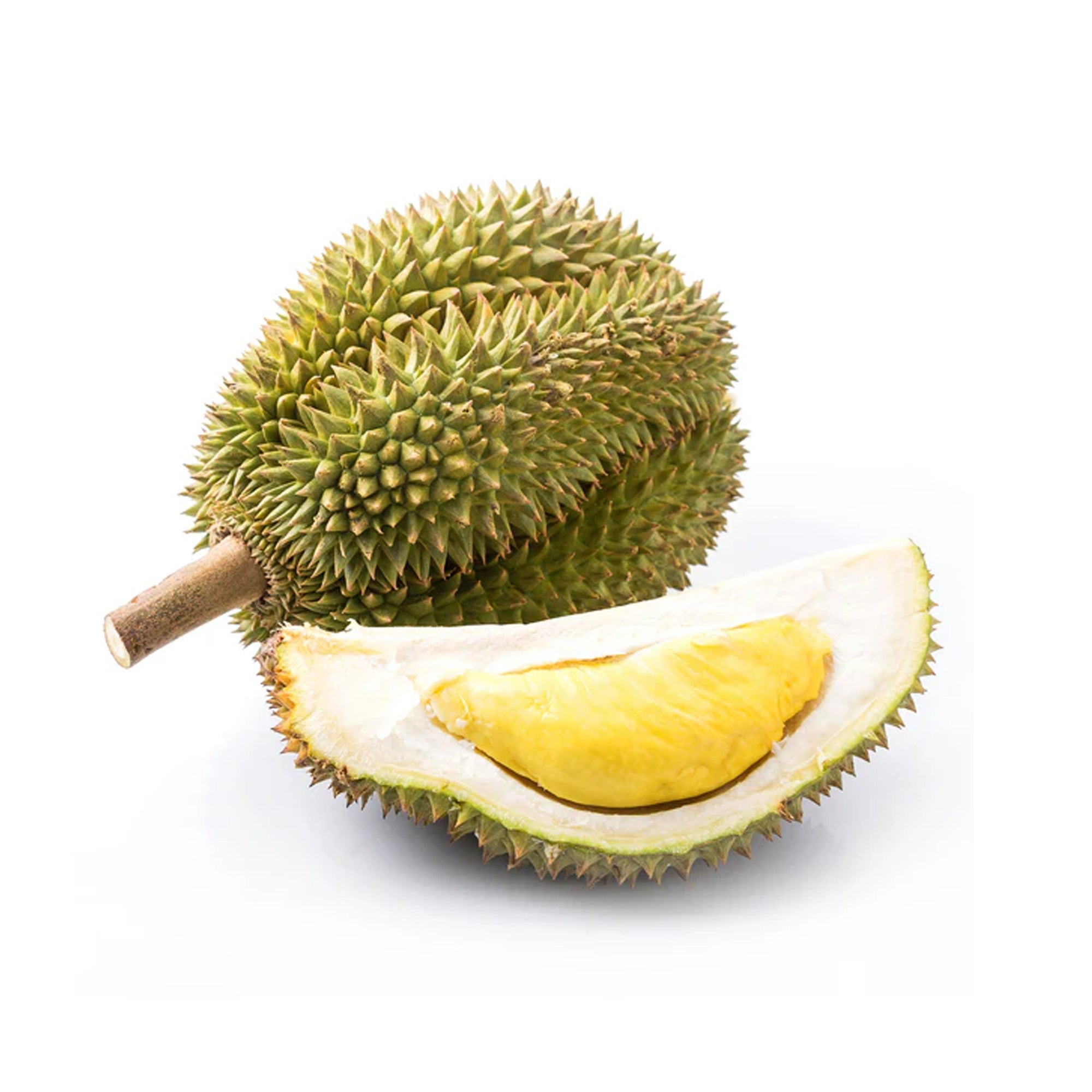
Durian is roughly oval, typically around 30 cm long, and entirely encased in a thick shell covered in sharp, woody spines. A mature fruit weighs anywhere from about 1 kg to 3 kg. The spikes are serious enough that handling the fruit by its body rather than its stem can break the skin, so most vendors use a cloth or gloves. Inside, the shell opens into segments of pale-yellow to golden flesh arranged around large seeds — soft, creamy in texture, and nothing like the forbidding exterior suggests.
Why does durian smell so strong?
The durian's reputation rests almost entirely on its smell, which permeates the outer shell and lingers in any enclosed space long after the fruit has been removed. The aroma comes from a complex mix of volatile sulphur compounds and esters that shift as the fruit ripens. Unripe durian smells relatively mild; fully ripe durian produces the full-strength, layered odour that has inspired bans on Singapore's MRT and in countless hotel lobbies across Southeast Asia.
Describing the smell to someone who has never encountered it is genuinely difficult. In 1856, the naturalist Alfred Russel Wallace wrote to Sir William Jackson Hooker that the flavour was best compared to "a rich custard highly flavoured with almonds," while noting "occasional wafts of flavour that call to mind cream-cheese, onion-sauce, sherry-wine, and other incongruous dishes." More recently, the late Anthony Bourdain — who enjoyed durian — offered a blunter summary of the aftermath: "Your breath will smell as if you'd been French-kissing your dead grandmother." Both descriptions are, in their own way, accurate.
What does durian taste like?
Taste depends heavily on ripeness. Harvested early, the flesh is firm, slightly bitter, and starchy enough that it is sometimes treated more like a vegetable than a fruit. Allowed to ripen fully — or beyond — the flesh softens to a consistency close to sour cream, and the flavour moves toward a rich sweetness layered with citrus notes and a mild bitterness in the finish. Most people who enjoy durian prefer it at or past peak ripeness, when those sweeter, more complex flavours dominate.
Traditionally, durian is gathered only after it falls from the tree naturally, which guarantees full ripeness. Commercial farms, particularly those supplying export markets, often harvest earlier so the fruit survives transit. The trade-off is a less intense flavour and a firmer, less divisive texture.
How nutritious is durian?
Behind the spectacle of its smell, durian is a genuinely nutritious food. It is a good natural source of iron, vitamin C, and potassium, and a single small fruit typically provides around 23 g of dietary fibre — a substantial portion of most adults' daily requirement. The potassium content supports healthy blood pressure, and the vitamin C contributes to skin health and immune function. Durian is also relatively calorie-dense compared with other tropical fruits, which is worth noting if you plan to eat more than a couple of segments.
How many varieties of durian are there?
There are around 30 recognised species of durian, all belonging to the genus Durio, though only a handful are commercially cultivated. The fruit is native to the rainforests of Malaysia, Indonesia, and Borneo, where wild varieties still grow. Today, commercial cultivation has spread to Sri Lanka, southern India, Cambodia, Vietnam, Thailand, and the island of Hainan in southern China.
Thailand has become the world's largest exporter and has developed more named cultivars than the original native-range countries. Varieties differ noticeably in flesh colour, seed size, sweetness, bitterness, and the intensity of the smell — experienced eaters often have strong preferences between them. In Sri Lanka, a locally developed cultivar known as Horana Gold has attracted particular attention for its grafted trees, which fruit earlier than seedling-grown plants and produce consistent, well-regarded flesh.
Where can you find durian in Sri Lanka?
Durian is not native to Sri Lanka, but it has been cultivated here for generations, particularly in the wet-zone lowlands of the Western and Southern provinces. The Horana area in Kalutara district has become something of a hub for serious durian cultivation. Fruit is typically available from around June through September, roughly coinciding with the southwest monsoon season, though availability varies year to year. Larger Colombo supermarkets sometimes stock durian outside the main season, usually as imported fruit or processed products.
For those who want to grow their own, grafted durian plants — which produce fruit considerably faster than seed-grown trees — are available for home gardens and small-scale cultivation in suitable climates.
Is durian worth trying in Sri Lanka?
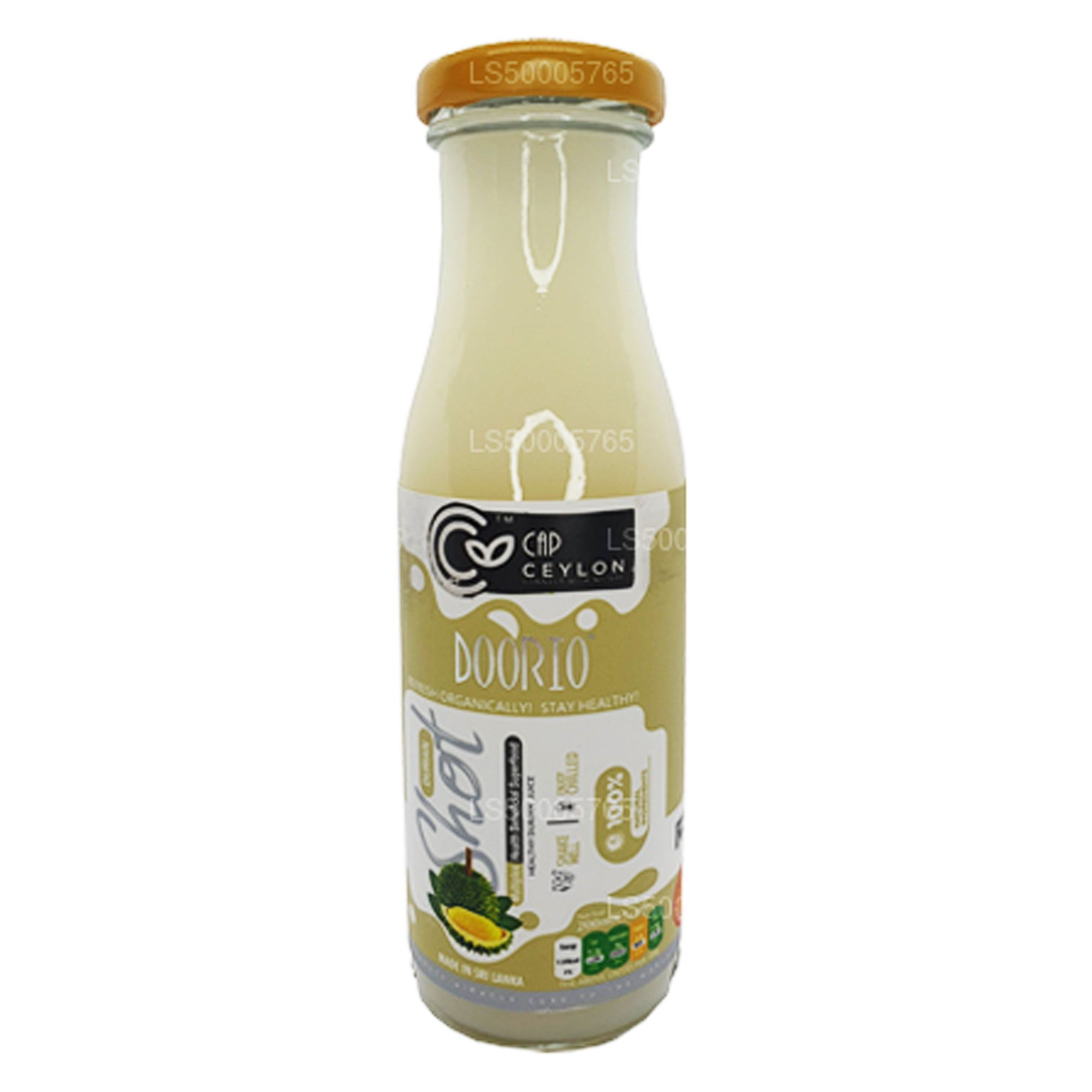
If you are visiting Sri Lanka during the main season and come across fresh durian at a roadside stall or market, it is worth trying at least once — with realistic expectations. Ask the vendor to select a ripe fruit and open it on the spot. The smell is real; the flavour, for most people, is a genuine surprise. Those who find they enjoy it often find they enjoy it very much. Those who do not at least have a story to tell. Processed durian products — shots, snacks, and sweets — offer a milder introduction for the more cautious.
Related reading
2 pages on closely related subjects.