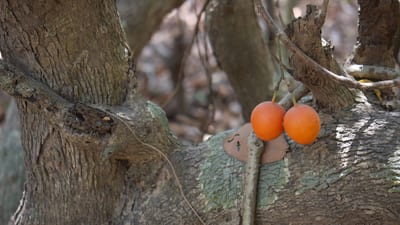
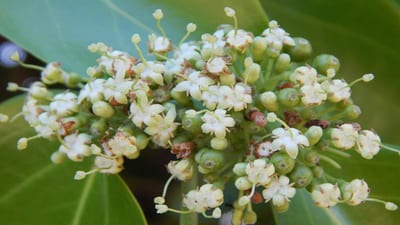
Solanum trilobatum is a prickly scrambling shrub of the nightshade family, Solanaceae, recorded in Sri Lanka's native flora under the Sinhala name Wel Thibbatu. Its fruit is noted as an edible part, while the rest of the plant carries the curved, yellowish prickles typical of many scrambling Solanum species.
What does Solanum trilobatum look like?
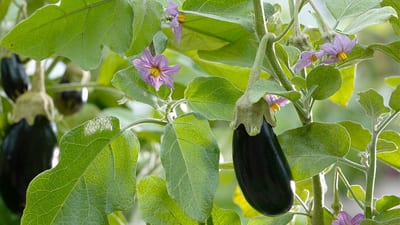
This is a slender, scrambling shrub armed with curved, yellowish prickles along its stems. The leaves are lobed, typically with three to five lobes, and measure 2 to 7 cm long by 1 to 4 cm wide. Flowers appear in clusters of three to nine on short peduncles, each borne on a pedicel 1 to 2 cm long. The corolla is deeply lobed, purple, and 12 to 16 mm long. Fruits are globose, about 15 mm in diameter.
Where does Solanum trilobatum grow in Sri Lanka?
The species is recorded as native to Sri Lanka. As a scrambling shrub, it typically climbs or sprawls through surrounding vegetation rather than standing upright on its own, a habit shared by other members of the Solanum genus found across South and Southeast Asia.
What is its conservation status?
Solanum trilobatum is recorded as a native species in Sri Lanka. This distinguishes it from endemic plants, which grow naturally nowhere else in the world, and from introduced species brought from elsewhere.
What is it called in Sinhala?
In Sinhala, the plant is known as Wel Thibbatu, a name that reflects its scrambling, vine-like growth habit alongside its relation to other thibbatu-type nightshades.
Can you eat Solanum trilobatum?
The fruit is listed as an edible part of this plant in the Lakpura flora register. No other parts are recorded as edible.
| Attribute | Recorded detail |
|---|---|
| Scientific name | Solanum trilobatum |
| Family | Solanaceae |
| Sinhala / local name | Wel thibbatu |
| Status in Sri Lanka | Native |
| Edible parts | Fruit |
| Growth form | Slender, prickly, scrambling shrub |
| Prickles | Curved, yellowish |
| Leaves | 3-5 lobed, 2-7 cm long, 1-4 cm wide |
| Inflorescence | 3-9 flowered, peduncles short |
| Flowers | Pedicels 1-2 cm long; corolla 12-16 mm long, deeply lobed, purple |
| Fruit | Globose, about 15 mm diameter |
Other species in this genus
11 more, sharing the same genus.