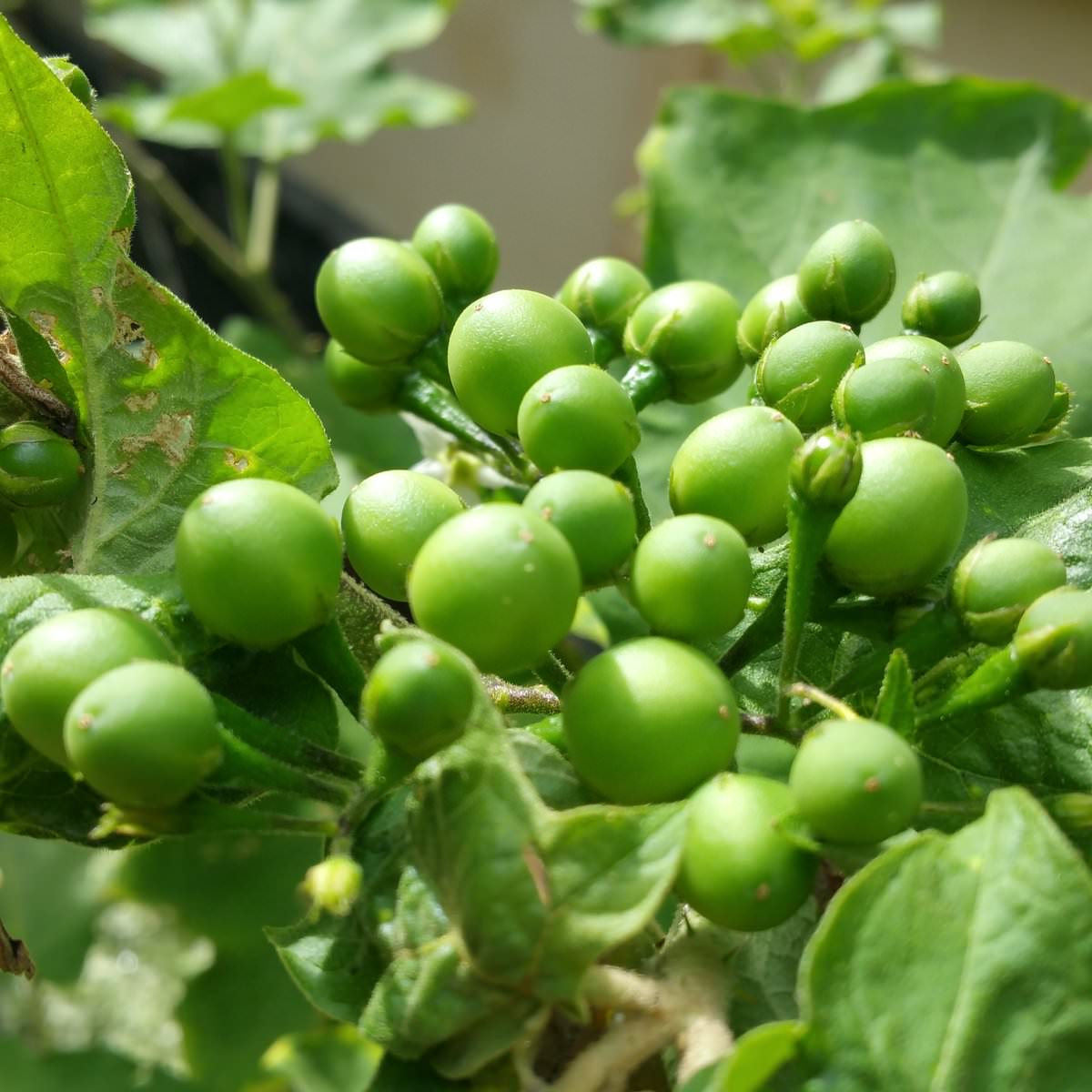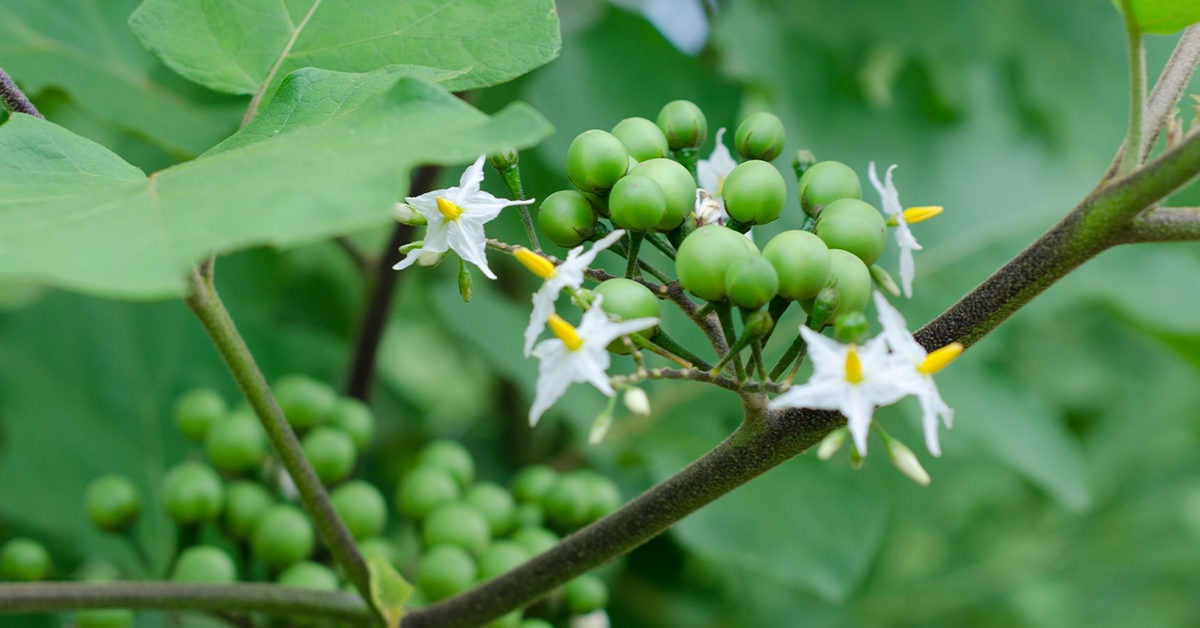


Solanum torvum, known in Sri Lanka as තිබ්බටු (Thibbatu) and commonly called turkey berry, pea eggplant, or devil's fig, is a spiny perennial shrub belonging to the family Solanaceae. Found widely across tropical and subtropical regions, it holds a quiet but important place in Sri Lankan cooking and traditional medicine alike.
What does Solanum torvum look like?
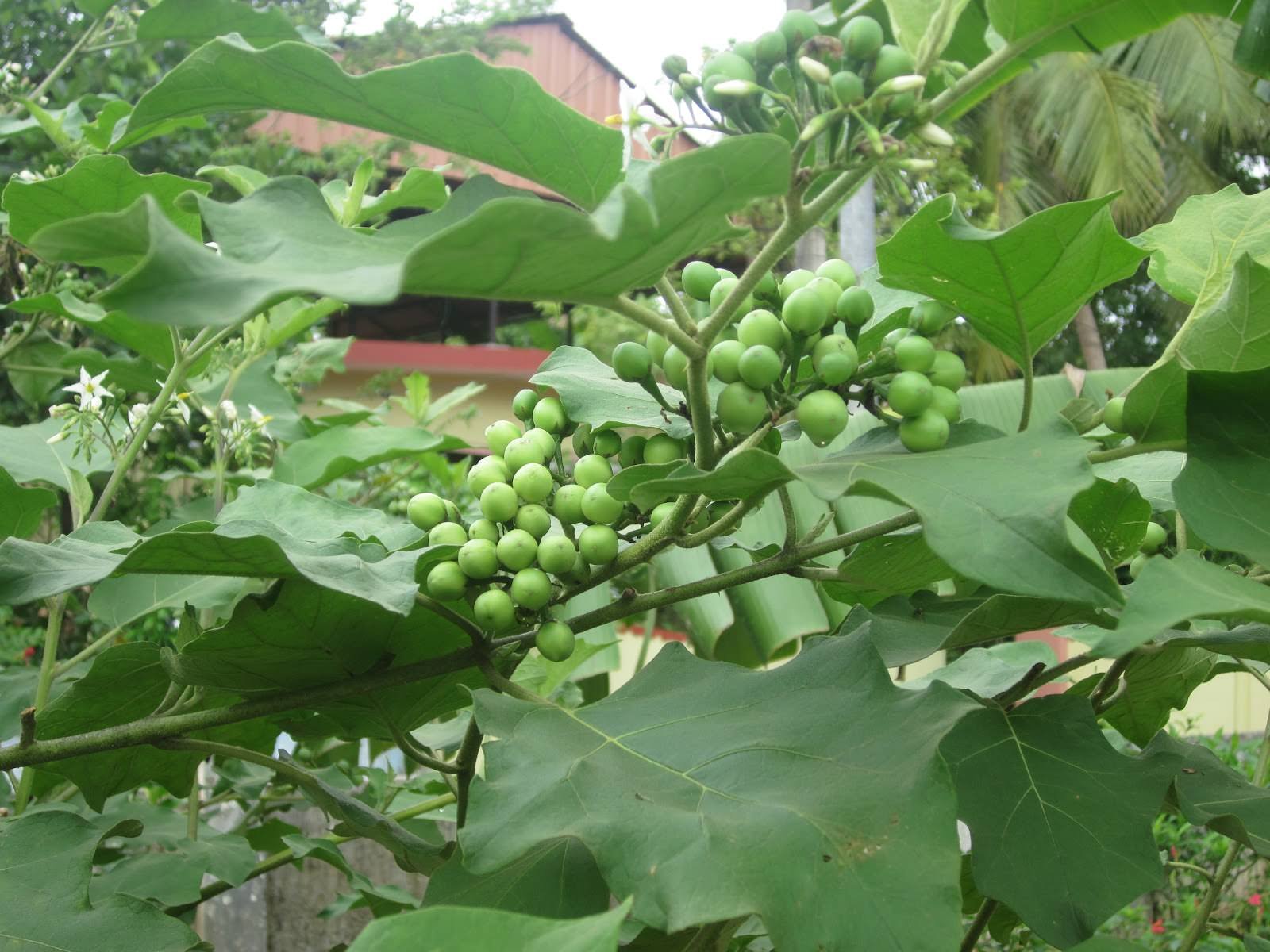
The plant typically grows to 2–3 metres in height, though under favourable conditions it can reach up to 5 metres. Its basal stem diameter is usually around 2 cm but may widen to approximately 8 cm in older specimens. The shrub generally produces a single stem at ground level before branching higher up.
The stem bark is grey and nearly smooth, marked by raised lenticels. Beneath the bark, a thin green layer overlies an ivory-coloured inner bark. Foliage is concentrated at the growing tips, giving the plant an open, airy appearance. The roots are white, with well-developed lateral roots rather than a deep taproot, particularly in plants growing on firm soil.
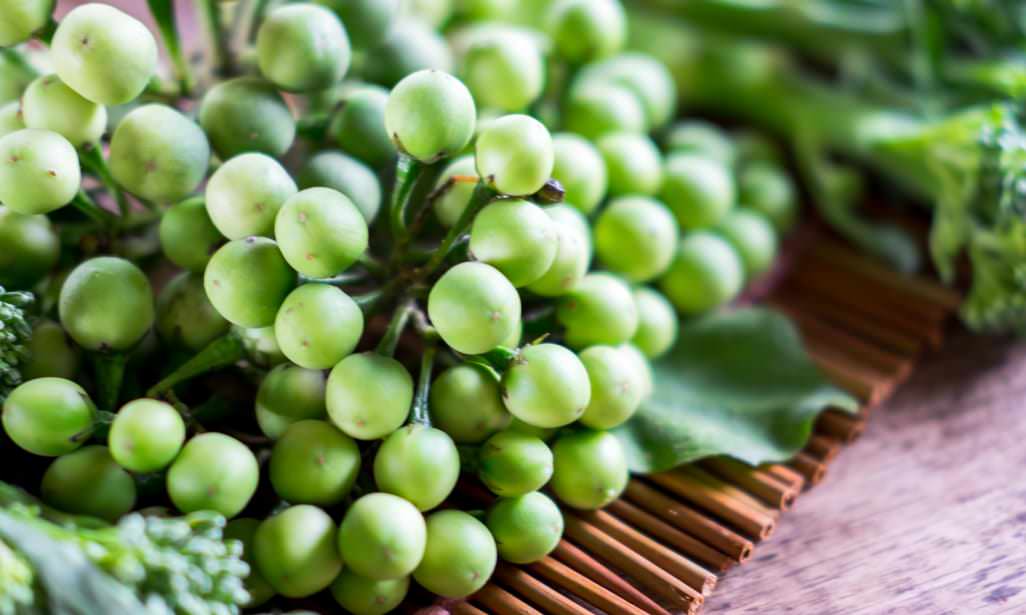
Clusters of small, round berries — each roughly the size of a pea — turn from green to yellow-orange as they ripen. The plant's scattered spines make harvesting a careful task.
How is Solanum torvum used in Sri Lankan cuisine?
In Sri Lanka, Thibbatu berries are a familiar ingredient in curries and sambols. The slightly bitter flavour that the raw berry carries mellows during cooking, adding depth to dishes without overwhelming other spices. They are often sautéed with mustard seeds, dried chilli, and coconut in a tempered preparation, or simmered into coconut-milk curries alongside other vegetables.
The berries are used whole or halved, and because they hold their shape reasonably well under heat, they provide a pleasant textural contrast. In rural households, Thibbatu appears in everyday cooking far more than it does in tourist-facing restaurant menus, making it one of those quietly authentic ingredients that defines home-style Sri Lankan food.
What place does turkey berry hold in traditional medicine?
In Sri Lanka, Solanum torvum belongs to the island's traditional-medicine heritage (hela wedakama) as well as to its kitchens, and the plant is also known in the Ayurvedic and folk traditions of South and Southeast Asia. Its fruit contains iron as well as naturally occurring flavonoids and alkaloids.
This page describes cultural tradition, not medical advice; consult a qualified doctor about any health condition.
How is Solanum torvum used as a horticultural rootstock?
Beyond the kitchen, Solanum torvum plays a practical role in commercial agriculture. It is widely used as a rootstock onto which cultivated eggplant (Solanum melongena) is grafted. The rootstock imparts exceptional vigour to the grafted plant and, critically, a strong tolerance of soil-borne diseases — including Fusarium and Verticillium wilts — that would otherwise limit a planting to a single season. Grafted eggplants on a Thibbatu rootstock can often continue productive growth into a second year, improving the return for smallholder farmers.
What is the botanical classification of Solanum torvum?
| Category | Detail |
|---|---|
| Scientific name | Solanum torvum Sw. |
| Family | Solanaceae |
| Crop group | Vegetables |
| Plant code | 061900 |
| Name in English | Turkey berry, devil's fig, pea eggplant, susumber |
| Name in Sinhala | Thibbatu (තිබ්බටු) |
| Name in Tamil | Karimulli, Mulli |
Where does Solanum torvum grow in Sri Lanka?
Thibbatu grows readily across the lowland wet and dry zones of Sri Lanka, often appearing as a semi-wild plant along roadsides, field margins, and disturbed ground. It thrives in full sun and tolerates a degree of drought once established. Cultivation is widespread in home gardens across the island, and the plant requires minimal input to produce a reliable harvest of berries over many months.
Its adaptability and vigour — the same qualities that make it valuable as a rootstock — mean it can naturalise quickly, and it is considered an opportunistic coloniser of open, disturbed habitats throughout the tropics.
Other species in this genus
10 more, sharing the same genus.