Among the celebrated rock carvings housed at Isurumuniya Viharaya in Anuradhapura, the Royal Family Carving stands as one of the most historically significant works of art to survive from ancient Sri Lanka. Executed in the Gupta-influenced tradition, the carving offers a rare figurative glimpse into the courtly world of the Anuradhapura period — a civilisation that shaped the island's religious, architectural, and cultural identity for over a millennium.
What does the Royal Family Carving depict?
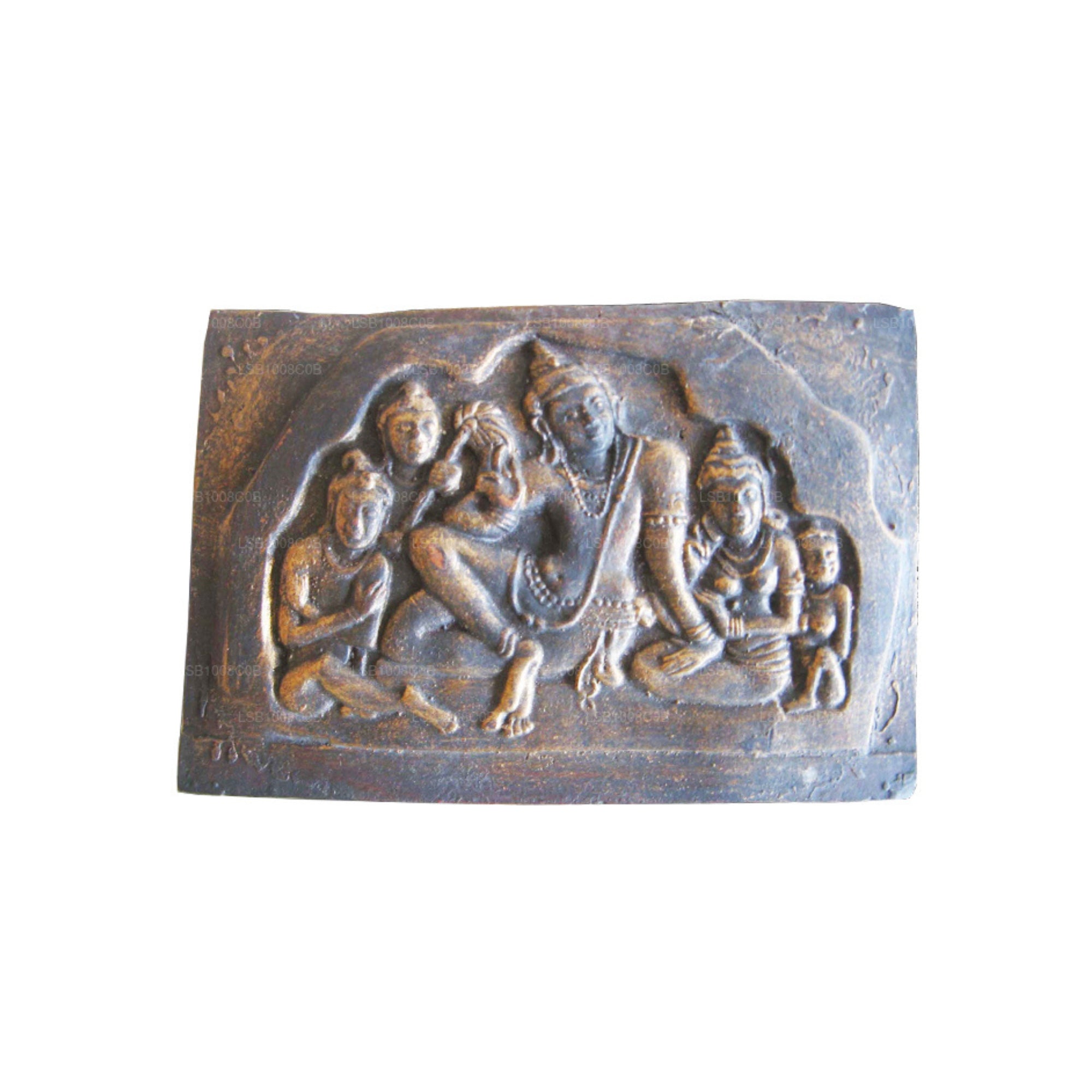
The carving is rendered in low relief — the technique known in Sanskrit as ardha unnata — on a flat granite slab. Five human figures are arranged in a courtly composition. The central and most prominent figure is identified as King Dutugamunu, the revered second-century BCE monarch who unified much of the island under one rule and commissioned some of Anuradhapura's most enduring monuments.
Dutugamunu is distinguished by a tall crown and a puna noola (sacred thread) worn across his chest — iconographic markers of royalty in the artistic vocabulary of the period. To his left, two attendant figures fan him with wijinipath, the long-handled ceremonial fans associated with royal service in ancient South Asian court imagery. The remaining figures complete the intimate domestic scene, lending the carving its conventional name: the Royal Family.
What artistic tradition does the carving belong to?
The Royal Family Carving is attributed to the Gupta Kala tradition — an artistic style that drew heavily from the classical Indian Gupta period (4th–6th centuries CE), characterised by refined proportions, gentle modelling of the human form, and a sense of serene idealism rather than rigid formality. This influence spread to Sri Lanka through Buddhist exchange networks, merging with local sensibilities to produce a distinctive Anuradhapura aesthetic.
The use of granite as the medium reflects both the geological abundance of the material in the dry-zone highlands around Anuradhapura and the technical mastery of craftsmen who could work its resistant surface to achieve subtle depth and expression. The low-relief method allowed the figures to emerge from the stone while remaining anchored to it — a quality that has helped preserve the carving's detail across more than twelve centuries.
The carving is dated to approximately the 8th century CE, placing it in the later Anuradhapura period, when the city remained a major centre of Theravada Buddhist culture and royal patronage of the arts was at its height.
Where is the Royal Family Carving located?
The carving is housed in the Isurumuniya Viharaya, a rock temple situated in Anuradhapura, the ancient capital of Sri Lanka. The temple complex is built around and into a large granite outcrop beside the Tissa Wewa reservoir, and it shelters several of Sri Lanka's most important carved reliefs in a dedicated museum building on site.
Isurumuniya is included within the sacred city of Anuradhapura, a UNESCO World Heritage Site, and is easily combined with visits to the major dagobas, the Sri Maha Bodhi tree, and the other rock carvings for which the temple is known — including the celebrated Lovers carving and the Man and Horse panel.
How does the Royal Family Carving compare to Isurumuniya's other reliefs?
| Carving | Subject | Estimated Date | Style |
|---|---|---|---|
| Royal Family | King Dutugamunu with attendants | 8th century CE | Gupta-influenced low relief |
| The Lovers | Male and female figures, possibly Saliya and Asokamala | Anuradhapura period | Low relief, intimate composition |
| Man and Horse | Rider with horse, elephants | Around 1st–3rd century CE | Naturalistic relief |
| Elephant Pond | Elephants bathing, carved into rock face | Anuradhapura period | Open-air relief |
Each carving in Isurumuniya's small museum presents a distinct moment in Sri Lankan sculptural development. The Royal Family panel is particularly valued for its confident figurative detail and its explicit royal iconography — elements that make it an important primary source for understanding courtly dress and ceremony in ancient Sri Lanka.
What should visitors know before going?
Isurumuniya Viharaya is an active place of worship, so modest dress — shoulders and knees covered, shoes removed before entering the temple rock area — is expected of all visitors. The on-site museum that displays the Royal Family Carving and the other major reliefs typically operates during daylight hours; it is worth confirming opening times locally on the day of your visit, as hours can vary around poya (full moon) days and religious observances.
Anuradhapura is most comfortably visited in the morning before midday heat builds, particularly during the dry months between May and September. The sacred city is large enough that hiring a bicycle or tuk-tuk to move between sites is common practice and adds practical efficiency to a half-day or full-day itinerary.
How does the Royal Family Carving fit into the broader Anuradhapura heritage?
Anuradhapura served as the capital of Sri Lanka for nearly fourteen centuries and produced an extraordinary concentration of monuments, reservoirs, and art that continues to shape the country's cultural identity. The Royal Family Carving belongs to a tradition of royal and religious patronage that also produced the colossal dagobas — Ruwanwelisaya, Jetavanaramaya, and Abhayagiri — that still define the skyline of the ancient city.
For travellers following a heritage route through the Cultural Triangle, Anuradhapura pairs naturally with Sigiriya: The Ancient Rock Fortress to the east, another site where royal imagery, granite, and artistic ambition converge in a landscape shaped by ancient Sri Lankan kingship.
Nearby places
10 places within about 25 km, nearest first.
- Vessagiriyaunder 1 km
- Isurumuni Loversunder 1 km
- Elephant Pond Carvingunder 1 km
- Stupasunder 1 km
- Isurumuniyaunder 1 km
- Basawakkulama Wewaunder 1 km
- Ranmasu Uyanaunder 1 km
- Sela Cetiya Stupaunder 1 km
- Sadagiri Maha Seya Stupaunder 1 km
- Tissa Wewa1 km
Related reading
3 pages on closely related subjects.