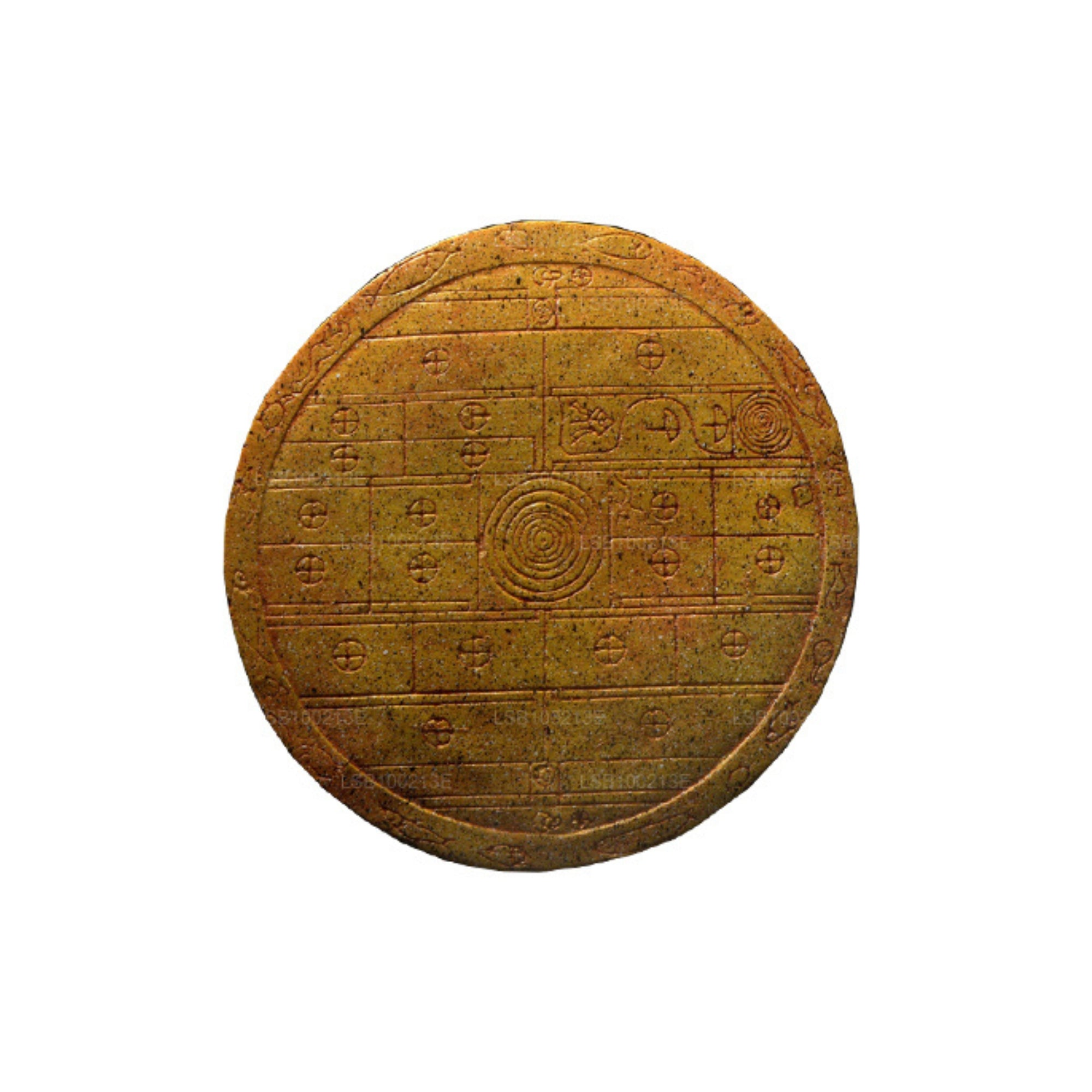
Ranmasu Uyana — literally "Golden Fish Park" — is one of the oldest surviving examples of planned garden architecture in South Asia. Carved out of the bedrock and shaded by ancient trees on the southern bank of the Tissa Wewa reservoir in Anuradhapura, this 40-acre (16 ha) pleasure garden once served the royal court of the ancient Sinhala kingdom. Today it stands as a quiet counterpoint to the grand dagobas and monastic complexes that surround it, offering visitors a rare glimpse into how early Sri Lankan rulers conceived of leisure, landscape, and water management.
What is the history of Ranmasu Uyana?
The garden dates to the early Anuradhapura period, placing its origins roughly in the third or second century BCE. An inscription discovered at the nearby Sigiriya-era Vessagiriya cave complex records that water was channelled into the park from Tissa Wewa and subsequently released into the rice paddies surrounding Isurumuniya Vihara — evidence of a sophisticated hydraulic system integrated into the broader irrigation network of the ancient city.
The design principles visible at Ranmasu Uyana align with descriptions found in classical Sinhala texts on garden planning. Terraced lawns, sculptured rock pools, bathing ponds, and pavilion plinths were all orchestrated to create a defined ceremonial and recreational landscape for the ruling elite. The garden is widely regarded among archaeologists as a precursor to the later, more celebrated pleasure garden tradition seen at sites such as Sigiriya.
What can you see at Ranmasu Uyana?
The site contains several distinct features that reward a slow, attentive walk.
- Rock-cut bathing pools: Three large ponds — traditionally attributed to royalty, nobles, and attendants respectively — are hewn directly into the granite. Their smooth sides and carefully graded steps are remarkably well preserved.
- Isurumuniya proximity: The garden shares its southern boundary with Isurumuniya Vihara, the rock temple famous for its bas-relief carvings. Visiting both in a single session makes strong historical sense, as the two sites were functionally linked by the same water supply.
- The Sakwala Chakraya: Carved into a rock face near the garden's edge is a circular diagram known as the Sakwala Chakraya — a cosmological map of some kind, still not fully decoded by scholars. Competing interpretations range from a star chart to a world map to a gateway symbol. Whatever its meaning, the carving is extraordinary and unique in Sri Lanka.
- Tissa Wewa views: The northern edge of the park opens toward the ancient reservoir. The water and tree-lined banks give the site a contemplative atmosphere that is quite different from the more visited monuments of Anuradhapura.
- Flora and birdlife: The mature tree canopy hosts a variety of bird species. Mornings are particularly good for birdwatching, and the shade makes an early visit far more comfortable than arriving at midday.
How does Ranmasu Uyana fit into the Anuradhapura Sacred City?
Anuradhapura is a UNESCO World Heritage Site and one of the longest continuously inhabited cities in the world. Ranmasu Uyana occupies the southwestern quarter of the Sacred City precinct. Most visitors to Anuradhapura focus their time on the Jetavanaramaya, Ruwanwelisaya, and Sri Maha Bodhi — all of which are essential. Ranmasu Uyana and Isurumuniya are best treated as an afternoon extension once the main monuments have been covered, when the light softens and crowds thin. The combined walk between the two sites takes around 90 minutes at a comfortable pace.
When is the best time to visit Ranmasu Uyana?
The North Central Province, where Anuradhapura sits, has a drier climate than much of Sri Lanka. The most comfortable months for sightseeing run from late November through April, when humidity is lower and rainfall is minimal. Early mornings — before 9 am — are ideal: the temperature is manageable, the light is flattering on the stone pools, and the garden is typically quieter. Avoid midday visits between June and September when heat can be intense.
The Esala Perahera Festival season (July–August) brings higher visitor numbers to Anuradhapura generally, though Ranmasu Uyana itself remains relatively tranquil compared to the main pilgrimage sites.
How do I get to Ranmasu Uyana from Colombo?
Anuradhapura lies roughly 200 km north of Colombo. By road the journey takes around four hours depending on traffic; by train from Colombo Fort to Anuradhapura Junction it is typically three to four hours, with onward tuk-tuk or taxi needed to reach the site. Most visitors incorporate Ranmasu Uyana into a multi-day itinerary that also includes Sigiriya and Polonnaruwa, overnighting in the Cultural Triangle rather than day-tripping from Colombo.
Within Anuradhapura, tuk-tuks are the most practical way to move between monuments. A half-day tuk-tuk circuit covering the Sacred City's southern zone — including Ranmasu Uyana, Isurumuniya, and Tissa Wewa — is a well-established local option.
What are the practical details for visiting?
| Detail | Information |
|---|---|
| Entry | Covered by the Anuradhapura Archaeological Site ticket (NHRC/CCF combined ticket) |
| Opening hours | Typically dawn to dusk; confirm locally as hours can vary |
| Dress code | Modest dress required; shoulders and knees should be covered near the Isurumuniya temple boundary |
| Footwear | Shoes must be removed at designated sacred areas |
| Facilities | Limited on-site; nearest facilities are in Anuradhapura town |
Is Ranmasu Uyana suitable for families and general tourists?
Yes. The terrain is flat and largely accessible, the distances are short, and the rock pools engage younger visitors who might find purely monastic sites less compelling. There is no steep climbing involved, unlike at Sigiriya or Mihintale. The proximity of Isurumuniya, with its famous lovers sculpture and elephant carvings, adds further variety. For travellers with limited time in Anuradhapura, pairing Ranmasu Uyana with the great stupas of the Sacred City gives a well-rounded sense of how the ancient capital balanced religious, civic, and royal life.
Nearby places
12 places within about 25 km, nearest first.
- Elephant Pond Carvingunder 1 km
- Stupasunder 1 km
- Vessagiriyaunder 1 km
- Isurumuni Loversunder 1 km
- Royal Family Carvingunder 1 km
- Isurumuniyaunder 1 km
- Basawakkulama Wewaunder 1 km
- Sela Cetiya Stupaunder 1 km
- Sadagiri Maha Seya Stupaunder 1 km
- Tissa Wewa1 km
- Vessagiri1 km
- Talawa City5 km
Related reading
2 pages on closely related subjects.