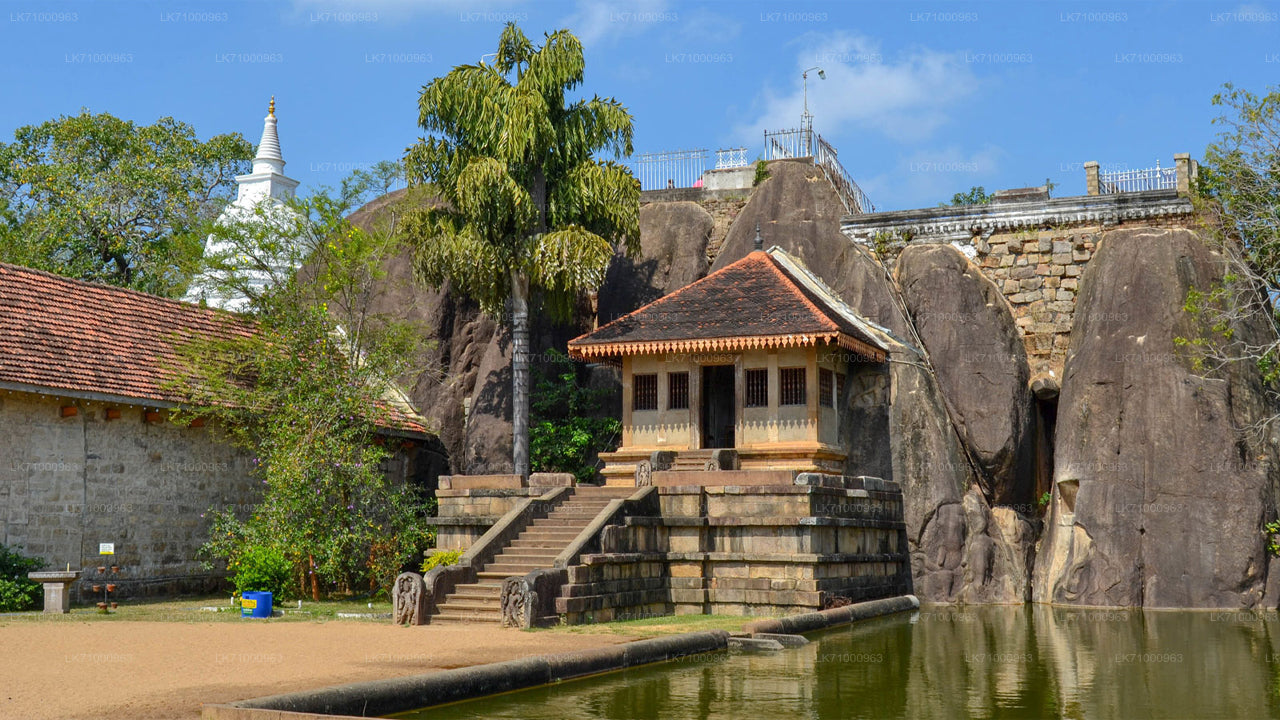
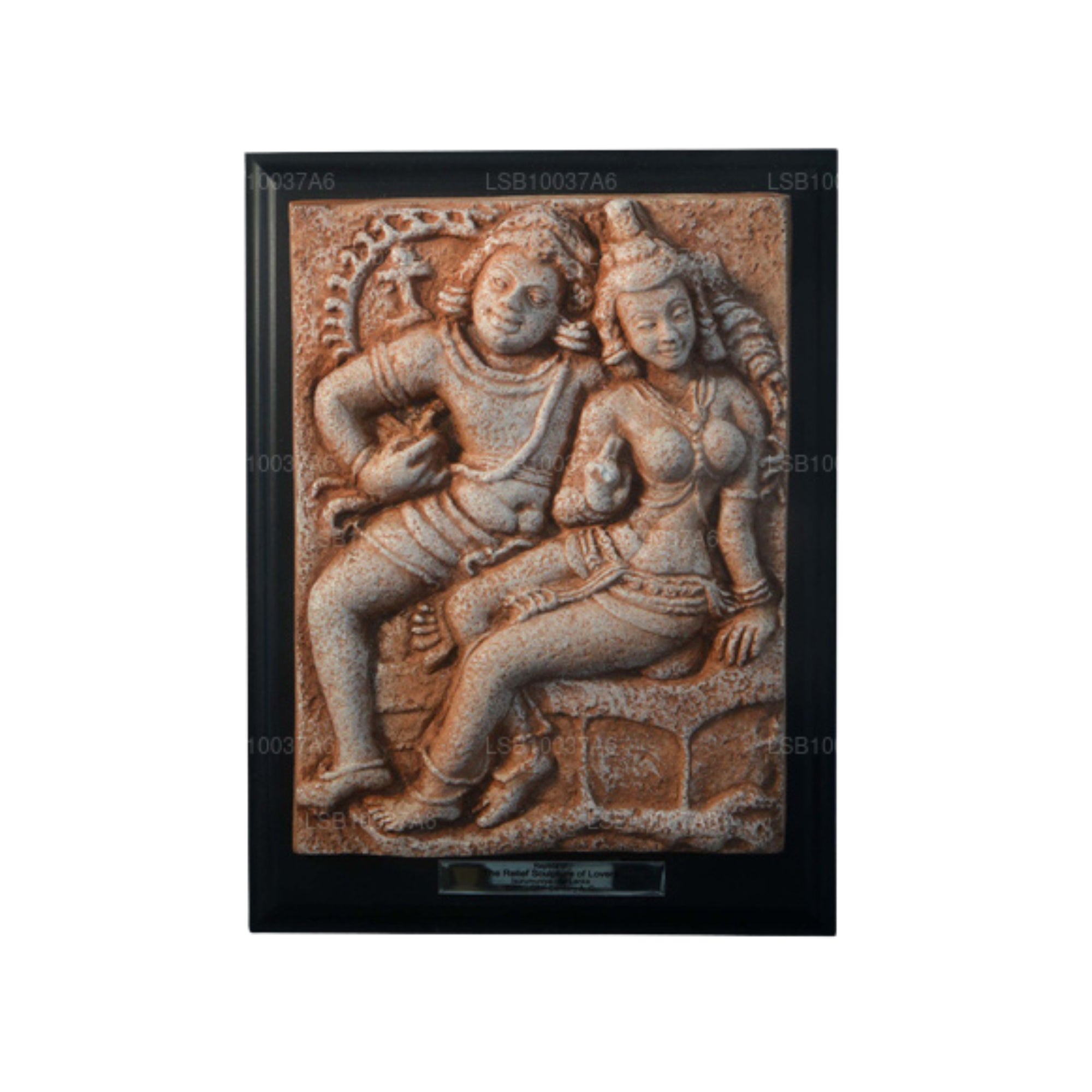
Carved into a granite face at the Isurumuniya rock temple in Anuradhapura, the relief known as the Isurumuni Lovers is one of the most celebrated and debated works of ancient Sri Lankan sculpture. Dating to around the 6th century CE and executed in the Gupta style that flourished across the Indian subcontinent at that time, the carving depicts a man and a woman in an intimate yet charged pose: the woman, seated on the man's lap, raises a finger in what many scholars read as a gesture of coy restraint, while the man appears unmoved by her protest. The figures are rendered with a confidence and naturalism unusual for the period, and that tension — between consent and desire, rank and devotion — is precisely what has kept the carving in conversation for nearly fifteen centuries.
Who are the figures in the Isurumuni Lovers carving?
The most widely held tradition identifies the couple as Prince Saliya, son of the great Sinhalese king Dutugemunu, and Asokamala, a young woman from the Sadol Kula — the lowest rung of the caste hierarchy recognised in ancient Sri Lanka. Under the social codes of the time, a prince betrothing a woman of inferior rank was not merely unconventional; it was illegitimate and politically ruinous. Saliya's choice carried a concrete and irreversible price: he renounced his claim to the throne rather than abandon Asokamala.
This story has no precise parallel in ancient Sri Lankan chronicles, but the broad outlines are corroborated by the Mahavamsa, which records Saliya as Dutugemunu's heir and notes his relationship with a low-caste woman. Whether the sculptor intended to portray Saliya and Asokamala specifically, or whether the identification grew up around an already-existing carving, remains an open question among historians. What is clear is that the image struck a chord with later generations, who found in it a convenient symbol of love transcending social hierarchy.
What is the historical context of the carving's location?
The carving is housed today at Isurumuniya Vihara, a cave temple constructed during the reign of King Devanampiya Tissa in the 3rd century BCE, making it one of the oldest Buddhist sanctuaries in Sri Lanka. The site takes its name from the Pali rendering of its original Sinhala designation and sits at the edge of the Tissa Wewa reservoir on the southern fringe of the ancient city of Polonnaruwa's cultural orbit — though Isurumuniya itself belongs firmly to Anuradhapura.
The area directly surrounding the temple was historically associated with Vessagiriya, a monastic complex that Dutugemunu is said to have donated to the Maha Sangha (the community of Buddhist monks). Some scholars suggest the Lovers carving was originally positioned elsewhere within the Vessagiriya complex and was subsequently moved to its present location inside the Isurumuniya museum when the monastery was donated. This would explain why a secular, romantic image appears in a context otherwise devoted entirely to Buddhist iconography.
An additional layer of mythology attaches to the Vessagiriya site through the Ramayana tradition, which associates the area with Vaisravana, the deity said to have ruled Sri Lanka from Lankapura before the era of Ravana. That claim is not verifiable historically, but it underlines how densely layered the sacred geography around Anuradhapura became over successive centuries of religious use.
What makes the carving artistically significant?
The Gupta style — named after the imperial dynasty that patronised it in northern India between roughly the 4th and 6th centuries CE — is characterised by idealised human forms, restrained ornamentation, and a smooth, almost fluid treatment of the body. Sri Lanka absorbed Gupta influences primarily through Buddhist networks of exchange, and the Isurumuni Lovers shows that influence clearly: the modelling of the figures is confident and three-dimensional, the drapery suggests movement, and the emotional relationship between the two subjects is conveyed through posture and gesture rather than facial expression alone.
What sets the carving apart from most Gupta-influenced work in Sri Lanka is its subject matter. The overwhelming majority of rock carvings and sculptures from this period depict the Buddha, bodhisattvas, or attendant deities. A purely secular, romantic image of this quality and ambition has no close parallel among surviving Sri Lankan examples of the era, which partly explains why the carving has attracted so much scholarly and popular interest.
Where exactly is the Isurumuni Lovers carving displayed?
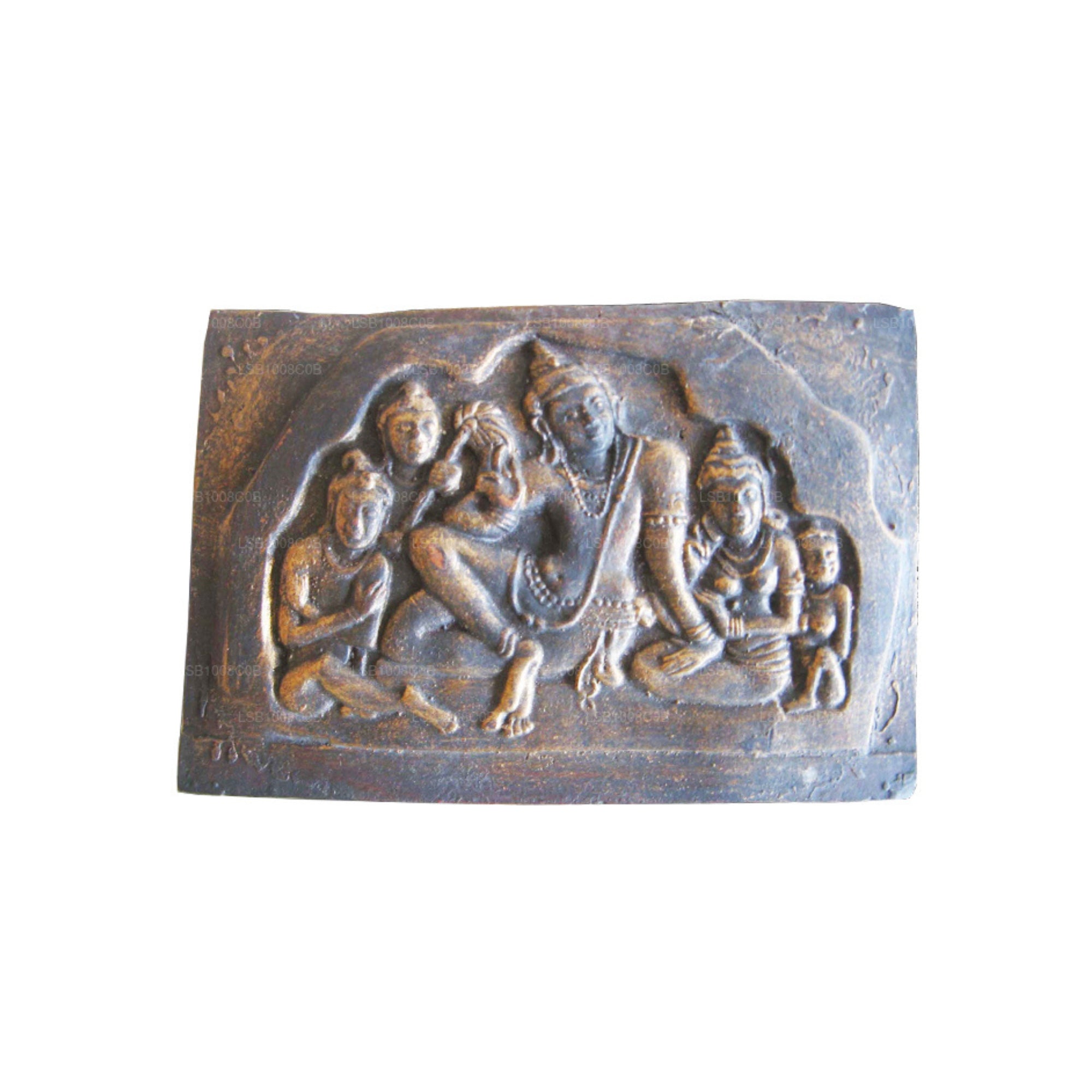
The relief is displayed in the small on-site museum at Isurumuniya Vihara, along with several other exceptional carvings including the celebrated Isurumuniya Elephant frieze and a figure widely identified as a royal family group. The museum is modest in scale but contains some of the finest stone carvings anywhere in Sri Lanka, and a visit rarely takes more than an hour for the temple and museum combined.
Isurumuniya Vihara is located in the southern section of the Anuradhapura Sacred City, within easy walking or cycling distance of the major dagobas. The site is an active place of worship as well as a heritage monument, so visitors are expected to dress modestly (shoulders and knees covered) and to remove footwear before entering the rock-cut shrine rooms.
When is the best time to visit Isurumuniya?
Anuradhapura is accessible year-round, but the most comfortable visiting months are generally from May through September, when the north-central province receives less rainfall and temperatures — while warm — are manageable in the early morning. Arriving before 9 a.m. allows you to see the carvings in good light and before the midday heat sets in. The site is particularly atmospheric during Poya (full-moon) days, when local devotees gather to make offerings, though it will also be busier than usual.
How do I get to Isurumuniya from Colombo?
Anuradhapura lies roughly 200 km north of Colombo, typically around four hours by road depending on traffic. Express trains from Colombo Fort station serve Anuradhapura several times daily; the journey takes approximately four to five hours and is a practical option for independent travellers. From Anuradhapura railway station, the Isurumuniya site is around 4 km, reachable by tuk-tuk or bicycle hire — cycling through the Sacred City is a pleasant way to visit multiple monuments in a single day. Lakpura can arrange private transfers and guided itineraries that combine the Isurumuniya Lovers with the other major sites of the Anuradhapura ancient city.
What else can I see at Isurumuniya Vihara?
Beyond the Lovers carving, the site rewards careful attention. The elephant frieze carved directly into the rock face at the base of the temple is a large-scale, energetic composition showing a line of elephants among lotus plants — a reminder that the reservoir beside the temple was once a vital watering point. The figure group identified as a royal family, displayed alongside the Lovers in the museum, shows a man, woman, and child rendered with similar Gupta-influenced refinement and has been tentatively linked to a scene from the royal court. The cave shrine itself, cut into a large granite outcrop, contains a seated Buddha image and offers a cool, dim contrast to the brightness of the surrounding tank landscape.
For those interested in the broader Buddhist heritage of the Sacred City, the nearby stupas of Ruvanvelisaya, Jetavanaramaya, and Abhayagiri are among the largest brick structures of the ancient world and form a natural extension of any visit to Isurumuniya.
Nearby places
12 places within about 25 km, nearest first.
- Royal Family Carvingunder 1 km
- Vessagiriyaunder 1 km
- Elephant Pond Carvingunder 1 km
- Stupasunder 1 km
- Isurumuniyaunder 1 km
- Basawakkulama Wewaunder 1 km
- Ranmasu Uyanaunder 1 km
- Sela Cetiya Stupaunder 1 km
- Sadagiri Maha Seya Stupaunder 1 km
- Tissa Wewa1 km
- Talawa City5 km
- Western Monasteries6 km
Related reading
1 pages on closely related subjects.