
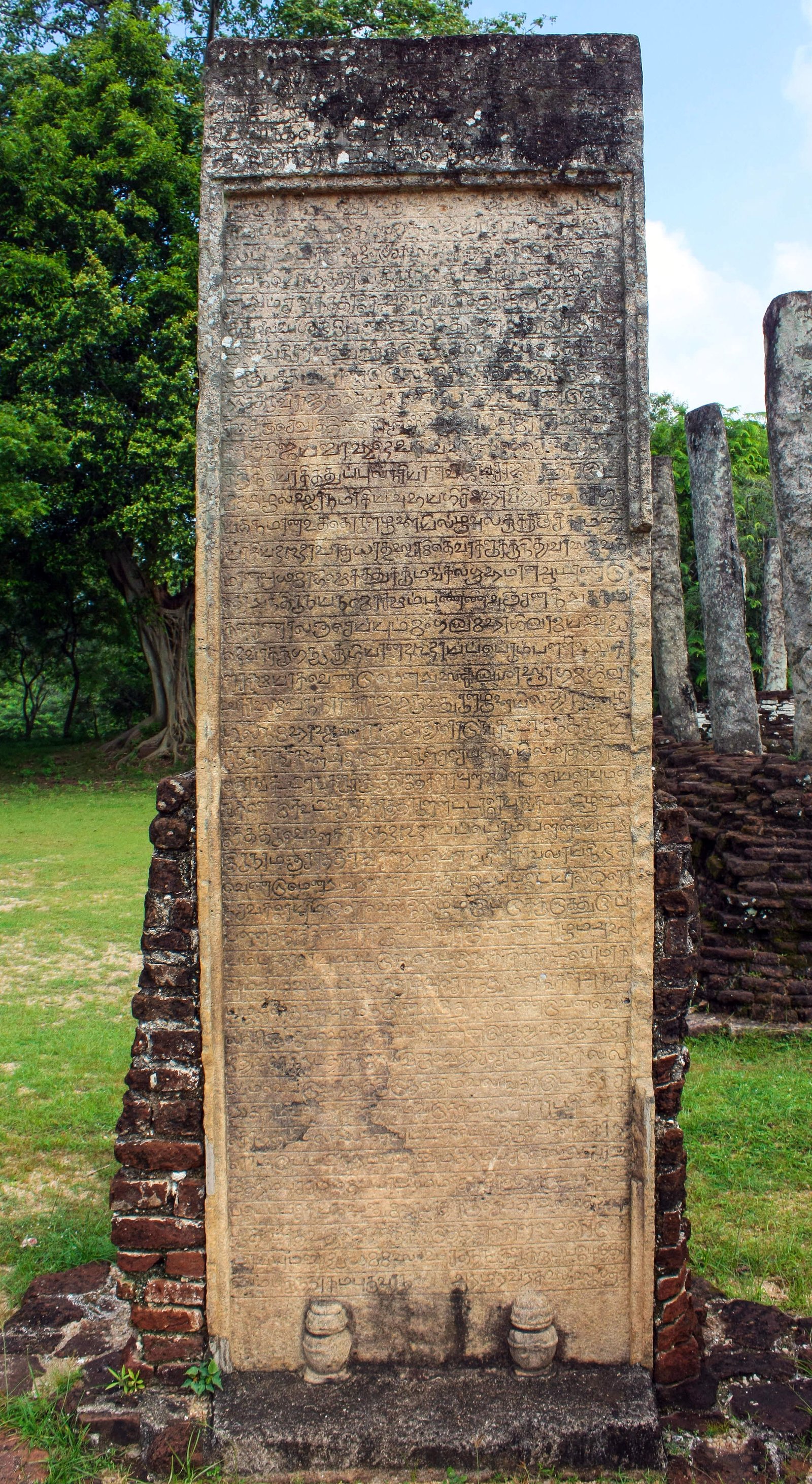
Among the many layered monuments of ancient Sri Lanka, the Royal Palace of King Vijayabahu I stands as a testament to a pivotal turning point in the island's history. Built during the eleventh century, it offers visitors a rare glimpse into the architectural ambitions of a king who reunified Sri Lanka after decades of Cola occupation.
Who was King Vijayabahu I?
King Vijayabahu I is one of the most celebrated figures in Sri Lankan history. He ascended to power in 1055 in the Rohana region in the south of the island and spent eighteen years conducting a sustained military campaign to drive out the Cola forces from South India. In 1073, three years after defeating the Colas, he formally celebrated his royal consecration at Anuradhapura — the ancient ceremonial capital of Sri Lanka — restoring Sinhalese sovereignty over the entire island for the first time in nearly a century.
Although Anuradhapura held deep ceremonial significance, Vijayabahu I chose Polonnaruwa as his seat of governance, relocating the administrative capital there and establishing a tradition that his successors would continue for generations.
What is the history behind the Royal Palace?
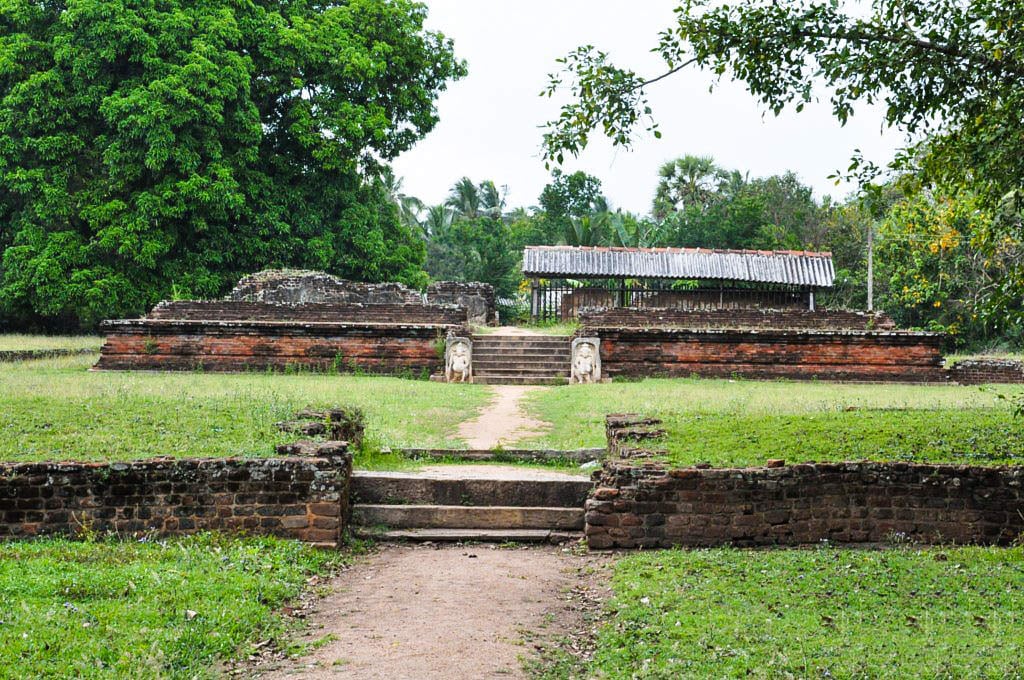
The structure that survives today is widely believed to be the temporary palace Vijayabahu I commissioned specifically for his coronation celebrations in Anuradhapura. Because the king intended Polonnaruwa as his permanent capital, this building was likely never meant to serve as a long-term royal residence. Instead, it was a ceremonial space — constructed with care and craft, but designed for a specific historic moment rather than enduring royal occupation.
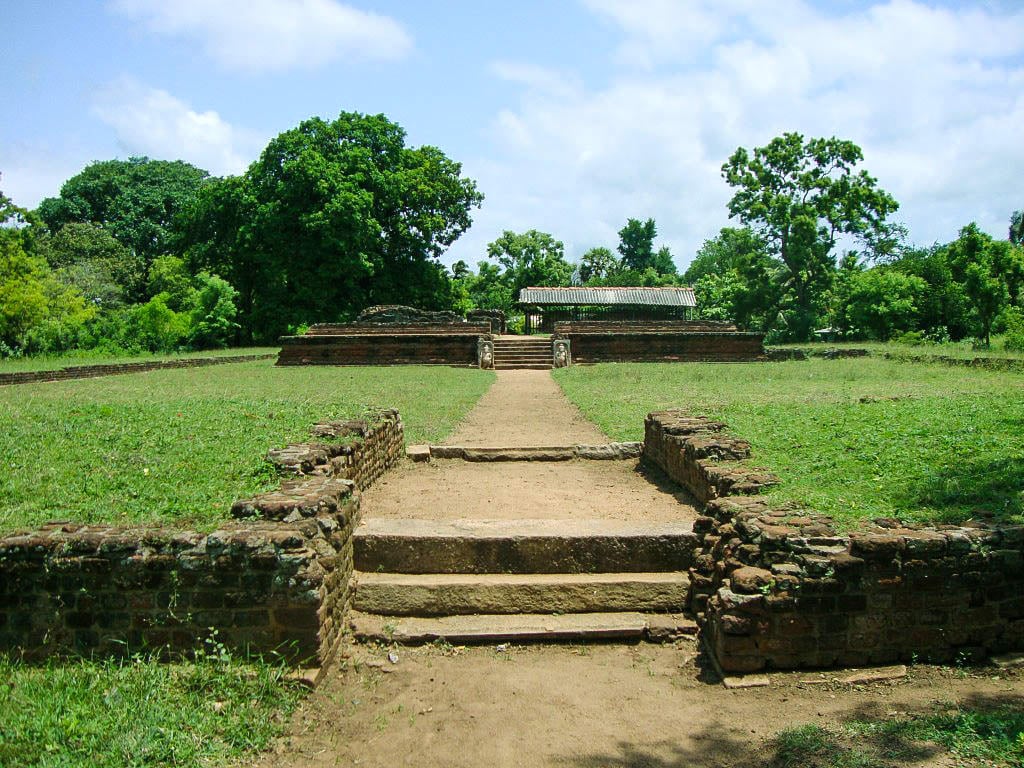
That context makes the palace's survival all the more remarkable. Centuries of exposure and the slow reclamation of the site by vegetation have left the structure in partial ruin, yet enough remains to convey the scale and dignity of the original construction.
What can visitors see at the Royal Palace of King Vijayabahu I?
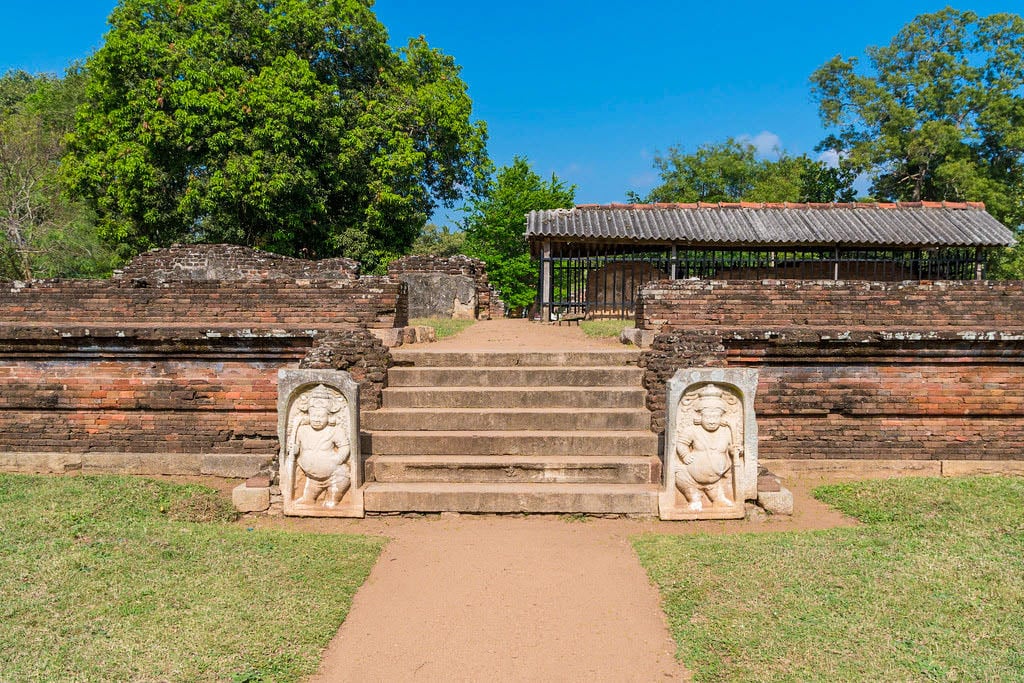
The palace footprint measures approximately 128 by 216 feet (around 39 by 66 metres), giving a sense of how substantial the structure once was. The walls, though heavily weathered, retain their basic outline, and several architectural elements have survived in recognisable form.
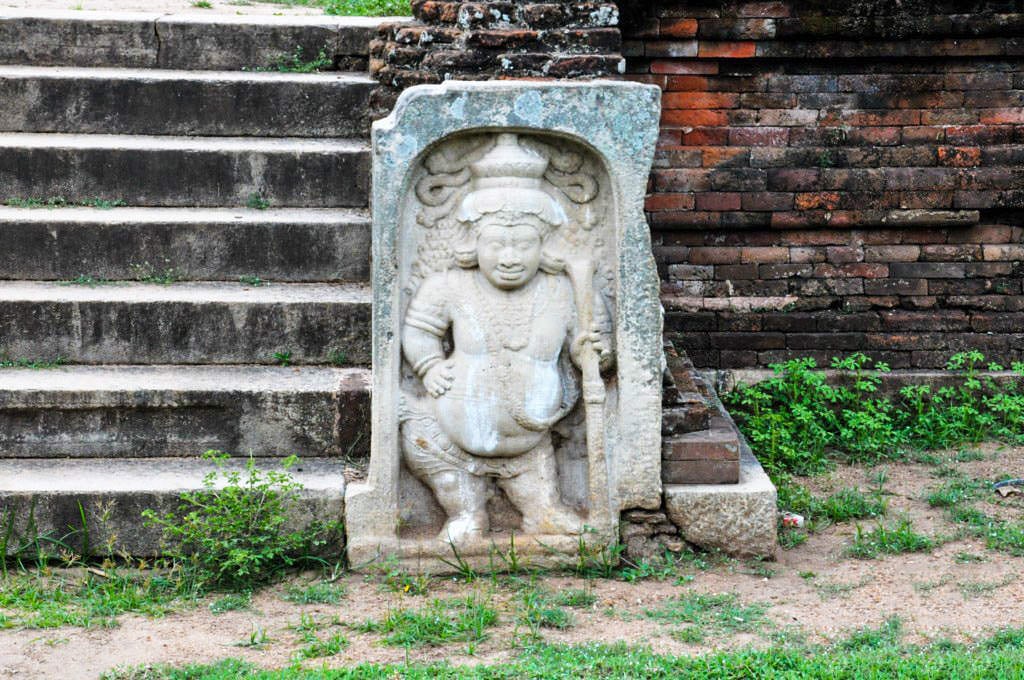
The most noteworthy features are the guardstones positioned at the entrance to the palace. These carved stone sentinels depict Sankhanihi and Padmanidhi — the two attendants of Kuvera, the god of wealth in Hindu and Buddhist cosmology. Guardstone iconography of this type was common in ancient Sri Lankan royal and religious architecture, and these examples are considered good specimens of the style associated with the later Anuradhapura period. Their presence at a royal entrance reinforced both the protective and the auspicious character of the space.
Beyond the guardstones, visitors can walk the perimeter of the palace platform, examining the stonework and reflecting on the political moment the building was intended to commemorate. The site sits within the broader Anuradhapura archaeological zone, which is recognised as a UNESCO World Heritage Site, so the surrounding landscape itself is rich with ancient structures.
How does this palace fit into Anuradhapura's wider heritage?
Anuradhapura served as Sri Lanka's first capital for over a millennium, and the city's archaeological zone contains an extraordinary concentration of ancient monuments — dagobas, palace complexes, ponds, and Buddhist shrines spanning many centuries. The Royal Palace of King Vijayabahu I belongs to a later stratum of this heritage, reflecting a period of recovery and renaissance after the Cola interlude rather than the earlier classical phase of Anuradhapura's greatness.
Visitors exploring this palace will find it most rewarding when seen in combination with other sites in the sacred city, including the Jetavanaramaya, the Sri Maha Bodhi, and the Ruwanwelisaya dagoba, all of which lie within a short distance. A guided tour that contextualises the historical timeline — from the founding of Anuradhapura through the Cola occupation to Vijayabahu's restoration — helps make the site meaningful rather than simply scenic.
When is the best time to visit the Royal Palace of King Vijayabahu I?
Anuradhapura can be visited year-round, but the most comfortable months for outdoor exploration of the archaeological sites fall between December and April, when the North Central Province experiences drier and slightly cooler conditions. Early morning visits are preferable — the light is gentler, the temperature is lower, and the major pilgrimage sites are less crowded. During Poya (full moon) days, the area around Anuradhapura sees significantly higher numbers of Sri Lankan Buddhist pilgrims, which adds cultural atmosphere but also brings larger crowds.
How do I get to the Royal Palace of King Vijayabahu I?
The palace is located within the ancient city of Anuradhapura, which lies in Sri Lanka's North Central Province. The city is accessible by road from Colombo in roughly three to four hours, or by train from Colombo Fort station. Within Anuradhapura, the archaeological sites are spread across a sizeable area; hiring a tuk-tuk or a bicycle is the most practical way to move between monuments. A private driver arranged in advance provides the most flexibility for visitors who want to cover several sites in a single day.
Is the site suitable for all visitors?
The palace ruins are set on relatively flat ground and are accessible without significant physical exertion, though the terrain is uneven in places. Visitors should wear modest clothing, as the site sits within a broader sacred zone where temples and shrines require covered shoulders and legs. Sturdy footwear is advisable. There is no formal entrance booth specific to this palace structure; access is typically covered by the general Anuradhapura archaeological zone ticket.