
Few sounds mark Sri Lanka's Sinhala New Year quite like the deep, resonant pulse of the Banku Rabana. Played outdoors in courtyards and village greens, it draws neighbours into a circle, blends folksong with percussion, and turns a drum into a shared moment. Understanding this instrument — its origins, construction, and the etiquette around playing it — helps visitors appreciate one of the most communal musical traditions on the island.
What is the Banku Rabana and where does it come from?
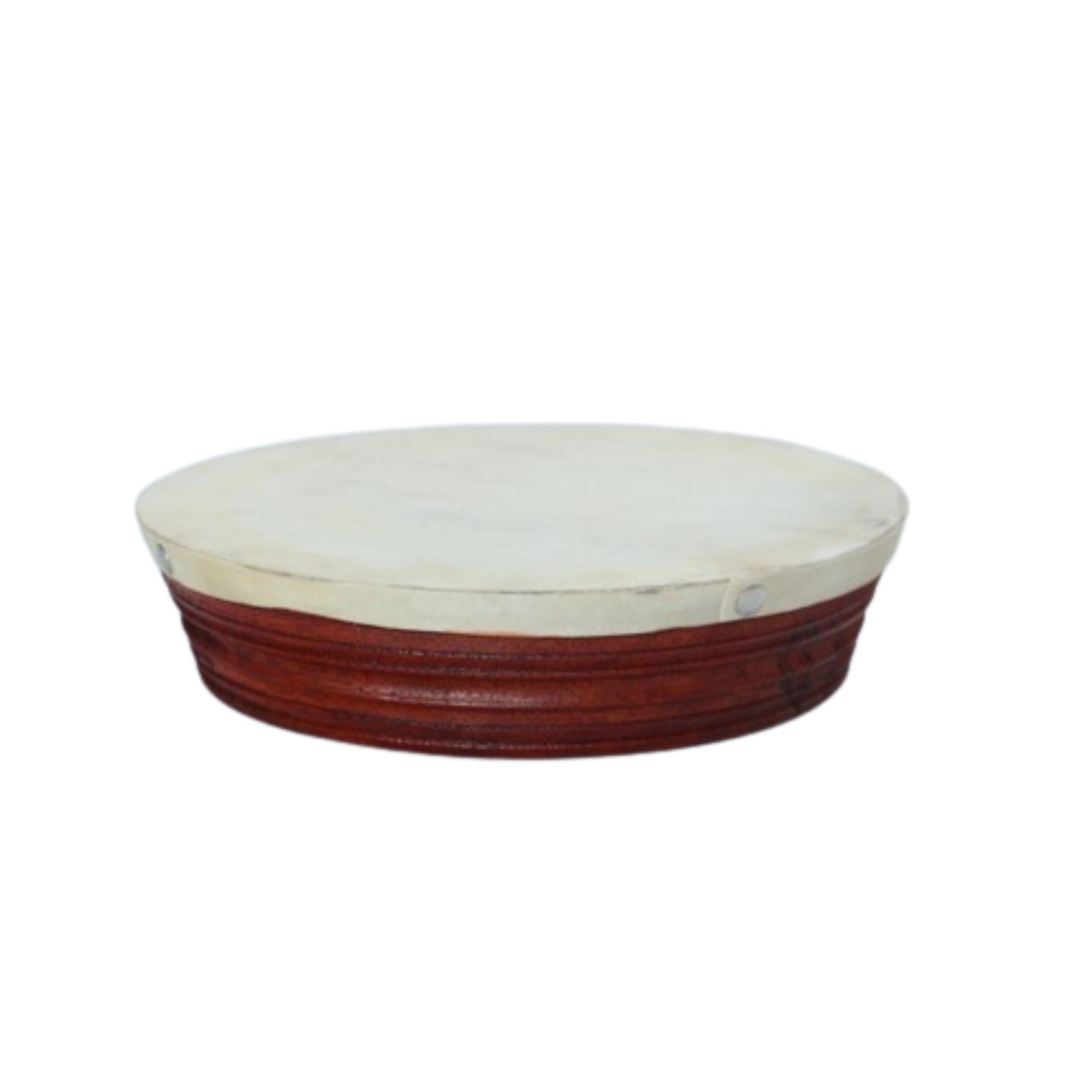
The Banku Rabana (also called Bench Rabana or Maha Beraya, meaning "great drum") belongs to a large family of traditional Sri Lankan drums collectively known as raban. Classical Sinhala literature records many varieties — Geta Bera, Yak Bera, Davula, Thammattama, Udakkiya, Dakkiya, Bummadiya, and the smaller hand-held Ath Rabana, among others. Of these, only a handful remain in active ceremonial use today; the rest survive mainly in literary references and museum collections.
The Banku Rabana holds a distinctive place within this family for two reasons: it is the largest drum in the Sri Lankan tradition, and it is the only one designed to be played by several people simultaneously. Its communal character has kept it central to festive life even as other forms have faded.
How is a Banku Rabana constructed?
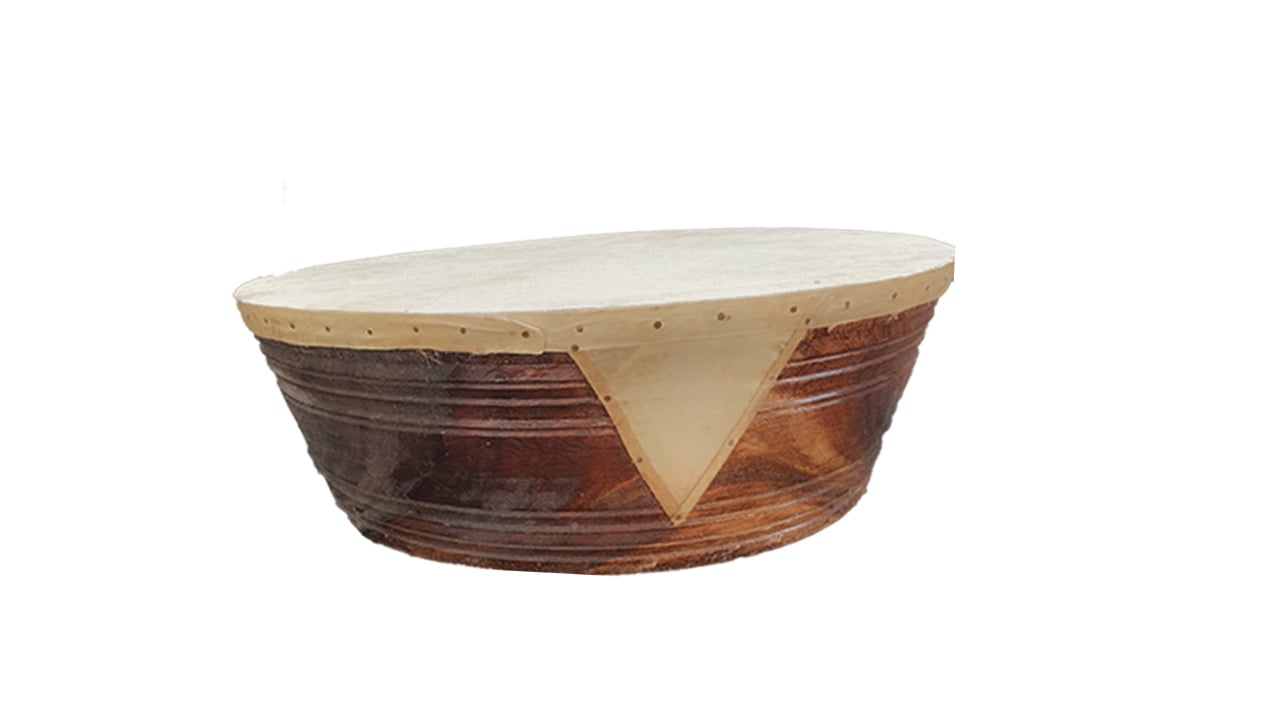
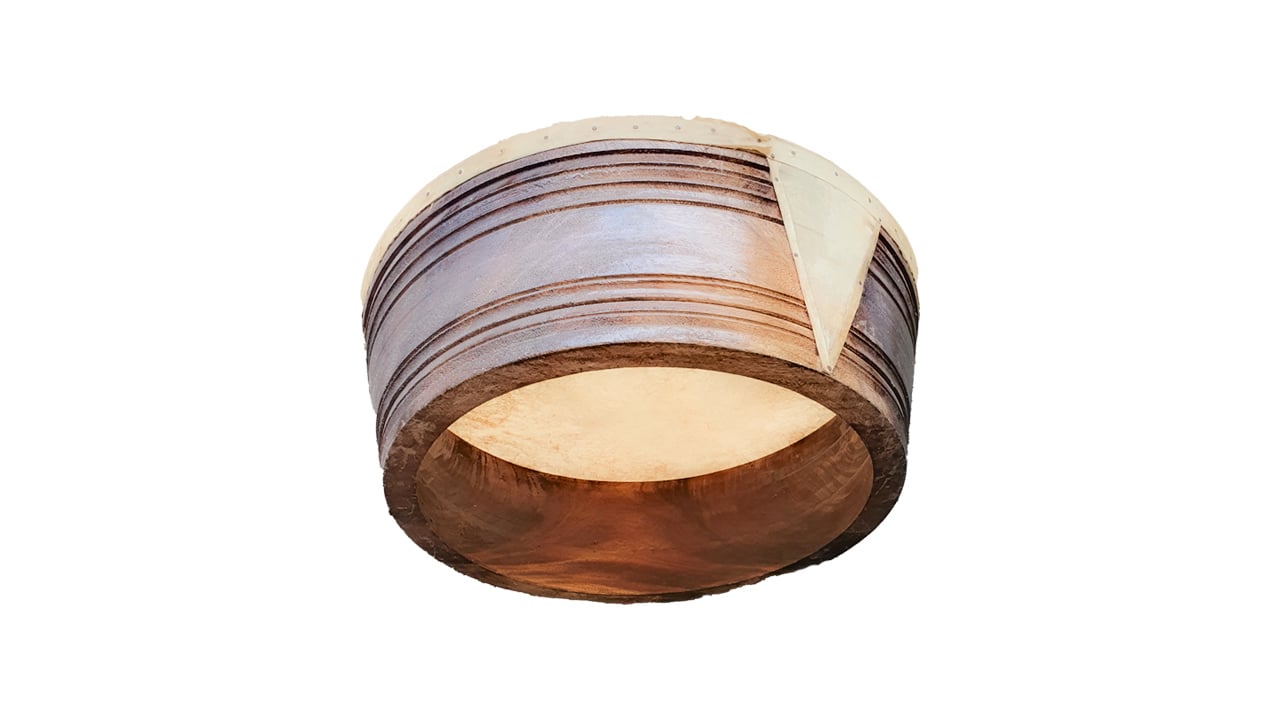
The circular frame is traditionally crafted from hardwoods that are both durable and acoustically responsive. Sooriya (Pterocarpus), Margosa (Neem), Jak, and Mara are the most commonly used timbers. The drumhead — the playing surface — is typically stretched goat skin, dried and laced tightly over the frame.
The finished drum is large: the diameter of the face ranges from roughly 24 to 48 inches depending on the maker and intended use. Rather than being set on a stand, it rests low to the ground on three short wooden trunks, positioned so that players seated around it can reach the surface comfortably from any angle.
Why is fire used to tune the drum before playing?
Tuning a skin drum is partly a matter of temperature. Before a session begins, the group leader places the Banku Rabana on its supports and kindles a fire beneath it. The gentle heat tightens the goat-skin head, raising the pitch and bringing out a clearer, more resonant tone. This pre-play ritual is both practical and ceremonial — it signals that the music is about to start and gives the community a moment to gather.
The technique is common across many traditions that use animal-skin membranes, but in the context of the Banku Rabana it carries additional cultural weight: the fire-lighting is usually the responsibility of the recognised leader of the group, reinforcing a social hierarchy around the instrument.
How is the Banku Rabana played?
Once the drum is warmed and tuned, players take their seats in a circle around it. The leader opens proceedings by singing a Raban Padhaya — a body of folksongs specific to Banku Rabana sessions, covering themes of the harvest, village life, and seasonal celebration. The verses establish the rhythmic pattern that the other players follow.
Striking technique goes well beyond open palms. Experienced players use:
- Fingers and palms for baseline rhythm and tone variation
- Elbows to produce deeper, lower-register beats
- Foreheads in more exuberant playing styles
- Bundles of coconut-palm midribs (ekels) for a sharp, percussive accent
- Bunches of keys or similar objects to add metallic texture to complex passages
As the rhythm intensifies, it is not unusual for a player to rise and dance around the circle — the physical energy of the drum simply carries people along. The Sinhala New Year season is the prime occasion for this kind of full-bodied playing.
Who traditionally plays the Banku Rabana?
The Banku Rabana has historically been associated with women, who lead the sessions and carry the main melodic lines in the Raban Padhaya. This association is strong enough that in many villages the instrument is considered a feminine space. That said, the tradition is not exclusive: men join in, particularly during large community gatherings, and the circle welcomes anyone willing to follow the rhythm. Even bystanders who never touch the drum participate — clapping, singing along, or simply being present in the communal atmosphere the instrument creates.
When and where do you encounter the Banku Rabana in Sri Lanka?
The instrument appears wherever there is joyful collective celebration. Sinhala and Tamil New Year (mid-April) is the most prominent occasion, when Banku Rabana sessions spring up in village courtyards across the Sinhala-speaking lowlands and hill country. Weddings, temple festivals, and harvest celebrations also draw the drum out. The Esala Perahera season in Kandy — while dominated by different percussion traditions — often coincides with village-level raban sessions in surrounding communities.
If you are travelling in April and want to witness a Banku Rabana session, rural areas in the Western, Sabaragamuwa, and Central Provinces offer the best chance. Village homestays and community-based tours occasionally arrange demonstrations outside the New Year period for visitors who express genuine interest.
How does the Banku Rabana differ from the Ath Rabana?
| Feature | Banku Rabana | Ath Rabana (Hand Rabana) |
|---|---|---|
| Size | 24–48 inches diameter | Typically 10–18 inches diameter |
| Playing position | Set on wooden trunks, players seated around it | Held in one hand or on the lap |
| Number of players | Several simultaneously | One player per drum |
| Vocal tradition | Raban Padhaya folksongs integral | Often played without accompanying song |
| Primary occasions | New Year, weddings, large community events | Domestic celebrations, informal gatherings |
Why does the Banku Rabana matter culturally?
In an era when amplified music dominates public events, the Banku Rabana endures because it does something a speaker system cannot: it makes every person around it a participant. The circular arrangement means there is no audience side and no performer side — only the drum at the centre and people contributing from every direction. That geometry is also a social statement about equality and shared joy.
Efforts to document and teach the Raban Padhaya repertoire are ongoing among Sri Lankan cultural organisations, recognising that the songs embedded in this tradition carry local history, agrarian knowledge, and communal values that are not recorded elsewhere. Keeping the Banku Rabana alive is, in a real sense, keeping a form of living oral literature in circulation.
Related reading
3 pages on closely related subjects.