

Asparagus racemosus — known across South Asia as shatavari, satavar, or shatamull — is a climbing shrub with deep roots in Ayurvedic and traditional medicine. In Sri Lanka, the plant goes by the name Hathawariya (හතවාරිය) and has been used in indigenous medicine for centuries. Despite its long history of use, the species now faces serious pressure in its natural range owing to habitat loss and over-harvesting.
What is Asparagus racemosus and where does it grow?
Asparagus racemosus is a perennial, woody climbing herb in the family Asparagaceae. It was formally described by the botanist William Roxburgh in 1799 and is native to a broad arc stretching from the Indian subcontinent and the Himalayas to parts of northern Australia. The plant favours gravelly or rocky soils at elevations of roughly 1,300–1,400 m (4,300–4,600 ft) on piedmont plains, where drainage is good and competition from dense forest vegetation is limited.
In Sri Lanka the species occurs in intermediate and montane zones, often found climbing through hedgerows, forest margins, and disturbed scrubland. Its slender, much-branched stems can reach 1–2 m in height when unsupported, though as a scrambling climber it regularly reaches higher when it has a host plant or structure to grip.
What does Asparagus racemosus look like?
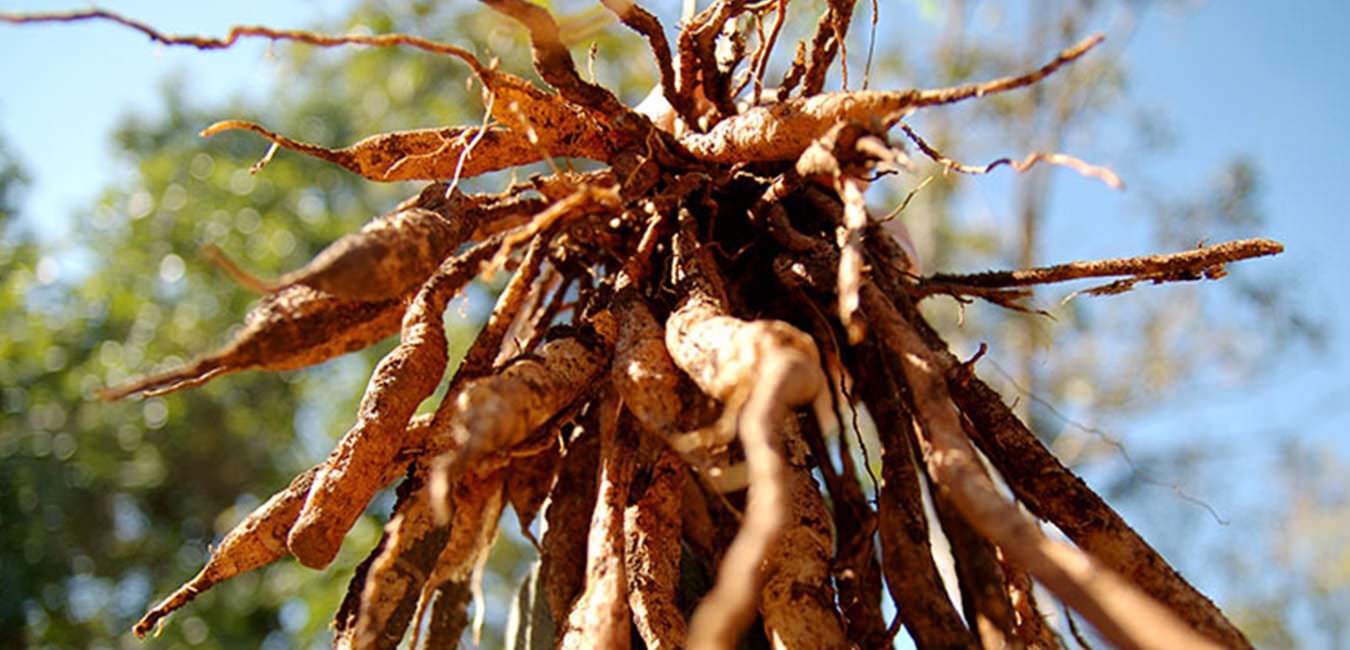
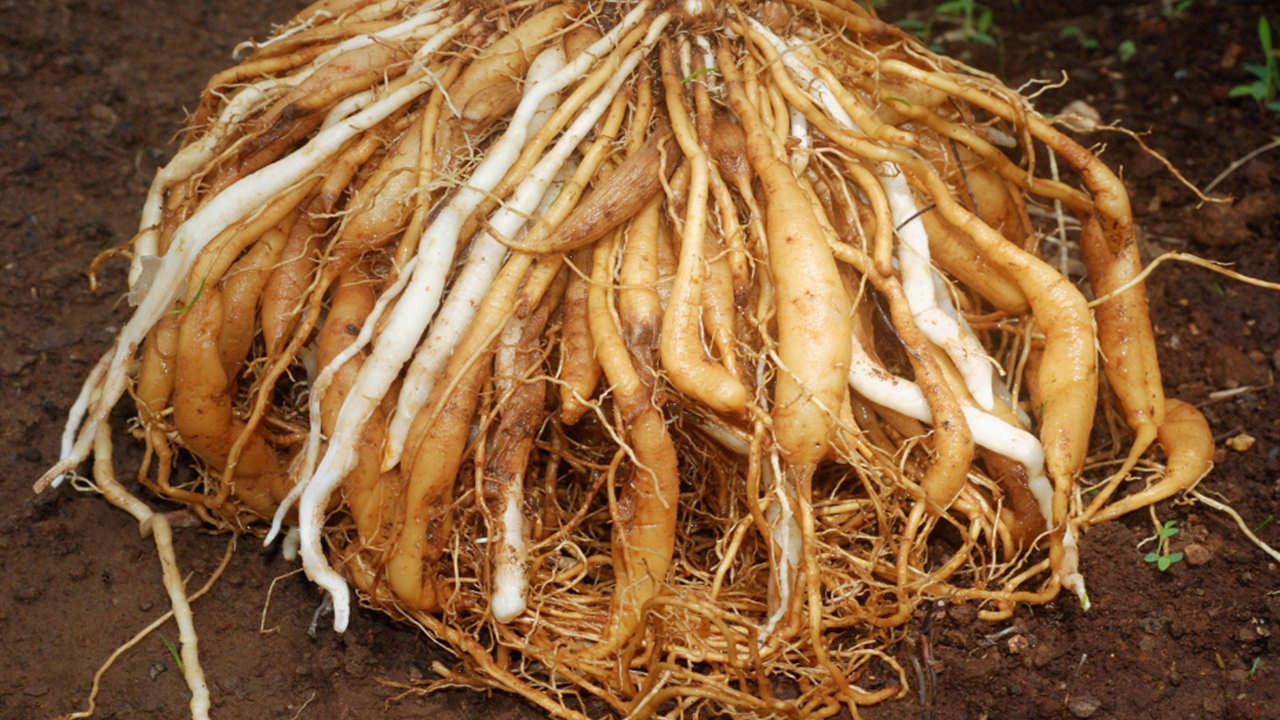
The plant produces small, pine-needle-like cladodes (modified stems that function as leaves) in clusters along its branches. These give the foliage a soft, feathery appearance. Tiny white flowers appear in racemes — the characteristic that gives the species its Latin name — and are followed by small, red to purple berries when mature. The most pharmacologically valued part of the plant is its root system: thick, succulent, tuberous roots that can grow to a considerable size and store the compounds responsible for the plant's medicinal properties.
What are the traditional and Ayurvedic uses of shatavari?
Asparagus racemosus holds a prominent place in classical Ayurvedic texts, where it is classified as a rasayana — a rejuvenating tonic that supports longevity and vitality. Practitioners have traditionally used preparations from the roots to support female reproductive health, as a galactagogue (to support milk production in nursing mothers), and as an adaptogen that may help the body manage physical stress. The roots are typically dried and powdered for use in churnas (herbal powders), decoctions, and medicated ghee.
In Sri Lanka's own system of traditional medicine, Hathawariya roots are incorporated into compound formulations used for a range of conditions. Related compound preparations found in the Ayurvedic pharmacopoeia — such as Pushyanuga Churna, which draws on multiple plant ingredients — may include shatavari among their constituents.
Modern phytochemical research has identified a class of compounds called steroidal saponins (shatavarin I–IV) as key active constituents, alongside flavonoids, alkaloids, and polysaccharides. Research interest in the plant's immunomodulatory and antioxidant properties has grown substantially, though clinical evidence in humans remains an active area of study.
Why is Asparagus racemosus considered endangered?
The demand for shatavari root — driven by both the domestic Ayurvedic industry and growing international interest in botanical supplements — has historically been met almost entirely through wild harvesting. Destructive collection practices, in which entire root systems are removed, leave no possibility for the plant to regenerate at the harvest site. Compounding this pressure, deforestation and the conversion of scrubland to agriculture have steadily reduced the natural habitat available to the species.
As a result, Asparagus racemosus is now regarded as endangered in several parts of its natural range, including portions of the Indian subcontinent. Conservation botanists and Ayurvedic industry groups have called for a shift toward cultivated supply chains, and some commercial cultivation is underway in India, though it remains modest relative to demand.
- Primary threat: Destructive wild-harvesting of roots for the herbal medicine trade
- Secondary threat: Habitat loss through deforestation and agricultural expansion
- Conservation response: Promotion of ex-situ cultivation and inclusion on conservation watch lists in several range countries
How is Asparagus racemosus cultivated?
Successful cultivation requires well-drained, sandy or loamy soil with good organic matter content. The plant does not tolerate waterlogged conditions. Propagation is generally carried out from seeds or root divisions. Under cultivation, roots are typically harvested after around 12–18 months of growth, when the tuberous root mass has developed sufficiently. Cultivated plants are often grown with a trellis or support structure to take advantage of the species' natural climbing habit and to maximise light interception.
In Sri Lanka, the species' preference for elevated, rocky terrain means it is most naturally suited to mid-country and upcountry agricultural systems, though smallholder cultivation in suitable microclimates elsewhere on the island is also practised.
How does Asparagus racemosus fit into Sri Lanka's herbal heritage?
Sri Lanka has a long, documented tradition of indigenous medicine known as Deshiya Chikitsa or Sinhala Vedakama, which draws on a rich pharmacopoeia of locally available plants. Hathawariya is one of a number of climbing and forest-margin species that have formed part of this tradition alongside better-known plants such as Acacia chundra and Pongamia pinnata. These species are often collected from forest-edge habitats shared with areas managed for biodiversity, such as the buffer zones around Sri Lanka's natural reserves.
The growing global interest in plant-based wellness has increased awareness of Sri Lanka's botanical heritage, and a number of locally produced Ayurvedic and herbal products now reach export markets. Sustainable sourcing and authenticated cultivation are increasingly important quality markers for buyers.
Quick reference: Asparagus racemosus
| Attribute | Detail |
|---|---|
| Scientific name | Asparagus racemosus Willd. |
| Common names | Shatavari, satavar, shatamull (India); Hathawariya (Sri Lanka) |
| Family | Asparagaceae |
| Native range | Indian subcontinent, Himalayas, parts of northern Australia |
| Typical height | 1–2 m unsupported; higher as a climber |
| Preferred habitat | Gravelly, rocky soils; 1,300–1,400 m elevation |
| Conservation status | Endangered in parts of natural range (wild populations) |
| Medicinal part used | Tuberous roots |
| Traditional system | Ayurveda, Siddha, Sri Lankan indigenous medicine |