



Aerva javanica is a flowering herb with deep roots in the traditional medicine systems of Sri Lanka and South Asia. Known in Ayurveda for its broad therapeutic applications, this resilient plant thrives in arid and semi-arid landscapes, often growing along roadsides, disturbed ground, and dry coastal plains. Its role in Sri Lankan herbal practice reflects centuries of accumulated botanical knowledge, making it a notable entry in the country's rich catalog of ayurvedic medicinal plants.
What is Aerva javanica and where does it grow in Sri Lanka?
Aerva javanica belongs to the family Amaranthaceae and is commonly found across the dry and intermediate zones of Sri Lanka. The plant typically grows as a perennial herb or small shrub, reaching heights of around 30 to 100 centimetres. Its stems are covered in fine woolly hairs, and it produces small white or pinkish flowers arranged in dense spikes. The leaves are simple, oval to oblong in shape, and similarly covered in soft hairs, giving the entire plant a silvery-grey appearance.
In Sri Lanka, the plant is most prevalent in the North-Western and Northern provinces, where dry scrubland and sandy soils provide its preferred growing conditions. It also appears in the dry lowland areas around the Wilpattu National Park region, often among sparse thorny scrub vegetation.
What are the traditional ayurvedic uses of Aerva javanica?
In Ayurvedic practice, different parts of Aerva javanica — including the roots, leaves, flowers, and seeds — are used for a range of medicinal purposes. The plant has historically been valued for properties that address inflammation, pain, and urinary complaints. It is also recognised in traditional systems for its potential role in managing fever and respiratory conditions.
- Anti-inflammatory: Root and leaf preparations have traditionally been applied to reduce swelling and joint discomfort.
- Urinary health: Decoctions made from the plant are used in folk medicine as a diuretic and to support kidney and bladder function.
- Fever management: Aerial parts of the plant have been used in herbal formulations intended to reduce fever.
- Wound healing: Crushed leaves or paste preparations have been applied externally on minor skin irritations and wounds in traditional practice.
- Respiratory support: Some traditional preparations include Aerva javanica for coughs and general respiratory complaints.
These uses are rooted in traditional knowledge and have attracted growing interest from researchers investigating the plant's phytochemical composition. Preliminary studies have identified alkaloids, flavonoids, and saponins among its constituents, though formal clinical validation is ongoing.
How does Aerva javanica differ from Aerva lanata?
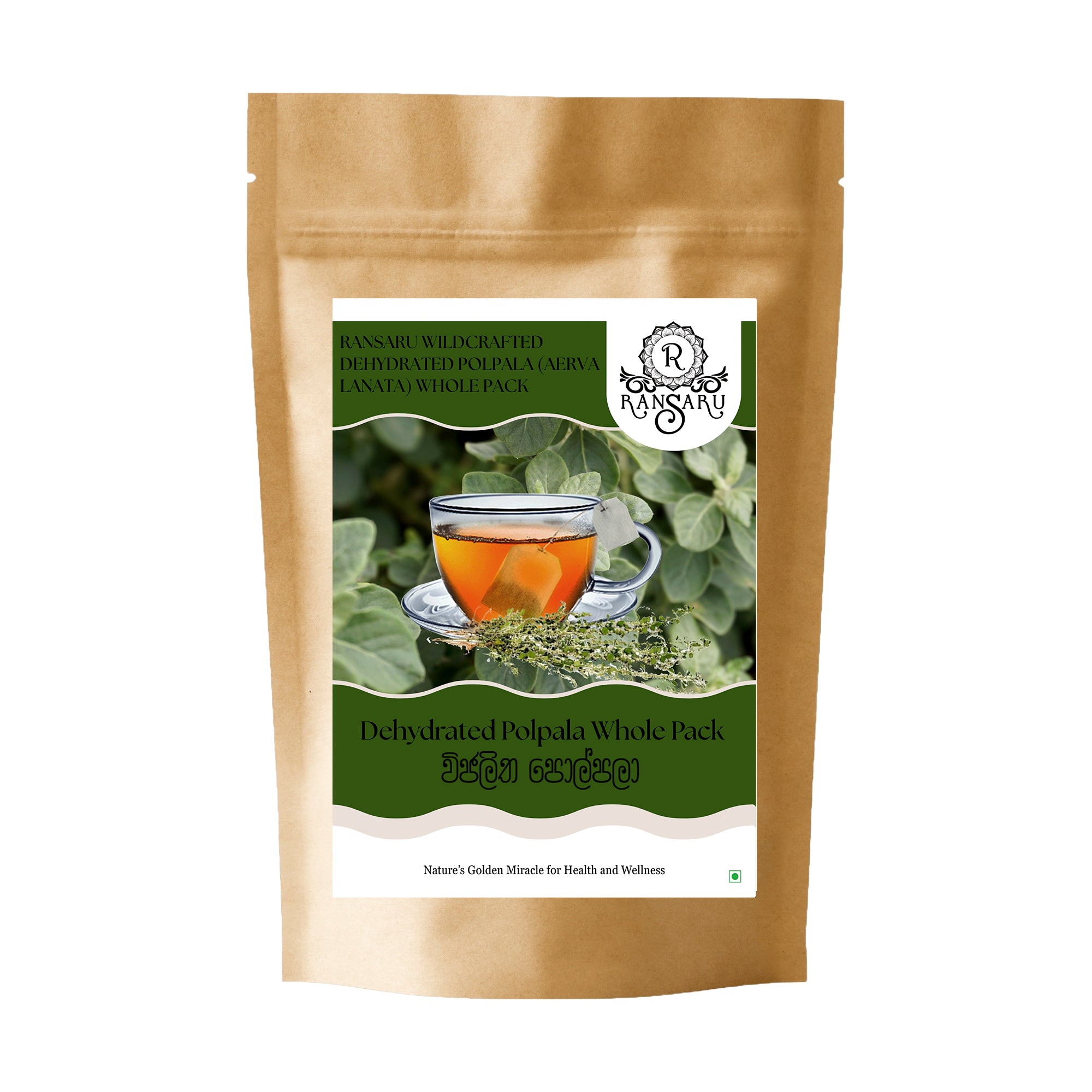
A close relative, Aerva lanata — known locally as Polpala — is arguably more widely recognised in Sri Lankan herbal medicine, particularly for its well-documented use in supporting kidney and urinary health. Polpala is commonly consumed as an herbal tea and is commercially available in dried and packaged forms across the country. Aerva javanica shares some overlapping traditional applications but is considered a distinct species with its own phytochemical profile and habitat preferences. Aerva javanica tends to favour drier, more arid conditions, while Aerva lanata is found across a broader range of climatic zones in Sri Lanka.
Both plants belong to the same genus and family, and both have their place within the Sri Lankan ayurvedic tradition. Practitioners familiar with local herbal medicine often distinguish them by leaf texture, flower colour, and growth habit, as well as by the specific conditions for which each is considered most suitable.
What is the significance of Aerva javanica in Sri Lanka's botanical heritage?
Sri Lanka's ayurvedic tradition is one of the oldest continuously practised systems of medicine in the world, drawing on a vast pharmacopoeia of native and naturalised plants. Aerva javanica is catalogued as part of this living heritage, documented by the Department of Ayurveda and referenced in traditional texts alongside other important medicinal species such as Acacia chundra and Pongamia pinnata.
The preservation of this knowledge is closely tied to Sri Lanka's forest reserves, dry-zone ecosystems, and traditional communities who have practised plant-based medicine across generations. Botanical surveys and ethnobotanical studies continue to document species like Aerva javanica to ensure this knowledge is not lost as land use patterns change.
How is Aerva javanica used in modern herbal products?
While Aerva javanica itself is primarily encountered in traditional and rural herbal practice, its close relative Aerva lanata (Polpala) has found a strong place in the modern Sri Lankan health product market. Dried herb preparations, herbal teas, and encapsulated supplements are commercially available, reflecting growing consumer interest in plant-based wellness. These products draw on the same broader genus and the cultural familiarity Sri Lankans have with Aerva species as household health remedies.
When sourcing any ayurvedic plant product, it is advisable to look for clearly labelled and quality-tested preparations from reputable suppliers to ensure correct species identification and appropriate preparation methods.
Can travellers encounter Aerva javanica while visiting Sri Lanka?
Travellers with an interest in botany or traditional medicine may encounter Aerva javanica in the dry lowland areas of Sri Lanka, particularly during visits to the northern and north-western regions. The plant is unassuming in appearance and easy to overlook among roadside scrub, but for those who know what to look for, its soft woolly texture and small flower spikes are distinctive markers. Herbal gardens attached to ayurvedic resorts and wellness centres sometimes include specimens of dry-zone medicinal plants, offering a more curated encounter with species like this one.
Sri Lanka's broader herbal and botanical landscape is rich enough to merit dedicated interest. From the spice traditions explored in areas around Syzygium aromaticum (clove) cultivation to the tea country of the hill regions, the island's plant heritage connects seamlessly with its travel experiences.
Other species in this genus
1 more, sharing the same genus.