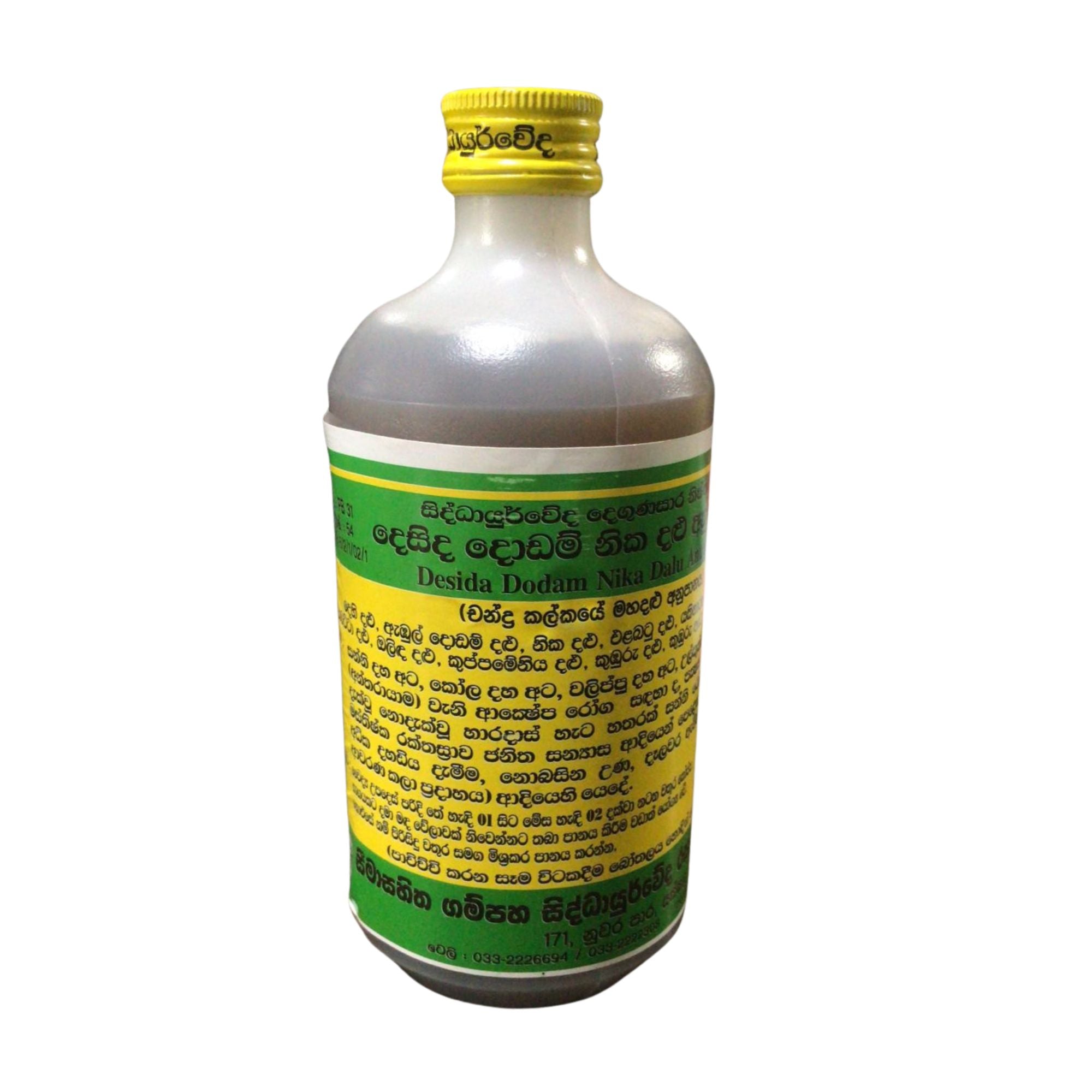
Sida alnifolia is a hardy, flowering shrub that occupies a quiet but respected place in Sri Lanka's long tradition of plant-based healing. A member of the Malvaceae family, it grows readily in tropical and subtropical conditions — along roadsides, in open grasslands, and across uncultivated land throughout the island. Its accessibility has made it a reliable herb for rural communities who have drawn on local flora for generations, long before pharmaceutical alternatives became widely available.
What is Sida alnifolia and where does it grow in Sri Lanka?
Sida alnifolia is a perennial herb or low shrub, typically reaching between 30 and 90 centimetres in height. It produces small yellow flowers characteristic of the Malvaceae family and is identifiable by its soft, somewhat downy leaves and slender stems. In Sri Lanka, it appears across the dry and intermediate zones, often thriving in disturbed soils where more demanding species struggle to establish.
Unlike cultivated Ayurvedic herbs, Sida alnifolia is generally gathered from the wild. Rural households, particularly in the North Central and Uva provinces, are among those most familiar with identifying and harvesting the plant responsibly. This ease of access has historically made it a practical choice for everyday remedies rather than a rare or ceremonial ingredient.
The plant is closely related to other Sida species, including Sida cordifolia — known as Bala in classical Ayurveda — and shares several of its therapeutic properties. Sri Lankan traditional practitioners sometimes group these species under broader category names when preparing compound herbal formulations, though each is distinguished by subtle differences in leaf shape, stem texture, and growth habit.
What are the traditional medicinal uses of Sida alnifolia?
Within Sri Lanka's system of Deshiya Chikitsa — indigenous medicine distinct from classical Indian Ayurveda, though related to it — Sida alnifolia is valued for its balya, or strength-promoting, properties. Practitioners typically use the whole plant: roots, stems, and leaves each contribute their own therapeutic character to preparations.
- Vitality and recovery: Decoctions prepared from the root are traditionally used to address general body weakness and fatigue, particularly after illness or prolonged physical exertion.
- Joint and muscle support: The plant is regarded as vata-pacifying in Ayurvedic terms — meaning it is thought to counteract conditions associated with dryness, stiffness, and pain in the joints and muscles.
- Nervous system support: Some preparations combine Sida alnifolia with other nervine herbs to support the nervous system, particularly in cases of exhaustion or stress-related depletion.
- Circulation and cooling: Its reportedly cooling and soothing nature is considered useful during periods of excessive heat or low-grade systemic inflammation — a relevant quality given Sri Lanka's warm climate.
These preparations are typically made as water-based decoctions, though the plant also appears as a dried powder mixed into compound formulations alongside herbs such as Acacia chundra or other native species used in classical Sri Lankan medicine. The approach reflects a holistic view of wellness in which combinations of plants are thought to work synergistically rather than as isolated ingredients.
How does Sida alnifolia fit into Sri Lanka's Ayurvedic tradition?
Sri Lanka's Ayurvedic tradition has evolved over more than two millennia, drawing on Indian classical texts while developing distinctly local knowledge systems. The country's biodiversity — encompassing cloud forests, coastal wetlands, dry-zone scrub, and highland grasslands — has supplied practitioners with an unusually wide pharmacopoeia of native plants.
Sida alnifolia sits within a group of herbs collectively referred to in classical texts as the Baladi gana or strengthening herbs. This grouping reflects the Ayurvedic principle of rasayana — the use of specific plants and preparations to promote rejuvenation, enhance resilience, and slow the effects of aging and depletion. While Sida alnifolia may not appear as prominently in classical Indian texts as Withania somnifera (ashwagandha) or Asparagus racemosus (shatavari), it holds a recognised place within Sri Lankan practice as an affordable and locally sourced equivalent for many of the same indications.
Traditional physicians — known as vedamahattayas — continue to practise across the island, and many retain working knowledge of plants like Sida alnifolia that formal pharmaceutical supply chains rarely stock. This practitioner knowledge is increasingly documented by Sri Lanka's Department of Ayurveda and university faculties of indigenous medicine, in recognition that such plant wisdom represents an irreplaceable cultural and scientific resource.
Is there scientific research on Sida alnifolia?
Phytochemical studies on Sida species have identified a range of biologically active compounds, including alkaloids (notably ephedrine-type compounds in some species), flavonoids, and saponins. These findings offer partial biochemical explanations for the plant's traditional uses — anti-inflammatory and antioxidant activity, for example, align with both its cooling reputation in traditional practice and more recent laboratory observations.
Research specifically on Sida alnifolia, as distinct from the more widely studied Sida cordifolia, remains limited in peer-reviewed literature. Most existing studies focus on in vitro (laboratory) assessments rather than clinical trials. This is not unusual for indigenous plants: the gap between traditional use and formal clinical validation is common across Ayurvedic botanicals, and it does not diminish the centuries of empirical evidence embedded in traditional knowledge.
Institutions such as the Institute of Indigenous Medicine at the University of Colombo and the Gampaha Wickramarachchi Ayurveda Institute have been active in documenting Sri Lankan medicinal plants. Their work supports the broader effort to ensure traditional knowledge is preserved and, where appropriate, validated for contemporary healthcare contexts.
How is Sida alnifolia connected to Sri Lanka's broader herbal economy?
Sri Lanka has historically been one of Asia's most significant exporters of medicinal plant material, alongside its more famous crops of Ceylon black pepper, cinnamon, and tea. The herbal products sector — which encompasses raw dried plant material, essential oils, Ayurvedic preparations, and finished wellness products — continues to grow as global consumer interest in plant-based wellness increases.
Wild-harvested plants like Sida alnifolia contribute to this economy in a diffuse way: they are gathered by smallholders and intermediaries, often sold at rural markets or supplied to Ayurvedic pharmacies and manufacturers. The sustainability of this supply chain depends on traditional harvesting practices that avoid over-extraction — knowledge that is itself a form of ecological stewardship passed down through generations.
For travellers visiting Sri Lanka with an interest in Ayurveda or traditional medicine, the island offers numerous opportunities to engage with this heritage directly. Ayurvedic wellness retreats, traditional medicine villages, and botanical garden tours provide context for plants like Sida alnifolia that are rarely visible in standard tourism itineraries but form an important part of Sri Lanka's living cultural landscape.
What should visitors know about Sri Lanka's medicinal plant heritage?
Sri Lanka's commitment to traditional medicine is institutional as well as cultural. The government maintains a dedicated Ministry of Indigenous Medicine, and Ayurveda, Siddha, Unani, and homeopathic systems are all formally recognised alongside Western medicine. Ayurvedic hospitals, government dispensaries, and university faculties operate nationwide.
For visitors, the most accessible entry points to this tradition are wellness retreats in the hill country or southern coastal areas, visits to botanical gardens such as the Royal Botanic Gardens in Peradeniya, and guided walks through natural areas where medicinal plants grow in their native habitats. The Sinharaja Forest Reserve, a UNESCO World Heritage Site, offers one such context — a biodiversity hotspot where endemic flora, including many plants used in traditional medicine, can be observed in a protected setting.
Purchasing Ayurvedic products made with local plants like Sida alnifolia directly from certified producers or registered practitioners ensures quality and supports the local economy. Travellers are advised to seek products from licensed manufacturers or institutions affiliated with Sri Lanka's Department of Ayurveda to ensure both safety and authenticity.
Other species in this genus
6 more, sharing the same genus.