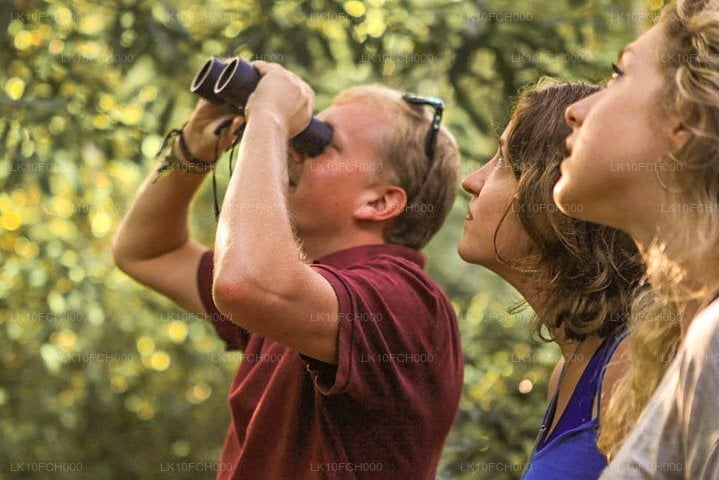
Sri Lanka sits at a confluence of migratory flyways in the Indian Ocean, making it a rewarding destination for seabird enthusiasts. From the storm-battered headlands of the south coast to the sheltered lagoons of the northwest, the island offers genuine encounters with pelagic and near-shore species that rarely attract the attention they deserve. Whether you are scanning the horizon from a whale-watching boat off Dondra Head or walking the tide line at a coastal wetland, seabird watching in Sri Lanka rewards patience with sightings that are difficult to match elsewhere in South Asia.
What seabirds can you see in Sri Lanka?
Sri Lanka's seabird list is shaped by three overlapping communities: resident coastal breeders, seasonally visiting waders and terns, and true oceanic pelagics that appear well offshore. Key species to look for include:
- Bridled Tern — breeds on rocky islets and is regularly seen from boats crossing the Palk Strait and the waters south of Dondra.
- Lesser Noddy and Brown Noddy — both recorded from offshore boat trips, particularly during the south-west monsoon period.
- Great Frigatebird — an occasional but spectacular visitor to the southern and eastern coasts.
- Wilson's Storm Petrel — a long-distance migrant that appears over deeper water during the northern winter.
- Little Tern, Whiskered Tern, and Gull-billed Tern — common around coastal lagoons, estuaries, and rice paddies, especially from October to March.
- Caspian Tern and Greater Crested Tern — large, conspicuous terns regularly seen along the west and south coasts.
- Black-headed Gull — the most frequently encountered gull, wintering in harbours and along beaches from November to March.
- Brown Booby — seen from deep-sea fishing boats and occasionally resting on buoys and channel markers.
Resident waterbirds such as the Indian Cormorant, Little Cormorant, and various herons are abundant at every coastal wetland and often appear alongside genuine seabirds, making any lagoon visit productive even outside the main migratory windows.
Where are the best spots for seabird watching in Sri Lanka?
The most reliable locations combine coastal access with productive feeding grounds nearby.
Kalpitiya Peninsula
The narrow strip of land separating Puttalam Lagoon from the open sea concentrates terns, waders, and occasional boobies, especially between November and March. Boat trips arranged from the peninsula's fishing villages put you in range of species that rarely come to shore. Dolphin-watching excursions from Kalpitiya often pass feeding flocks of terns, adding seabird encounters to a marine mammal outing.
Muthurajawela Marsh, Negombo
This brackish wetland north of Colombo holds large numbers of wintering terns and waders alongside resident cormorants and herons. A guided boat ride through the marsh channels is the most effective way to cover the area without disturbing roosting birds. The proximity to Negombo makes it an easy half-day addition to any west-coast itinerary.
Bundala National Park
Bundala's lagoons and saltpans on the south coast host internationally significant concentrations of Greater and Lesser Flamingo alongside terns, skimmers, and occasional rarities blown in from the Indian Ocean. The park is recognised as a Ramsar Wetland of International Importance. Early mornings in the dry season (January–April) typically produce the largest counts.
Anawilundawa Sanctuary
A coastal wetland reserve on the north-west coast, Anawilundawa protects a mosaic of mangroves, freshwater tanks, and brackish channels that attract an impressive range of waterbirds, including several tern species and occasional pelagic visitors after storms. Birding here is done on foot along well-maintained paths, making it accessible even for travellers without specialist experience.
Offshore — South and East Coast Boat Trips
The most reliable way to encounter true pelagic seabirds is to head offshore. Whale-watching boats departing from Mirissa, Weligama, Tangalle, and Trincomalee regularly pass flocks of storm petrels, boobies, and noddies. Arranging a dedicated deep-sea fishing trip is another practical route to pelagic waters, particularly along the south-east shelf edge where upwellings attract baitfish and the birds that follow them.
Madu Ganga Estuary
The Madu Ganga estuary near Balapitiya is best known for its mangrove ecosystem, but the tidal channels also shelter kingfishers, herons, and terns that work the fish-rich waters. A river safari here combines seabird and waterbird watching in a single outing.
When is the best time to go seabird watching in Sri Lanka?
Sri Lanka has two distinct monsoon seasons that affect where and what you can see.
| Period | Best coast | Highlights |
|---|---|---|
| November – March | West & South | Peak migratory terns and gulls; calm seas for offshore boat trips; Flamingos at Bundala |
| April – September | East & North-east | Calmer waters in the east; Trincomalee whale-watching opens; breeding terns on rocky islets |
| Year-round | All coasts | Resident cormorants, herons, Little Terns; inland waterbirds at protected lagoons |
The transitional months of April and October can produce unusual sightings as migrants move through, but sea conditions are often unsettled and offshore trips may be unreliable.
How do seabird watching trips in Sri Lanka work?
Most seabird watching in Sri Lanka is woven into broader wildlife activities rather than sold as a standalone experience. There are several practical approaches:
- Join an organised whale-watching or dolphin-watching boat trip — these regularly depart from Mirissa, Weligama, Tangalle, and Trincomalee. Bring binoculars and position yourself at the bow for the best scanning angle.
- Book a dedicated birdwatching tour — multi-day itineraries covering coastal wetlands, offshore excursions, and forest birding exist and can be tailored to include seabird-priority sites such as Bundala, Kalametiya, and the Kalpitiya Peninsula.
- Combine with a mangrove or river safari — estuary boat trips at Madu Ganga or Kalametiya Sanctuary cover near-shore species efficiently in a short time window.
- Self-drive coastal birding — the southern coastal road between Colombo and Hambantota passes multiple productive spots; a car and driver arranged through a DMC gives you the flexibility to stop wherever activity is sighted.
What equipment should I bring for seabird watching?
Seabirds at sea are typically distant, fast-moving, and affected by glare. A minimum kit recommendation would be 8×42 or 10×42 waterproof binoculars and, for offshore trips, a 20–60x spotting scope if deck space allows. A field guide covering the birds of Sri Lanka and the wider Indian Ocean is useful; Craig Robson's A Field Guide to the Birds of South-East Asia covers many relevant species, though a Sri Lanka-specific title will be more practical for resident and endemic context. Polarised sunglasses reduce sea-surface glare considerably on open-water trips.
Are there guided seabird watching tours available?
Lakpura offers a range of guided birding tours that include coastal and wetland seabird watching alongside Sri Lanka's celebrated forest endemics. These range from short sanctuary walks at sites such as Anawilundawa and Kalametiya to comprehensive multi-day circuits of the island. All departures use experienced local guides who hold a detailed knowledge of seasonal movements and reliable seabird locations. Custom itineraries are available for serious listers who want to prioritise offshore pelagic excursions.
Related reading
9 pages on closely related subjects.