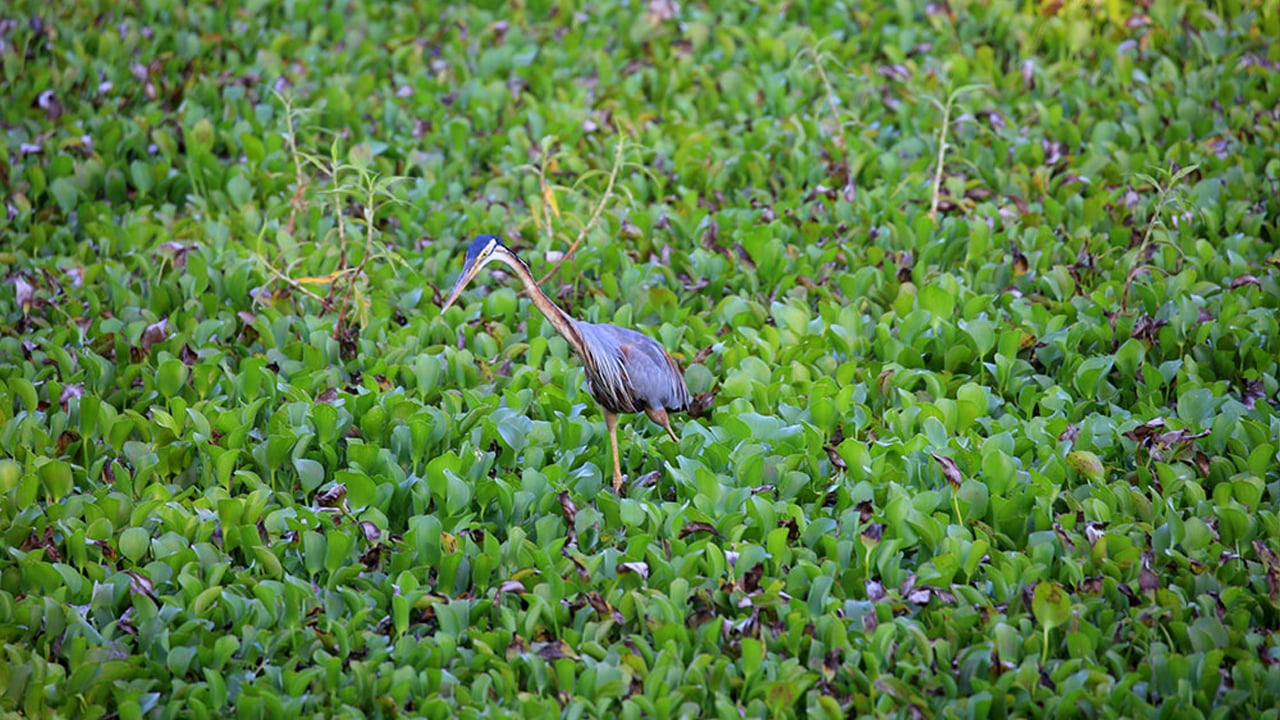
Tucked into the coastal belt between Negombo and Puttalam, Anawilundawa Wetland Sanctuary sits where three distinct ecosystems converge: freshwater and mangrove wetlands, a saltwater coastal zone, and a network of ancient irrigation tanks. Covering around 1,397 hectares, this relatively little-visited reserve was designated a RAMSAR Wetland — international recognition reserved for sites of exceptional ecological importance. For birders and naturalists, it is one of the northwest coast's most rewarding half-day stops.
What makes Anawilundawa ecologically significant?
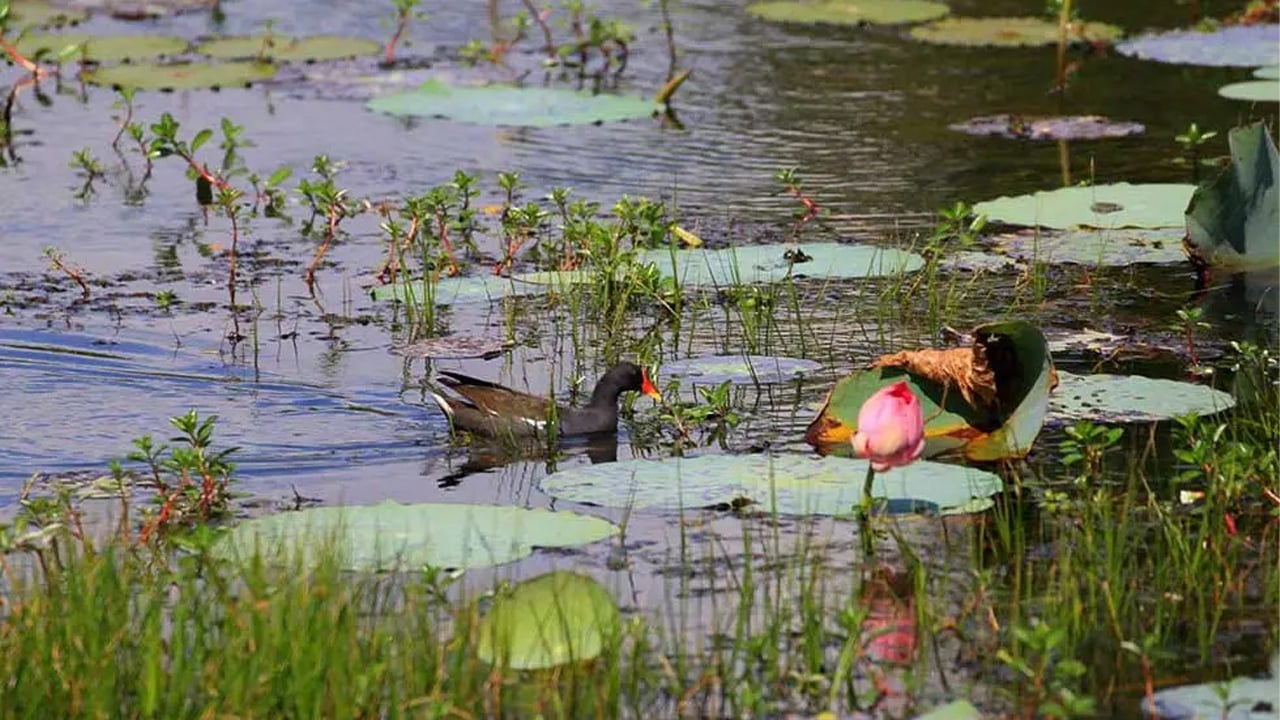
Few wetlands in Sri Lanka manage to pack so many habitat types into a single boundary. Forested wetlands — including mangrove swamps and freshwater swamps — sit alongside brackish coastal margins and a cascade of man-made freshwater tanks. This mosaic creates conditions that support an unusually wide range of species, and the Madu Ganga estuary to the south illustrates how productive these northwest coastal wetland systems can be.
According to the RAMSAR listing, the sanctuary supports up to 40% of the vertebrate species found in Sri Lanka, and its waters harbour roughly 50% of the country's freshwater fish species, including at least three species found nowhere else. The tanks reach only three to four metres in depth, making them highly productive for zooplankton and phytoplankton — the base of the food chain that sustains fish, waterbirds, and larger fauna alike.
What is the history behind the sanctuary's tanks?
The six principal tanks — Pinkattiya, Maradansola, Anawilundawa, Mayyawa, Surawila, and Vellawali — are not natural lakes. They form part of an ancient cascading irrigation system that dates to the 12th century AD, built to water traditional paddy fields and sustain islands of natural vegetation in an otherwise dry landscape. Three peripheral tanks supplement the network.
The original waterways that connected the tanks have long since disappeared, but the tanks themselves remain functional. Today they are fed by floodwater from the Deduru Oya river, transferred via the Sengaloya scheme. Beyond irrigation, the tanks historically served as flood buffers, helped recharge underground aquifers, filtered sediment and pollutants, and regulated nutrient flows — roles they continue to perform today.
What birds can I see at Anawilundawa?
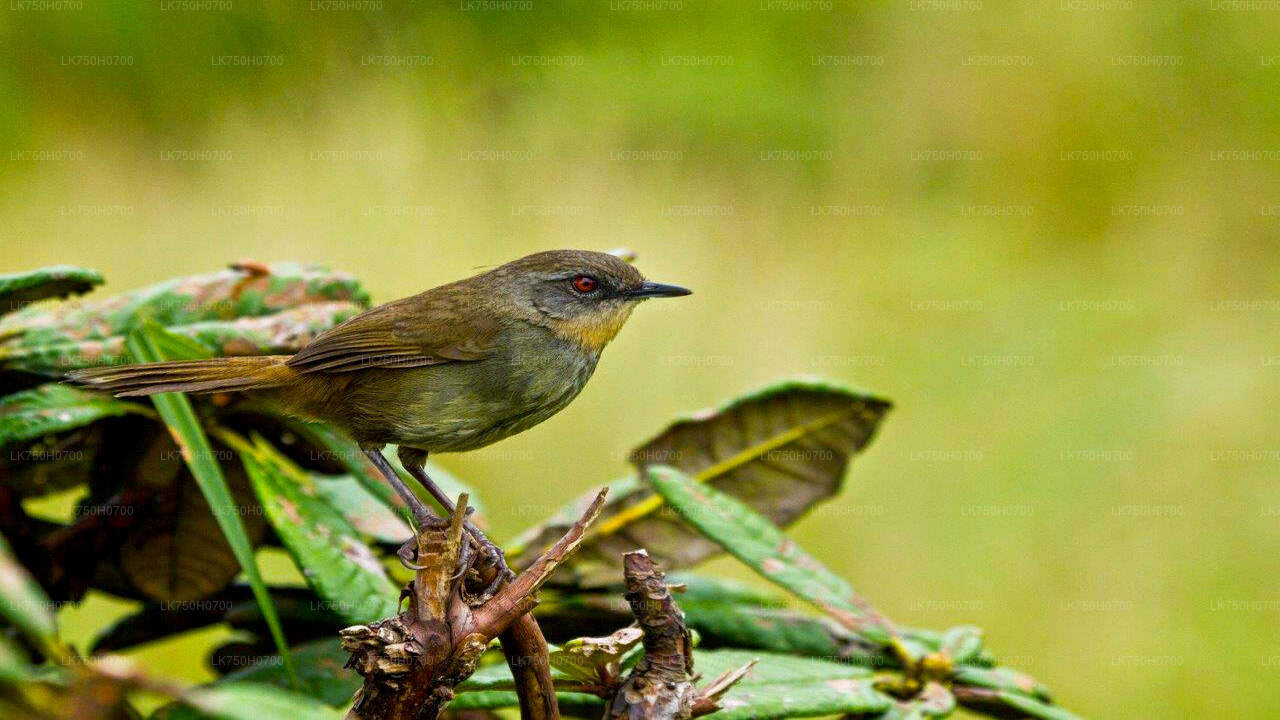
Over 150 bird species have been recorded here, a figure that includes both year-round residents and seasonal migrants. Resident and endemic species are present throughout the year, but the October-to-April window is when migratory species arrive from Central and South Asia, often bringing rare sightings. The sanctuary is a known nesting site for several waterbird colonies.
- Cormorants (including less-common species)
- Egrets and herons in multiple species
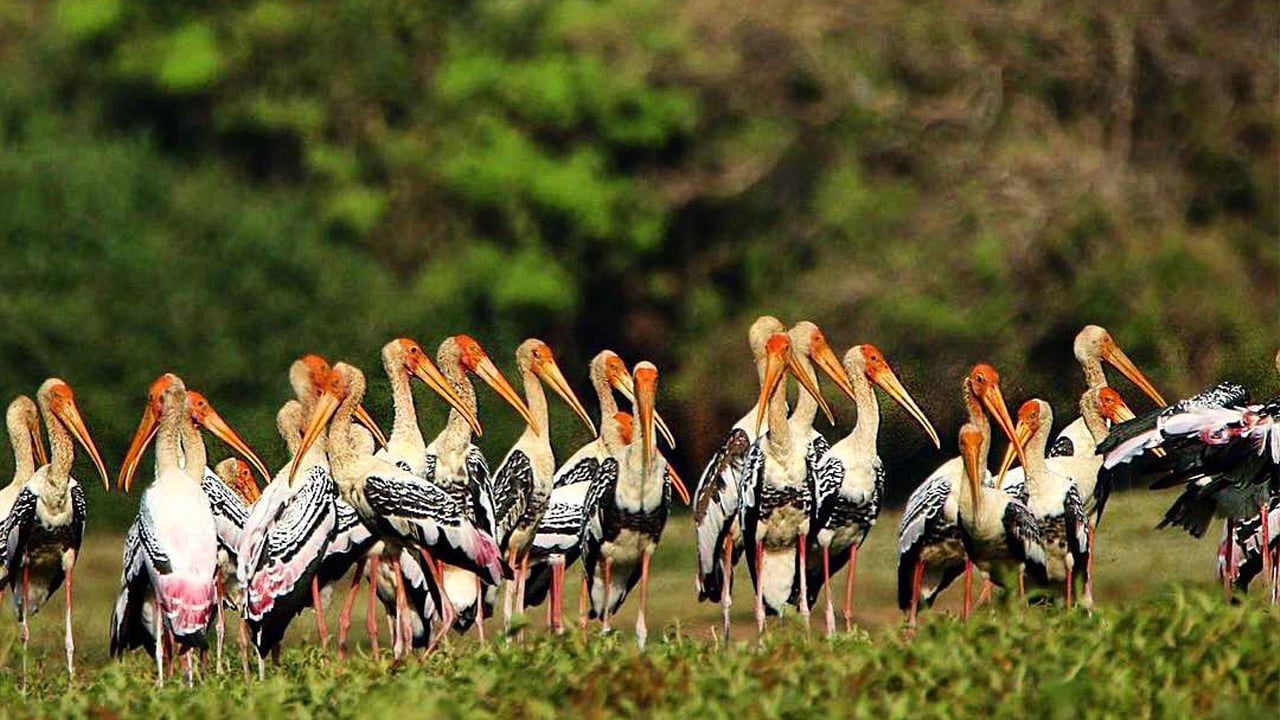
- Painted storks and open-billed storks
- Ibis species
- Pheasant-tailed jacana
- Purple swamphen
- Spot-billed pelican
- A wide range of waders and ducks during the northern winter
Early morning visits — typically between 06:00 and 09:00 — offer the best light and the highest activity levels. The flat, open tank margins give good sightlines without dense vegetation obscuring the birds.
What other wildlife is present?
Beyond birds, Anawilundawa is home to more than 20 mammal species. The Toque Macaque monkey is frequently spotted near the tank margins. Five threatened mammal species have been recorded within the sanctuary, though the specific species are best confirmed with a local guide who knows current activity patterns.
The wetlands also support an important community of reptiles — the RAMSAR documentation specifically notes reptiles as a highlight — as well as amphibians and a diverse fish fauna. The shallow, productive waters make the tanks particularly good habitat for freshwater species that are increasingly pressured elsewhere in Sri Lanka.
When is the best time to visit Anawilundawa?
The sanctuary is accessible year-round, but the peak season for wildlife observation runs from October to April. During these months, migratory birds from Central Asia, the Himalayas, and Eastern Europe swell the resident population considerably. The dry season also keeps the access tracks passable and reduces the risk of leeches in the vegetation.
If endemic and resident species are the priority, visits outside the monsoon months (roughly May to September) are still productive. The tanks hold water through most of the year because of the Deduru Oya supply scheme, so waterbirds are rarely absent.
How do I get to Anawilundawa from Colombo?
Anawilundawa lies on the coastal road (A3) between Negombo and Chilaw, close to the small town of Iranawila. From Colombo, the drive is roughly 70–80 km and takes around 90 minutes to two hours depending on traffic through the Negombo corridor. A private vehicle or a Negombo day tour that continues north along the coast is the most convenient approach; public transport serves the route but stops short of the sanctuary entrance itself.
The sanctuary is often combined with a visit to the nearby Iranawila coastal area or the historic Dutch Fort in Negombo, making it easy to build a full day on the northwest coast.
Is Anawilundawa suitable for first-time birders?
Yes. The open tank landscapes mean birds are visible at distance without specialist optics, and the variety of large waterbirds — egrets, storks, cormorants — is immediately impressive even for visitors with no prior birdwatching experience. A guide who can identify species by call and point out less obvious residents adds significant value, particularly for anyone wanting to tick endemic species off a list. Lakpura's guided walks and boat-based tours of the sanctuary are structured to work for both beginners and experienced birders.
Practical information
| Detail | Notes |
|---|---|
| Location | Northwest coast, near Iranawila, between Negombo and Chilaw |
| Total area | Approximately 1,397 hectares |
| RAMSAR designation | Yes — internationally listed wetland of importance |
| Number of tanks | Six primary tanks, three peripheral tanks |
| Bird species recorded | Over 150 (resident and migratory) |
| Best visiting season | October to April for migratory species |
| Recommended start time | Dawn (around 06:00) for optimal bird activity |
| Distance from Colombo | Roughly 70–80 km via A3 coastal road |
Nearby places
9 places within about 25 km, nearest first.
Related reading
6 pages on closely related subjects.