Tucked inside the Battaramulla suburb of greater Colombo, the Talangama Wetland is one of Sri Lanka's most accessible yet genuinely wild natural spaces. The lake at its centre was built centuries ago as an irrigation reservoir, but over time the surrounding marshes, paddy fields, canals, and ponds evolved into a layered ecosystem that now supports an extraordinary range of wildlife — all within roughly 45 minutes of the city's commercial heart.
What exactly is a wetland?
The Ramsar Convention — the international treaty governing wetland conservation — defines a wetland as any area of marsh, fen, peatland, or water, whether natural or artificial, permanent or temporary, fresh, brackish, or saline. That broad definition captures exactly what Talangama is: a mosaic of open water, floating vegetation, emergent reeds, and cultivated paddy that together perform vital ecological services.
Wetlands absorb floodwater, filter runoff, sequester carbon, and stabilise shorelines. In a rapidly urbanising corridor like the Colombo metropolitan area, Talangama's continued existence matters beyond birdwatching — it acts as a green buffer for communities downstream.
What wildlife can you see at Talangama Wetland?
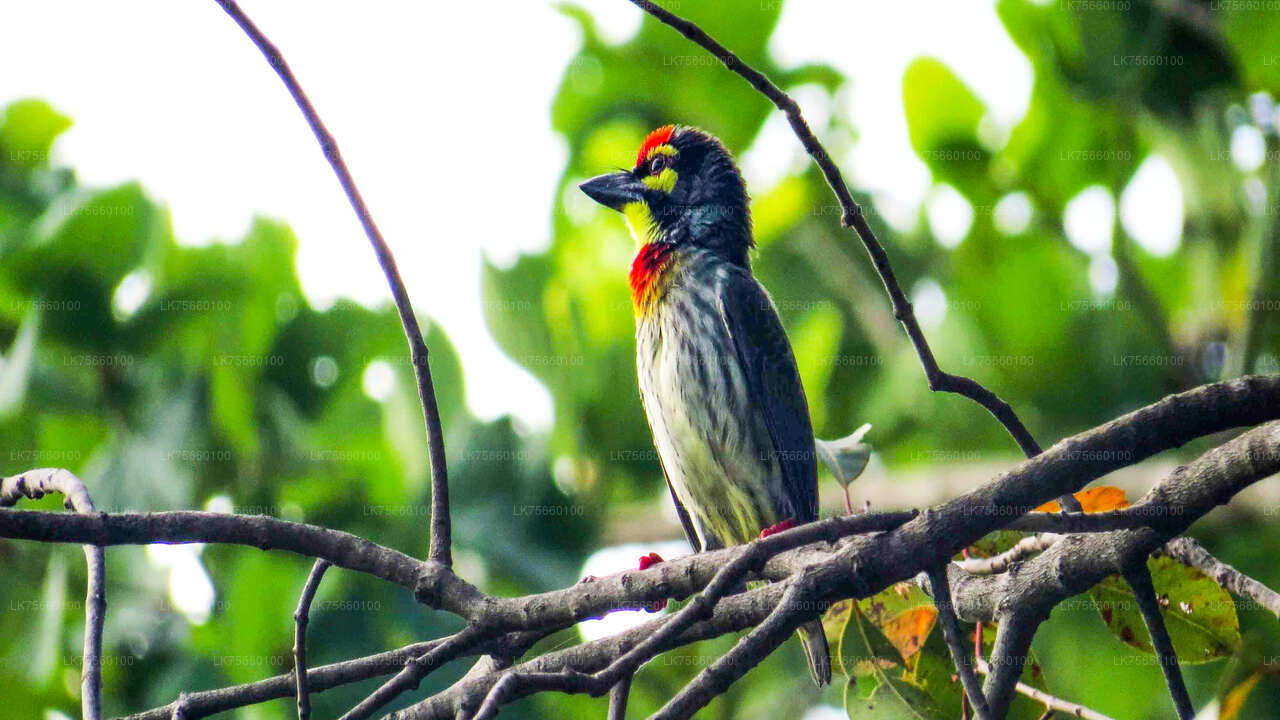
The site is best known for birds, with confirmed sightings of well over 100 species across resident, migratory, and vagrant categories. Waterbirds dominate: herons, egrets, ibises, kingfishers, and rails are almost guaranteed on any morning visit. The list below captures confirmed regulars.
Waterbirds and waders
- Purple Swamphen, White-breasted Waterhen, Common Moorhen
- Pheasant-tailed Jacana, Black-winged Stilt
- Little Grebe, Little Cormorant, Oriental Darter
- Cattle Egret, Little Egret, Intermediate Egret
- Purple Heron, Grey Heron, Indian Pond Heron, Black-crowned Night-Heron
- Asian Openbill, Painted Stork, Black-headed Ibis, Glossy Ibis
- Lesser Whistling Teal, Cotton Pygmy-Goose
- Common Sandpiper, Marsh Sandpiper, Wood Sandpiper, Common Redshank, Common Greenshank
- Pintailed Snipe, Curlew Sandpiper, Kentish Plover, Lesser Sand Plover
Kingfishers and bee-eaters
- Pied Kingfisher, Common Kingfisher, White-throated Kingfisher, Stork-billed Kingfisher
- Little Green Bee-eater, Blue-tailed Bee-eater
Raptors
- Oriental Honey-buzzard, Shikra, Crested Serpent Eagle
Forest and garden birds
- Rose-ringed Parakeet, Asian Koel, Greater Coucal, Indian Scops-Owl, Brown Hawk-Owl
- Indian Pitta, Asian Paradise-Flycatcher, Black-hooded Oriole
- White-browed Bulbul, Yellow-billed Babbler, Dark-fronted Babbler
- Black-rumped Flameback, Indian Pygmy Woodpecker
- Barn Swallow, Indian Swiftlet, Forest Wagtail, Yellow Wagtail
- White-backed Munia, Black-headed Munia
Dragonflies and damselflies
The wetland supports a rich odonate community, including several species not easily observed elsewhere near Colombo.
- Blue-eyed Pondcruiser (Epophthalmia vittata)
- Rapacious Flangetail (Ictinogomphus rapax)
- Sombre Lieutenant (Brachydiplax sobrina)
- Spine-legged Redbolt (Rhodothemis rufa)
- Scarlet Basker (Urothemis signata)
- Green Skimmer (Orthetrum sabina)
- Sapphire Flutterer (Rhyothemis triangularis)
- Yellow Waxtail (Ceriagrion coromandelianum)
- Painted Waxtail (Ceriagrion cerinorubellum)
Reptiles, amphibians, and mammals
Beyond birds and insects, the wetland shelters a surprising range of vertebrates. The Water Monitor — Sri Lanka's largest lizard — is commonly seen basking along canal banks. The Purple-faced Leaf Monkey, listed as endangered, forages in canopy patches bordering the marsh. Less frequently encountered but recorded are the Fishing Cat, Common Palm Civet, Brown Mongoose, Indian Porcupine, and Otter.
When is the best time to visit Talangama Wetland?
Early morning — ideally between 6 a.m. and 9 a.m. — delivers the highest bird activity and the best light for photography. Most waterbirds are actively feeding before the sun climbs and heat haze sets in. The wetland is productive year-round, but the northeast monsoon season (roughly October to February) brings additional migratory waders and ducks from Central Asia and the Indian subcontinent, significantly expanding the species count.
Weekday visits are noticeably quieter than weekends, when recreational joggers and cyclists share the perimeter path. If seeing shyer species such as the Black Bittern or Purple-faced Leaf Monkey is a priority, a weekday dawn visit is worth the early alarm.
What activities are available at Talangama Wetland?
| Activity | Best time of day | Notes |
|---|---|---|
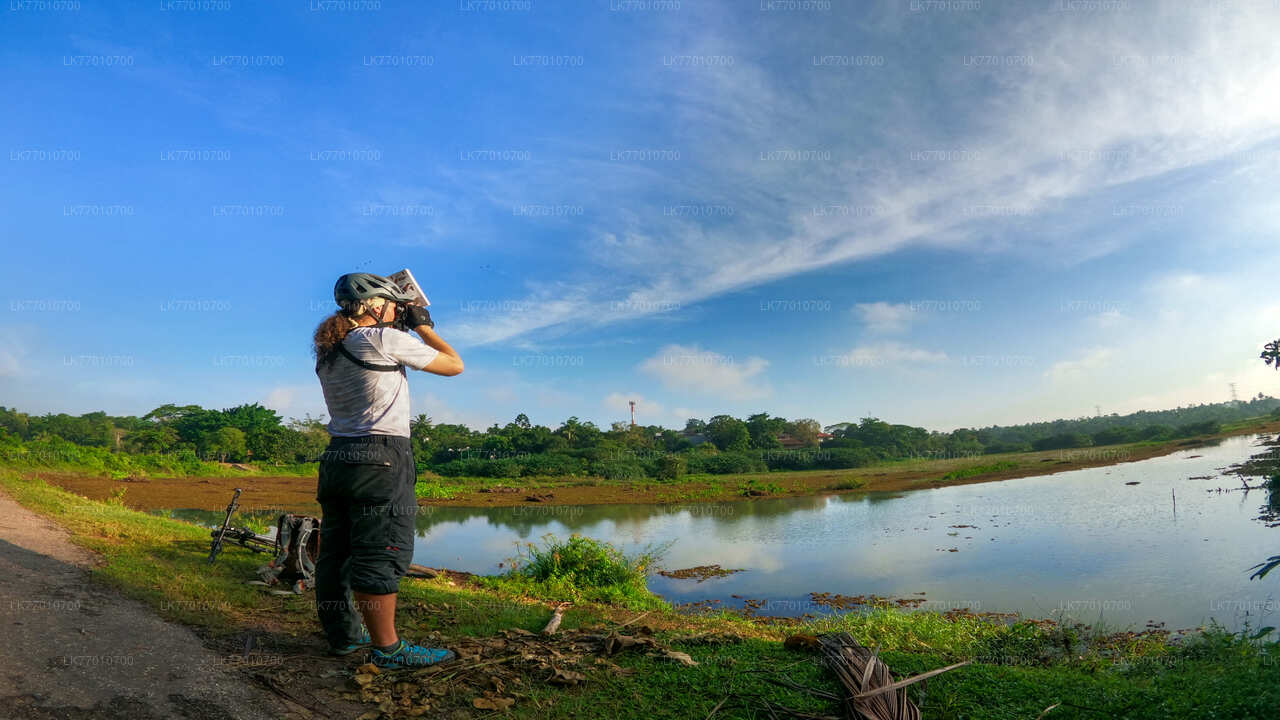
| Birdwatching | Dawn to mid-morning | Binoculars and a field guide recommended; average half-day count 60–70 species |
| Cycling | Early morning or late afternoon | Flat perimeter paths suit casual riders; road bikes and mountain bikes both manageable |
| Dragonfly and butterfly watching | Mid-morning onwards | Best after the dew lifts; odonates peak in warmer, drier months |
| Nature walking / jogging | Any time of day | Paved and gravel paths encircle much of the lake |
The Colombo city tour circuit can be extended to include a morning session at Talangama for travellers who want a contrast between urban and natural Sri Lanka on the same day.
How do I get to Talangama Wetland from Colombo?
The wetland sits in the Battaramulla area, approximately 12–15 km east of Colombo Fort. By car or tuk-tuk the journey typically takes 30–45 minutes depending on traffic, which can be heavy during peak hours on the Rajagiriya corridor. Rideshare apps operate reliably to this area. Visitors joining a guided tour are usually collected from their Colombo or Mount Lavinia hotel, eliminating the navigation challenge entirely.
Is Talangama Wetland suitable for children and beginners?
Yes. The flat terrain, accessible paths, and proximity to the city make it one of the most beginner-friendly birdwatching sites in Sri Lanka. Children respond well to the kingfishers and jacanas, which tend to be bold and easy to observe at close range. Experienced naturalists will still find the site rewarding, particularly for its dragonfly diversity and the chance of Fishing Cat in the right season.
Conservation status and etiquette
Talangama Lake and its surrounding wetlands are recognised as an Important Bird and Biodiversity Area (IBA) by BirdLife International. The site faces ongoing pressure from urban encroachment and water pollution. Visitors are asked to stay on established paths, avoid disturbing nesting waterbirds, and take all litter out with them. No collection of plants, insects, or animals is permitted.
For those interested in how Sri Lanka manages its more expansive natural areas, the Sinharaja Forest Reserve — a UNESCO World Heritage Site — represents the country's approach to protecting lowland rainforest at a landscape scale.
Nearby places
12 places within about 25 km, nearest first.
Related reading
2 pages on closely related subjects.