
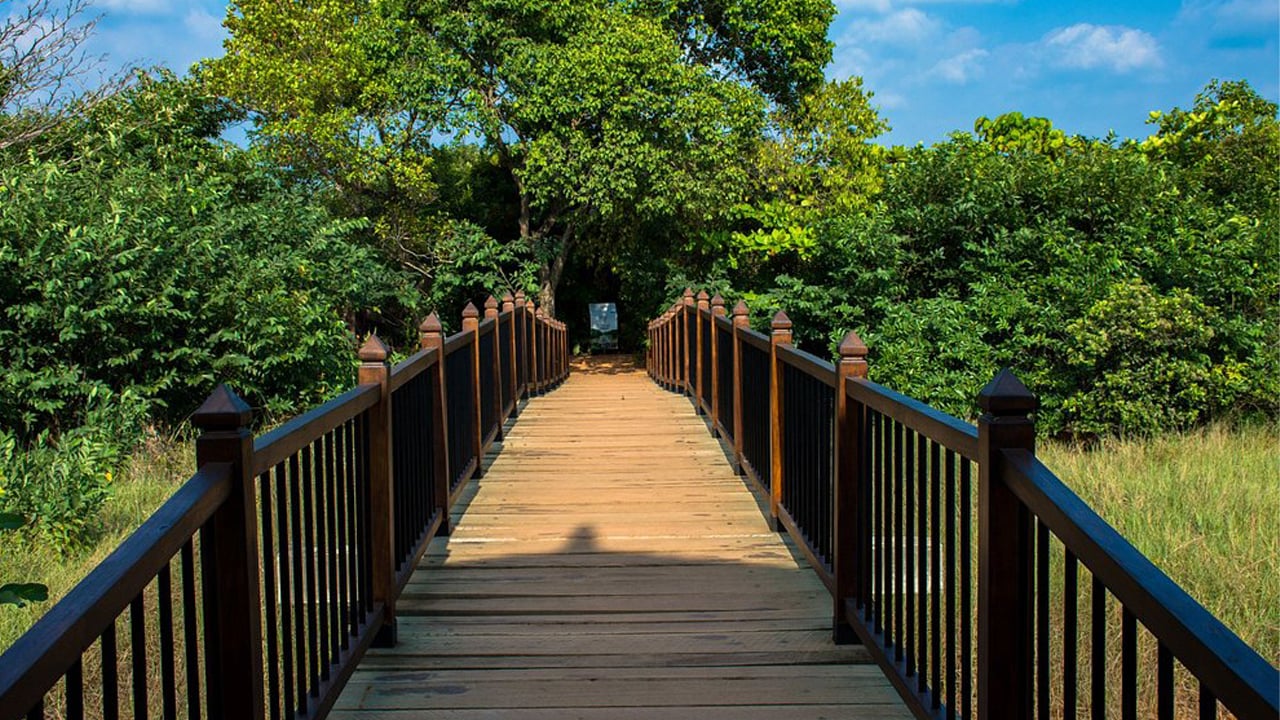
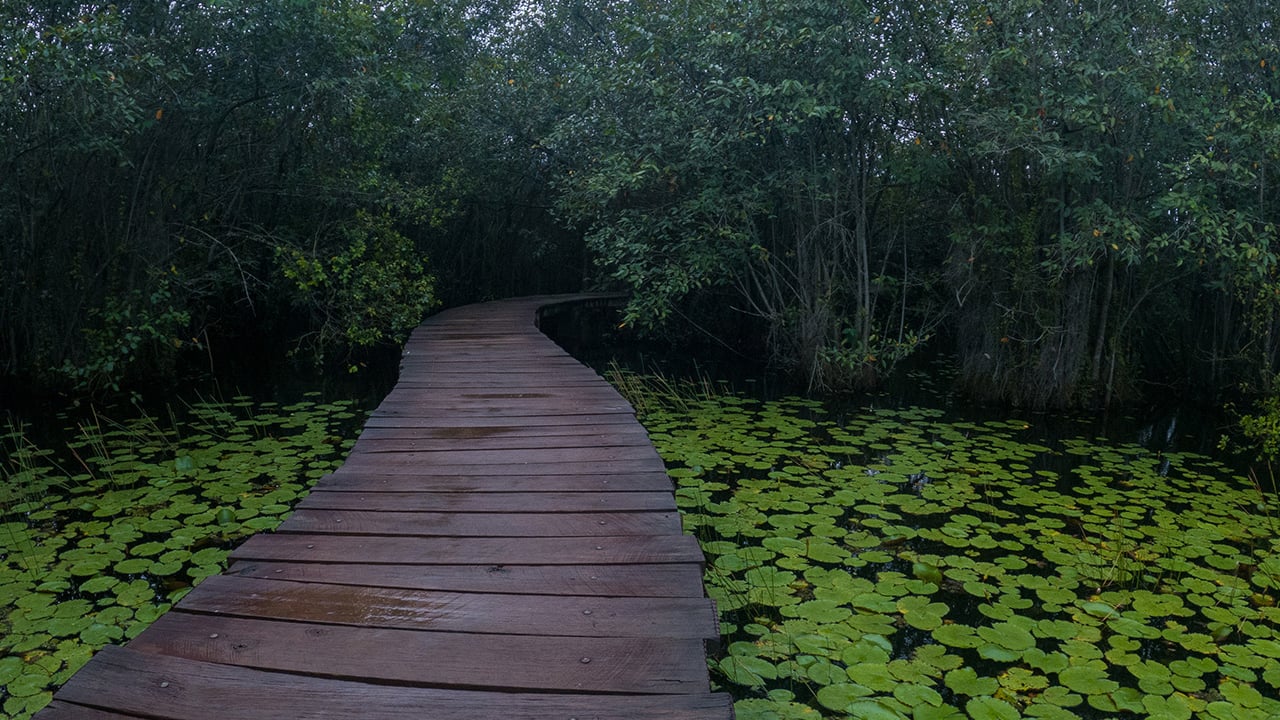

On the western edge of Ethul Kotte, separated from the bustle of greater Colombo by little more than a few streets, lies one of the city's most quietly rewarding natural spaces. Beddagana Wetland Park protects 18 hectares of marshland that has remained ecologically intact for centuries — a living remnant of the ancient floodplains that once surrounded the Kotte Kingdom. Today it offers residents and visitors a rare chance to encounter genuine urban wildlife without leaving the capital.
What is the history behind Beddagana Wetland Park?
The story of Beddagana begins with the Kotte Kingdom, which flourished in this area several centuries ago. Ethul Kotte served as the kingdom's fortified heart, with a moat fed from the adjacent Diyawanna Lake protecting its boundaries. Over time, the fort fell into disuse, water seeped back into the lake, and the surrounding land became a low-lying marshland — unsuitable for development but ideal for wildlife.
For generations the marsh sat undisturbed, slowly becoming overgrown with mangroves and wetland vegetation. Birds arrived, insects colonised the undergrowth, and seeds carried in by wildlife gave rise to rare flowering plants that in turn drew butterflies. The roads nearby — Rampart Road and Colombotantri Mawatha — still carry the names of the old kingdom, giving the whole neighbourhood a layered sense of history.
In 1985 the Department of Wildlife Conservation formally recognised the area's ecological value and declared it a Wildlife Sanctuary. Nearly three decades later, the Metro Colombo Urban Development Project (MCUDP) redesigned the sanctuary as a publicly accessible wetland park, and it opened to visitors in 2016. It now serves a dual purpose: protecting its resident biodiversity and helping manage flooding from Diyawanna Lake overflows.
What wildlife can you see at Beddagana Wetland Park?
Birdwatching is the main draw. The wetland sits along migratory routes, so the species list changes with the seasons. Resident waterbirds share the marsh with seasonal migrants, and patient observers can expect to record a wide range of herons, kingfishers, and waders. Early morning visits, before the heat builds, typically yield the longest species lists.
Butterflies are a secondary attraction. The flowering plants that colonised the park over decades support several species, and the best sightings tend to coincide with flowering periods in the drier months. The diversity of insect life here is also notable for an urban setting — a consequence of the park's long, undisturbed history.
- Birds: herons, egrets, kingfishers, rails, waders, and a variety of migratory species depending on the season
- Butterflies: multiple species attracted by native flowering plants within the sanctuary
- Flora: mangroves, wetland grasses, and flowering plants established naturally over centuries
- Insects: dragonflies, damselflies, and other wetland invertebrates
For visitors who enjoy the Sinharaja Forest Reserve style of immersive nature walking, Beddagana offers a more accessible urban equivalent — a good introduction to Sri Lanka's remarkable biodiversity without requiring a long journey out of Colombo.
When is the best time to visit Beddagana Wetland Park?
The park is worth visiting year-round, but the experience shifts significantly with the seasons. Migratory birds arrive between roughly October and March, making the cooler months between November and February particularly rewarding for birdwatchers. Resident species are present throughout the year.
Regardless of season, arrive as early in the morning as possible. Wildlife activity peaks in the first two hours after dawn, temperatures are more comfortable, and the light is better for photography. Midday visits in the hotter months (March to May) are quieter for wildlife and harder on visitors.
How do I get to Beddagana Wetland Park from Colombo?
The park is located in the Beddagana area of Ethul Kotte, a short drive from central Colombo. Travelling along Kotte Road, turn at the Beddagana junction and then take the lane on the left — the one immediately after the lane containing the Beddagana Bo Tree. The main entrance is at the end of this lane. A car park is available at the corner just inside the entrance.
The most straightforward approach for visitors staying in Colombo is to hire a private vehicle or take a metered taxi. The journey from Colombo Fort or the Colombo city centre typically takes around 30 to 45 minutes depending on traffic. A Colombo city tour with a half-day extension to Beddagana is a practical way to combine the wetland with other Ethul Kotte and Rajagiriya points of interest.
What should I bring and what are the park rules?
The park asks visitors to respect a few important guidelines that help protect the ecosystem:
- No plastic bottles or containers — leave them at the ticket counter before entering. Bring a reusable glass or metal water bottle.
- No litter — if you carry food or snacks in, carry all wrappers out.
- Camera etiquette — turn off flash and silence your shutter sound around wildlife. Sudden noise and light disturb birds and cause them to relocate.
- Footwear — the park involves extended walking on uneven, sometimes muddy ground. Closed shoes or light hiking footwear are strongly recommended over sandals.
- Binoculars — almost essential for birdwatching, as many species keep their distance from the boardwalks and pathways.
The park is free or low-cost to enter (confirm current entry arrangements at the ticket counter on arrival). It is managed to remain a quiet, low-impact space, so large groups and loud behaviour are discouraged.
Is Beddagana Wetland Park suitable for families and children?
Yes, with some caveats. The park's walking trails are manageable for children old enough to walk steadily on uneven ground — younger children in pushchairs will find the terrain difficult. The real benefit for families is the chance to introduce children to natural history in a setting that is safe, contained, and genuinely wild-feeling despite being minutes from the city.
Explaining to children in advance that quiet behaviour leads to better wildlife sightings tends to produce better experiences for everyone. The butterfly population in particular captures the attention of younger visitors.
How does Beddagana compare to other wildlife experiences near Colombo?
Beddagana is not a replacement for a national park safari — the scale and the megafauna are simply not here. What it offers instead is something different: an intimate, slow-paced encounter with wetland ecology within the city boundary. It suits travellers who have a genuine interest in birds or botany, or those who want a quiet hour of nature before or after a day of city sightseeing.
For travellers whose primary interest is wildlife, Sri Lanka's national parks — including Udawalawe National Park in the south — offer a very different calibre of experience. Beddagana works best as a complement to, rather than a substitute for, those larger destinations.
Nearby places
9 places within about 25 km, nearest first.
- Beddagane Veherakanda ruinsunder 1 km
- Battaramulla City1 km
- Ape Gama (Our Village)1 km
- Diyatha Uyana1 km
- Kotte Rajamaha Viharaya2 km
- Diyawanna Lake2 km
- Diyasaru Park2 km
- Alakeshwara Ruins2 km
- Talangama Wetland3 km
Related reading
6 pages on closely related subjects.