Sarcostemma brunonianum is a succulent, twining plant native to Sri Lanka, recorded in Lakpura's indigenous plant register under its Sinhala name Muwakeeriya. It belongs to the family Asclepiadaceae, a group of plants typically distinguished by milky latex and clusters of small, star-shaped flowers. No edible parts are recorded for this species.
What does Sarcostemma brunonianum look like?
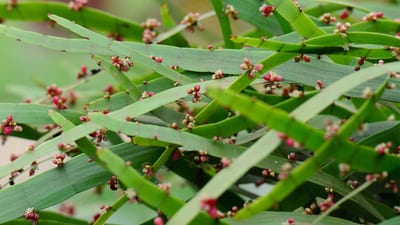
This is a scrambling and twining succulent, woody at the base. Its stems are glabrous (hairless), cylindrical, fleshy, and jointed, with a dark green colour and abundant latex running through them. This jointed, latex-rich stem structure is characteristic of many plants in the Asclepiadaceae family.
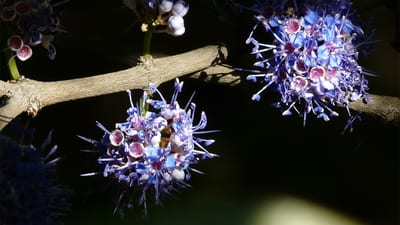
The flowers appear in sessile, umbel-like clusters, meaning they sit close to the stem without individual stalks. Each flower has a corolla between 0.8 and 1.2 cm wide, pale or yellowish-green in colour. The fruits, known as merocarps, are slender pods 8 to 9 cm long and up to 0.5 cm in diameter, also glabrous.
Is Sarcostemma brunonianum native to Sri Lanka?
Yes. The species is recorded as native to Sri Lanka, meaning it occurs naturally on the island as part of its indigenous flora, though it is not recorded as endemic and may also be found elsewhere in its natural range.
What is it called in Sinhala?
The local Sinhala name recorded for this species is Muwakeeriya.
Can Sarcostemma brunonianum be eaten?
No edible parts are recorded for this species. Many members of the Asclepiadaceae family contain latex that can be irritating or toxic, so this plant should not be consumed.
| Attribute | Recorded detail |
|---|---|
| Scientific name | Sarcostemma brunonianum |
| Family | Asclepiadaceae |
| Sinhala / local name | Muwakeeriya |
| Status in Sri Lanka | Native |
| Edible parts | None |
| Growth form | Scrambling and twining succulent, woody at base |
| Stem | Glabrous, cylindrical, fleshy, jointed, dark green, with abundant latex |
| Flowers | Sessile, umbel-like clusters; corolla 0.8–1.2 cm wide, pale or yellowish-green |
| Fruit (merocarps) | 8–9 cm long, up to 0.5 cm diameter, glabrous |