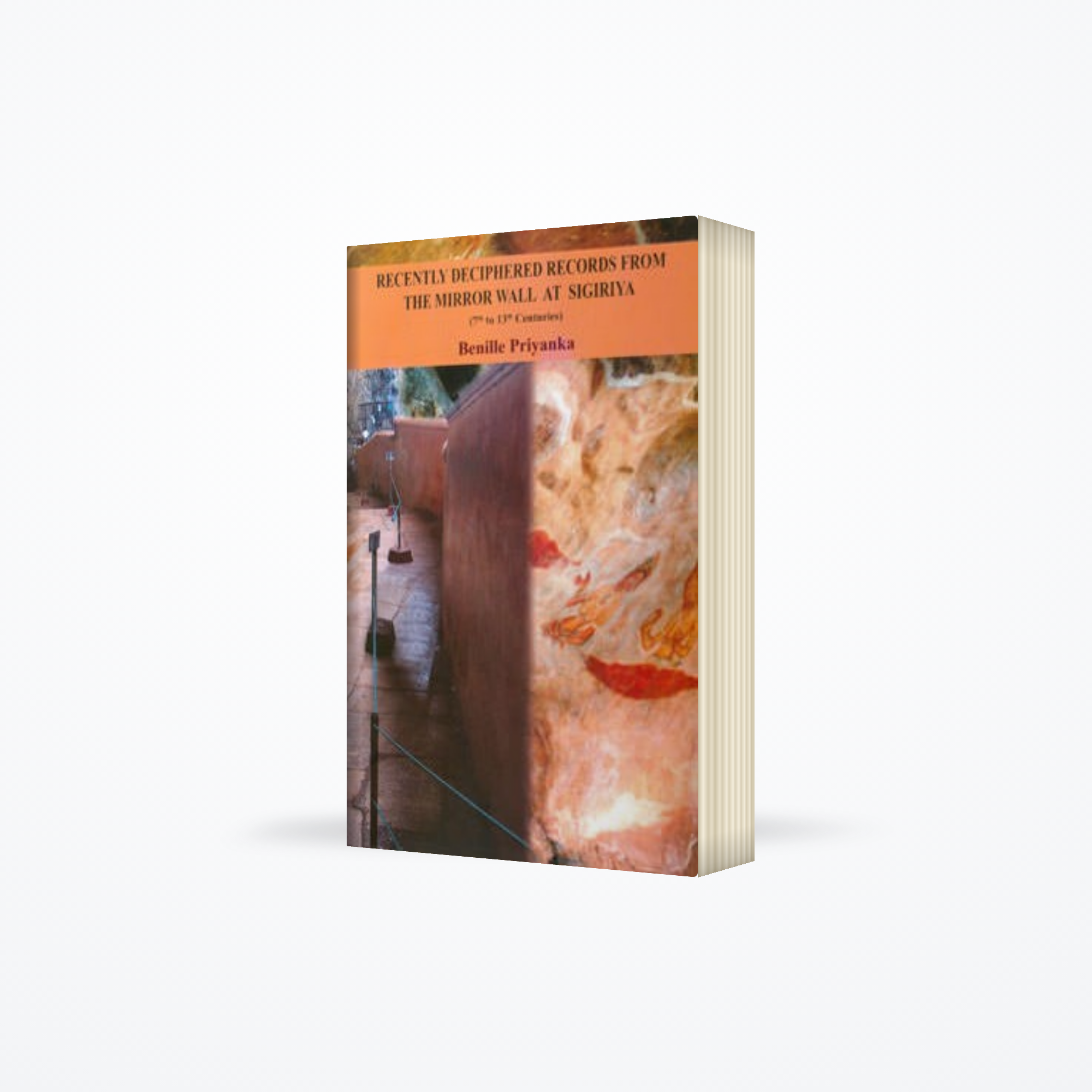
Clinging to the near-vertical western face of Sigiriya Rock, the Mirror Wall is one of the most remarkable surviving features of King Kasyapa's fifth-century fortress. Originally a highly polished white masonry parapet, it served both a functional purpose — protecting the walkway along the cliff — and, apparently, an irresistible invitation for literate visitors to record their thoughts for posterity.
What is the Mirror Wall at Sigiriya?
Known in Sinhala as Kedapath Pavura, the Mirror Wall is a brick-masonry parapet coated in a lime plaster so finely burnished that it once reflected like polished metal. King Kasyapa I commissioned the wall as part of his grand palace complex at Sigiriya Rock Fortress around the late fifth century AD. Over the centuries, that gleaming white surface darkened to the ochre and orange tones visitors see today — a patina caused by centuries of weathering, mineral deposits, and the steady accumulation of human contact.
Only around 100 metres of the original wall survives. Brick debris and carved grooves along the western rock face indicate where the wall once extended further, and holes chiselled into the opposite rock surface suggest that timber beams once supported a protective roof over the walkway.
What do the inscriptions on the Mirror Wall say?
Between roughly the seventh and eleventh centuries AD, visitors to Sigiriya — pilgrims, monks, minor royalty, and ordinary travellers — scratched verses into the plaster using a metal stylus. These inscriptions, numbering in the hundreds, are among the oldest surviving examples of Sinhala script and constitute a unique body of early Sri Lankan literature.
The verses are striking in their sophistication. Many are addressed to the Sigiriya Damsels — the celebrated cloud maidens depicted in the fresco gallery just above the wall — and several were written by women, confirming a degree of female literacy that was relatively uncommon in the medieval world. The language is refined and poetic, celebrating beauty, longing, and the passage of time, rather than the official proclamations one might expect from royal inscriptions.
- The earliest graffiti dates to approximately the seventh century AD, roughly 200 years after the wall was built.
- Most verses are written in Old Sinhala, though a small number are in other languages.
- The metal stylus used to scratch the inscriptions was a common writing implement of the period.
- Scholars have deciphered and catalogued the inscriptions; the corpus represents one of the richest collections of early Sinhala poetry outside of formal religious texts.
How was the Mirror Wall constructed?
The wall is built in fired brick and finished with multiple layers of lime plaster, the outermost of which was hand-burnished to a mirror-like sheen. Ancient Sri Lankan craftsmen achieved this finish through repeated applications of a plaster mixture containing lime, sand, and organic binders, polished while still slightly soft. The technique is closely related to the decorative plasterwork found elsewhere at Sigiriya and at other Anuradhapura-period sites.
The grooves and postholes visible in the rock face on the inner side of the surviving wall section are particularly telling: they show that the walkway was originally covered, protecting both the plaster surface and the people moving along it from the elements. Without that roof, weathering over the following 1,400 years has inevitably taken its toll.
Why is the Mirror Wall significant for Sri Lankan history?
The inscriptions transform the wall from an architectural curiosity into a living historical document. They provide direct evidence of literacy rates, aesthetic sensibilities, social customs, and the enduring cultural significance of Sigiriya long after King Kasyapa's death in 495 AD. The site continued to attract visitors during the periods when Sigiriya functioned as a Buddhist monastery, and many of the graffiti appear to date from those monastic centuries.
For linguists, the Mirror Wall graffiti are invaluable: they trace the evolution of Sinhala script and vocabulary across roughly four centuries, filling gaps that formal religious and royal inscriptions cannot. Comparable examples of such sustained vernacular writing on a single surface are rare anywhere in the ancient world. The site at Polonnaruwa, Sri Lanka's medieval capital, preserves royal inscriptions from a later period, but the Mirror Wall's informal, personal character sets it apart entirely.
How do I reach the Mirror Wall during a visit to Sigiriya?
The Mirror Wall is encountered partway up the main ascent of Sigiriya Rock, on the western side of the boulder-strewn pathway. Visitors climb a series of metal staircases from the base of the rock, pass the Lion's Paw terrace, and then follow the sheltered walkway where the wall runs along the cliff face. The fresco gallery housing the Sigiriya Damsels is located just above this section.
The walk to the Mirror Wall involves moderate physical effort, including steep staircases and exposed heights. Comfortable footwear is advisable, and the ascent is best attempted in the cooler morning hours. The Sigiriya Village area has accommodation options for those wishing to arrive early.
What should visitors know before viewing the Mirror Wall?
Touching the Mirror Wall is strictly prohibited, and the walkway in front of it is patrolled by site staff. This restriction has been in place since the 1960s, following concerns that continued physical contact was accelerating deterioration of the plaster and the inscriptions. Photography is permitted, though flash photography close to the surface is discouraged.
- The wall section open to visitors is protected by a low barrier; do not lean over it.
- The inscriptions are partially transliterated on information boards at the site.
- Sigiriya is a UNESCO World Heritage Site; standard site rules apply throughout.
- Entry tickets for Sigiriya are purchased at the Cultural Triangle office or online through the Central Cultural Fund.
Is there academic research on the Mirror Wall inscriptions?
The inscriptions have been studied and published by Sri Lankan and international scholars since the nineteenth century. The most comprehensive modern work was carried out by the late Professor Senarat Paranavitana, whose multi-volume study remains a foundational reference. More recently, epigraphers have revisited some of his readings, and a number of previously difficult inscriptions have been re-examined using imaging technology. Readers with a deeper interest in the subject can consult the UNESCO World Heritage listing for Sigiriya, which summarises the site's Outstanding Universal Value and points to further scholarly resources.