Ramakele Stupa stands quietly at the edge of the jungle roughly a kilometre before the entrance to Sigiriya, a rarely visited remnant of one of Sri Lanka's most active periods of royal Buddhist patronage. Known formally as Ramakele Mahanaga Pabbatha Viharaya, the site is also identified as Mahanapaw Viharaya — a name recorded both in the Sigiri rock graffiti and on a stone inscription found nearby. Its modest profile today gives little indication of the architectural sophistication it once possessed.
Who built Ramakele Stupa, and when?
Scholars attribute the stupa's construction to the late 5th or early 6th century AD, placing it either during the reign of King Kashyapa I (477–495 AD) or his successor Mugalan I (495–512 AD). Both kings were prolific builders whose legacies extend across the North Central Province, and the technical refinement of Ramakele's relic chamber supports a royal commission of that era.
The stupa belongs to the same broad tradition of Anuradhapada-period religious architecture that produced monuments across the Sigiriya heartland, though its scale is far more intimate than the great dagobas of Anuradhapura or Polonnaruwa.
What makes the relic chamber of Ramakele Stupa unusual?
The relic chamber is the most architecturally distinctive feature of the stupa and sets it apart from contemporaneous examples across the island. Rather than a single cavity, the chamber was divided into three separate compartments arranged vertically. The lowest compartment housed an elaborately carved stone replica of Maha Meru Parvathaya — the mythical cosmic mountain that sits at the centre of the Buddhist and Hindu universe.
This type of cosmological imagery embedded within a relic chamber is exceptionally rare in Sri Lankan stupa architecture, and the carving's quality points to skilled craftsmen working under royal or senior monastic patronage. The stone replica has since been removed for safekeeping and is now on display at the National Museum in Colombo, where visitors can examine its detail at close range.
Unfortunately, the relic chamber was looted by treasure hunters before the site came to the attention of archaeologists, and whatever portable relics it once contained are lost. Despite this, the three-compartment structure and the Maha Meru carving make Ramakele one of the more intellectually compelling stupas in Sri Lanka's archaeological record.
What does Ramakele Stupa look like today?
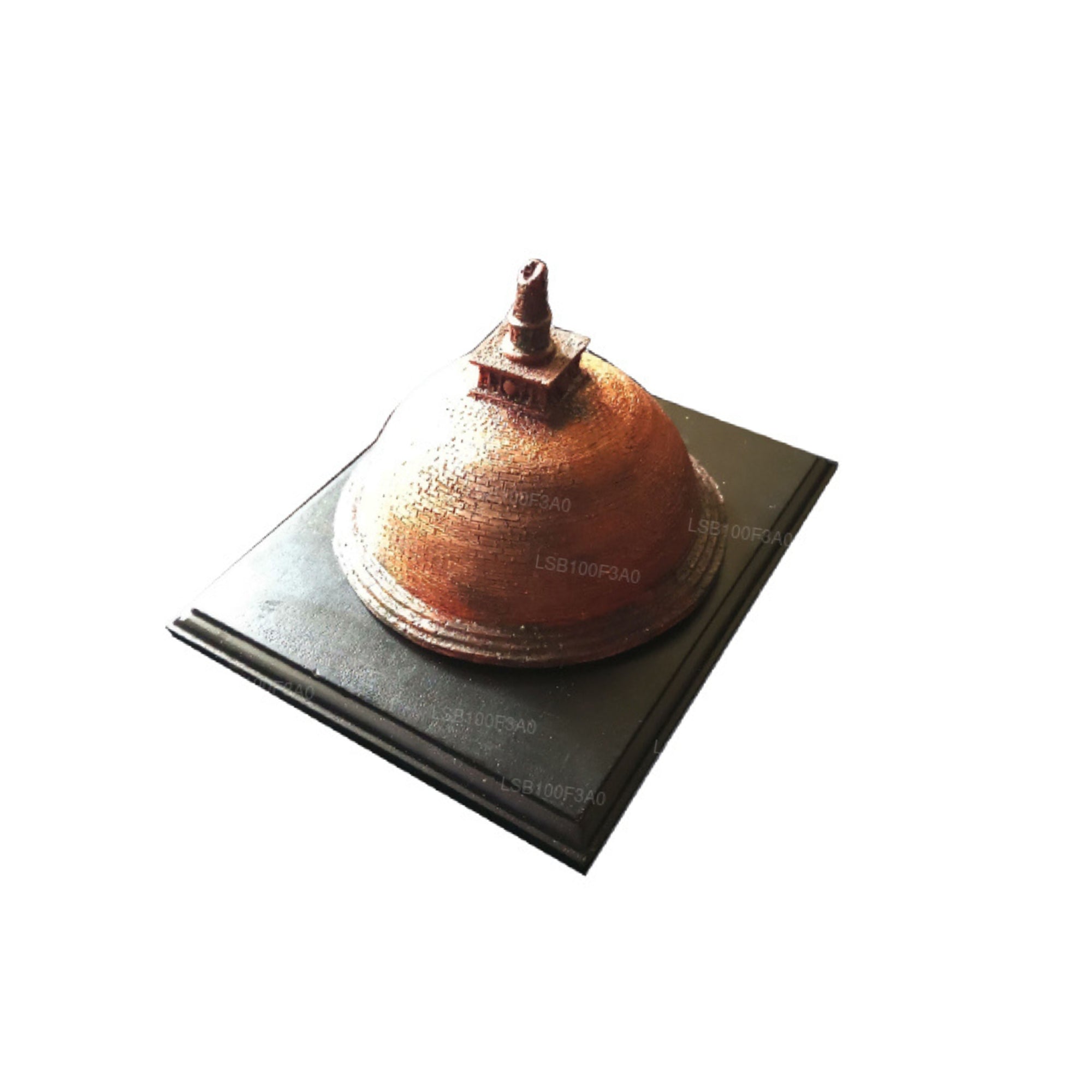
What survives above ground is the central body of the stupa — the bubble-shaped anda — together with three circular pesa walau (terraced rings at the base). The diameter of the stupa measures around 92 feet, placing it in the medium range for Sri Lankan dagobas of the period. The structure has not been restored, so it sits in a naturalistic state of partial ruin, overgrown at its margins and largely absorbed back into the surrounding vegetation.
The setting is atmospheric rather than polished: a short walk of about 50 metres into the treeline brings you to the stupa, which emerges from the canopy with little ceremony. This rawness is part of its appeal for travellers who prefer sites that haven't been sanitised for mass tourism.
How do I get to Ramakele Stupa from Colombo or Dambulla?
The stupa lies just off the main road connecting Inamaluwa, on the Dambulla–Habarana Road, to Sigiriya. Travelling from Dambulla, take the Inamaluwa turn-off and follow the road toward Sigiriya. The stupa is on the right-hand side approximately one kilometre before the Sigiriya ticket office, set back roughly 50 metres from the road into the tree line. There is no formal car park, but vehicles can pull over safely on the verge.
From Colombo, the drive to Inamaluwa takes around three to four hours depending on traffic. Most visitors combine Ramakele with a visit to the Sigiriya rock fortress on the same day, as the two sites are within a few minutes of each other by road. The Sigiriya Village area offers accommodation if you plan to explore the region over more than one day.
When is the best time to visit Ramakele Stupa?
The site is accessible year-round. The dry season between May and September generally offers easier walking conditions, as the short jungle path to the stupa can become muddy during the inter-monsoon rains of October and November. Early morning visits — before 9 am — are cooler and offer a better chance of having the stupa to yourself, given that almost all tourists in the area arrive at Sigiriya mid-morning.
There is no entry fee for Ramakele Stupa, and no staffed ticket office. Visitors should wear shoes suitable for an uneven jungle floor and carry water, particularly if visiting between May and September when temperatures in the North Central Province regularly exceed 32°C.
Is Ramakele Stupa worth visiting alongside Sigiriya?
For travellers with an interest in early Sri Lankan Buddhist architecture or archaeology, Ramakele rewards a short detour. It takes no more than 30 minutes to visit, and its proximity to Sigiriya means there is almost no additional travel cost or time. The contrast between the grand, heavily visited rock fortress and this quiet, largely unrestored monument is itself instructive — a reminder that the landscape around Sigiriya was densely populated with religious structures during the Anuradhapura period, most of which have yet to be fully excavated or interpreted.
Those with a deeper interest in Sri Lanka's stupa tradition may also wish to visit Kiri Vehera Stupa, another well-preserved example of the form in the Cultural Triangle area.
Nearby places
9 places within about 25 km, nearest first.
- Singhagiri Village Tourunder 1 km
- Pidurangalaunder 1 km
- Sigiriya Reservoirunder 1 km
- Outer moatunder 1 km
- Pidurangala Viharaunder 1 km
- Mirror Wallunder 1 km
- Sigiriya Museumunder 1 km
- Water Gardenunder 1 km
- Sigiriya Airport (GIU)3 km