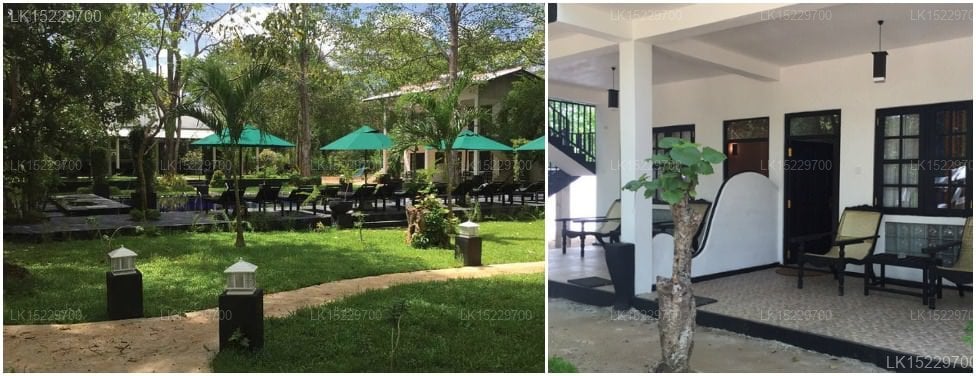




Sri Lanka's ancient hydraulic civilisation left behind not only grand reservoirs and irrigation canals but also intimate, carefully engineered water features that reflect the island's deep relationship with water as both a practical resource and a spiritual symbol. The Miniature Water Garden is one such space — a scaled, contemplative landscape where water, stone, and vegetation are arranged with deliberate precision. Whether encountered as a standalone destination or as part of a broader cultural itinerary, it offers a quiet counterpoint to the island's more visited monuments.
What is the Miniature Water Garden?
The term "miniature water garden" describes a category of designed landscape found across Sri Lanka's ancient sites — most notably in and around the ruins of Polonnaruwa, where royal pleasure gardens incorporated shallow pools, fountains, and ornamental waterways into their layout. These were not simply decorative. They reflected a sophisticated understanding of hydraulics, microclimate management, and aesthetic proportion that was centuries ahead of comparable traditions elsewhere in Asia.
The gardens typically feature a series of interconnected pools cut from limestone or brick, fed by gravity-driven channels that draw on the same engineering principles used to build the island's great tank systems. Aquatic plants, some of which have grown in these settings for generations, soften the stonework and attract birdlife, making a visit as rewarding for naturalists as for historians.
What can you see at a Sri Lankan miniature water garden?
Visitors can expect a series of low-walled enclosures where shallow water reflects the sky and surrounding canopy. Stone pathways lead between pools of varying depths, occasionally punctuated by carved channels or spillways that hint at the original flow of water through the system. The interplay of light on water — particularly in the early morning or late afternoon — gives the space a meditative quality that photographs rarely capture fully.
- Carved limestone pool surrounds and stepped entry points
- Gravity-fed channel systems linking individual pools
- Aquatic and marginal planting, including native water lilies
- Resident birdlife, often including kingfishers and pond herons
- Proximity to broader archaeological or garden complexes at major sites
The surrounding landscape — whether the dry-zone scrub of the Cultural Triangle or the lusher foliage of a highland setting — frames the pools differently depending on season and location. During the wet season, channels that appear dry in drought months carry a thin film of water that reactivates the original engineering logic of the design.
Where are miniature water gardens found in Sri Lanka?
The most studied examples are associated with the royal garden complexes of Sri Lanka's ancient capitals. Polonnaruwa contains several pleasure garden remains where water features were integral to the design. Sigiriya, with its elaborately planned western precinct gardens, also incorporates water gardens that are considered among the oldest landscaped gardens in the world — the symmetrical pools and fountain jets there are still partially functional after more than 1,500 years.
Smaller, less documented examples appear across the dry zone wherever ancient tank infrastructure exists. Some have been incorporated into contemporary hotel and eco-lodge grounds, allowing guests to observe the principle at work in a living context. The Sinharaja Forest Reserve region, by contrast, offers a very different relationship with water — one shaped by high rainfall and dense canopy rather than engineered containment — providing useful perspective on how geography influenced Sri Lanka's garden traditions.
When is the best time to visit a miniature water garden in Sri Lanka?
The dry season in the Cultural Triangle — broadly from May to September — offers the clearest skies and most comfortable temperatures for exploring open archaeological sites. However, visiting just after the northeast monsoon (around January to March) means the pools are more likely to hold water, and the surrounding vegetation is at its greenest. Early morning visits are strongly recommended: light is better for photography, temperatures are lower, and birdlife is most active.
| Period | Conditions | Notes |
|---|---|---|
| January – March | Post-monsoon, pools full | Good for water reflections and birdwatching |
| May – September | Dry season, clear skies | Best for photography; carry water |
| October – December | Northeast monsoon active | Lush surroundings; some access tracks muddy |
How do I reach a miniature water garden from Colombo?
Access depends on which site you are visiting. The Sigiriya garden complex, which contains the island's most famous water garden precinct, lies around 170 km north of Colombo — typically a three-and-a-half to four-hour drive depending on traffic. Polonnaruwa is roughly 215 km from Colombo and is often combined with Sigiriya on a two- or three-day Cultural Triangle circuit. Both are best reached by private car or organised transfer rather than public transport, which involves multiple connections and limited luggage space.
If your interest is in lesser-known water garden sites embedded within working estates or eco-properties, your host or Lakpura's planning team can identify locations appropriate to your route and travel pace.
What else is nearby?
Miniature water gardens rarely exist in isolation. At Sigiriya, the water garden precinct forms the western approach to the famous rock fortress — see our guide to Sigiriya: The Ancient Rock Fortress for context on the broader site. Village excursions from the Sigiriya area, including trips to traditional craft workshops and paddy-farming communities, complement a garden visit well. The Dambulu Oya River runs through the same region and supports boat-based wildlife watching.
For travellers building a longer itinerary, pairing a water garden visit with time at Horton Plains National Park in the central highlands offers a strong contrast: engineered water landscapes in the dry zone followed by the raw cloud-forest hydrology of the plateau. These contrasts are often what make Sri Lanka itineraries memorable rather than formulaic.
Tips for visiting a miniature water garden
- Wear flat, closed shoes — pool surrounds can be slippery, particularly after rain.
- Carry a hat and sun protection; shade is limited within most garden precincts.
- Respect site conservation rules: do not wade into or touch carved pool edges.
- Allow at least 45 minutes to explore the garden at a considered pace rather than rushing through.
- Combine your visit with the adjacent ruins or landscape rather than treating the water garden as a standalone stop.
- If visiting in the dry season, check with your guide whether pools are currently holding water — it affects the visual experience considerably.
Nearby places
10 places within about 25 km, nearest first.
- Boulder Gardenunder 1 km
- Lion's Paw Terraceunder 1 km
- Sigiriya Frescoesunder 1 km
- Inner Moatunder 1 km
- Cobra Hood Caveunder 1 km
- Mirror Wallunder 1 km
- Sigiriya Museumunder 1 km
- Water Gardenunder 1 km
- Outer moatunder 1 km
- Sigiriya Reservoirunder 1 km