Knoxia zeylanica is a perennial herb in the Rubiaceae family, recorded in Sri Lanka's native flora under the local name Ela rathmal. It is listed as endemic, meaning it occurs naturally only in Sri Lanka and nowhere else in the wild. The species has no recorded edible parts.
What does Knoxia zeylanica look like?
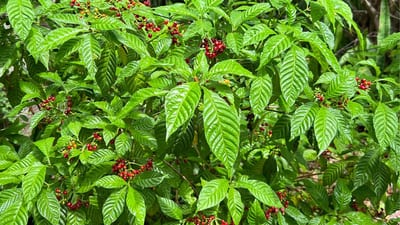
Knoxia zeylanica is a suffruticose perennial, meaning its base is somewhat woody while the upper growth stays herbaceous. It grows to about 70 cm tall. The leaves are ovate-oblong to lanceolate, measuring 1.5 to 7.5 cm long and 0.8 to 1.5 cm wide, glabrous (hairless) on the upper surface and glabrescent to glabrous beneath. Leaf tips are acute to acuminate, while the base ranges from acute or attenuate to obtuse.
What do the flowers and fruit look like?
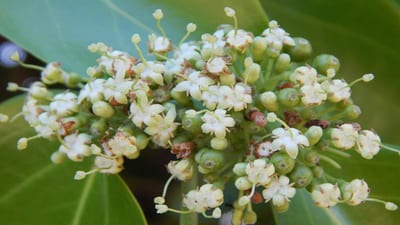
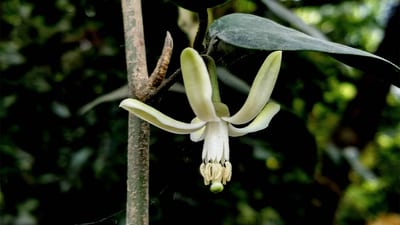
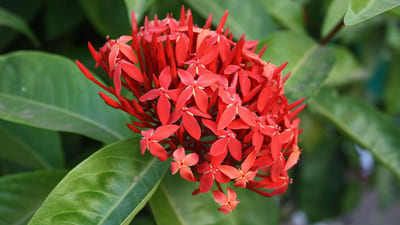
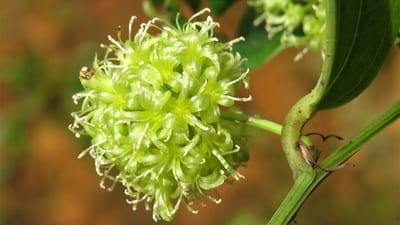
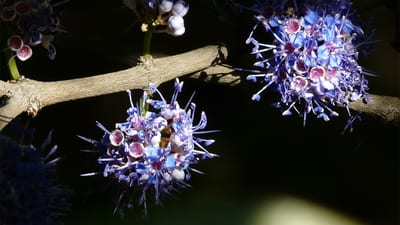
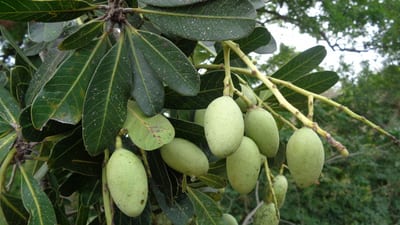
The inflorescence is spicate, 2 to 6 cm long, ending in condensed corymbose clusters of flowers that are whitish to bluish-pink. Rubiaceae species typically bear small, clustered flowers of this kind, consistent with the family's broader character. The fruit is ovoid and dorsally compressed. Its mericarps are usually fused at first, later splitting from the base into two separate mericarps, with column-like carpophores holding the structure.
Where is Knoxia zeylanica found?
Knoxia zeylanica is endemic to Sri Lanka, meaning the species is native exclusively to the island and is not found growing wild elsewhere. Many plants in the Rubiaceae family, which also includes coffee and several ornamental shrubs, are widespread across the tropics, but this particular species is restricted to Sri Lanka alone.
What is it called in Sinhala?
The local Sinhala name recorded for this species is Ela rathmal. No other vernacular or trade names are documented for it.
Can Knoxia zeylanica be eaten?
No edible parts are recorded for this species. It should not be treated as a food plant.
Recorded facts at a glance
| Attribute | Recorded detail |
|---|---|
| Scientific name | Knoxia zeylanica |
| Family | Rubiaceae |
| English name | Knoxia |
| Sinhala name | Ela rathmal |
| Status in Sri Lanka | Endemic |
| Edible parts | None |
| Life form | Suffruticose perennial, up to 70 cm |
| Leaves | Ovate-oblong to lanceolate, 1.5–7.5 x 0.8–1.5 cm |
| Inflorescence | Spicate, 2–6 cm, condensed corymbose clusters |
| Flower colour | Whitish to bluish-pink |
| Fruit | Ovoid, dorsally compressed, mericarps splitting from the base |