Ipomoea asarifolia is a native vine of Sri Lanka belonging to the family Convolvulaceae, the morning glory family. It is known in Sinhala as Ela binthamuru. No part of the plant is recorded as edible.
What does Ipomoea asarifolia look like?
Ipomoea asarifolia is a trailing vine that roots at the nodes as it spreads. Its leaves are rounded-cordate to subreniform in shape, measuring 4 to 8 cm long, with a heart-shaped base and a rounded tip, and the leaf surface is glabrescent (becoming nearly hairless with age).
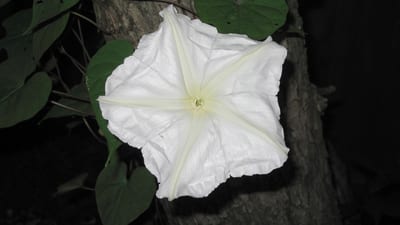
Flowers appear singly or in simple or compound cymes arising from the leaf axils or stem tips, carried on pedicels 14 to 24 cm long. As in other members of the Convolvulaceae, the flowers are typically funnel-shaped. The fruit is a subglobose, brown, glabrous capsule that is tardily dehiscent, meaning it opens slowly to release its seeds. The seeds themselves are brown to dark brown, around 6 to 7 cm long, and finely covered in gray pubescence.
Where does Ipomoea asarifolia grow?
Ipomoea asarifolia is recorded as native to Sri Lanka. The Ipomoea genus as a whole is widespread across the tropics and subtropics, and many of its members, including this species, are vines adapted to sprawling or climbing growth in open, sunlit ground.
What is its conservation status?
The species is classified as native to Sri Lanka, meaning it occurs naturally in the country though it is not confined to it.
What is it called in Sinhala?
The local Sinhala name recorded for Ipomoea asarifolia is Ela binthamuru. This is the name used in Sri Lanka's indigenous plant records alongside the scientific name.
| Attribute | Detail |
|---|---|
| Scientific name | Ipomoea asarifolia |
| Family | Convolvulaceae |
| Sinhala / local name | Ela binthamuru |
| Status in Sri Lanka | Native |
| Edible parts | None |
| Life form | Vine, rooting at the nodes |
| Leaves | Rounded-cordate to subreniform, 4–8 cm long, basally cordate, apically rounded, glabrescent |
| Inflorescence | Solitary or in axillary/terminal simple or compound cymes |
| Pedicels | 14–24 cm long |
| Fruit | Tardily dehiscent capsule, subglobose, brown, glabrous |
| Seeds | Brown to dark brown, 6–7 cm long, minutely gray-pubescent |
Other species in this genus
10 more, sharing the same genus.