Dillenia retusa is a native evergreen tree of Sri Lanka belonging to the family Dilleniaceae, a group of flowering plants known for their showy white or yellow blossoms and often leathery, strongly veined leaves. Locally it is called Godapara (ගොඩපර). The species produces an edible fruit and is classified as of least concern on Sri Lanka's national conservation list.
What does Dillenia retusa look like?
This is an evergreen tree that can grow up to 20 metres tall. Its leaves are large, measuring 8-21 cm long and 5-12 cm wide, with 10 to 14 parallel veins running across the leaf blade. The petioles (leaf stalks) are 1.3-2.2 cm long, smooth on the upper surface and sparsely covered with stiff hairs along the nerves and midrib beneath.
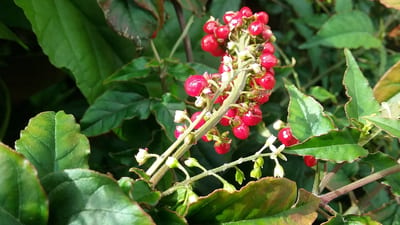
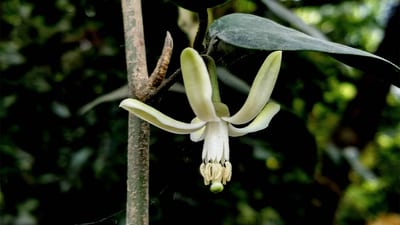
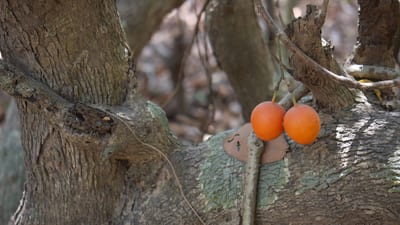
Flowers appear in small clusters of two to three, arranged in simple racemes with an axis 2-4 cm long. Each flower sits on a pedicel 10-35 mm long and has five white petals. The fruit, technically a pseudocarp, is orange or yellowish-green and 2-3 cm in diameter, containing small seeds about 2.5 x 2 mm in size.
Where does Dillenia retusa grow?
Dillenia retusa is native to Sri Lanka. Members of the Dilleniaceae family are typically found across tropical and subtropical regions of Asia, and many species in this family favour humid, forested environments.
What is its conservation status?
Under Sri Lanka's National Conservation Status list (2012), Dillenia retusa is assessed as Least Concerned. This indicates the species is not currently considered at significant risk within its native range.
What is it called in Sinhala, and is it edible?
In Sinhala, the tree is known as Godapara (ගොඩපර). Its fruit is recorded as an edible wild fruit, consistent with the fleshy, often tart pseudocarps produced by other members of the Dillenia genus.
Recorded facts at a glance
| Attribute | Detail |
|---|---|
| Scientific name | Dillenia retusa |
| Family | Dilleniaceae |
| Sinhala name | Godapara (ගොඩපර) |
| Status in Sri Lanka | Native |
| Conservation status (NCS 2012) | Least Concerned |
| Edible parts | Fruit (wild fruit) |
| Life form | Evergreen tree, up to 20 m tall |
| Leaves | 8-21 x 5-12 cm, 10-14 nerved |
| Petioles | 1.3-2.2 cm long |
| Inflorescence | 2-3 flowered simple racemes, 2-4 cm axis |
| Petals | 5, white |
| Fruit (pseudocarp) | Orange or yellowish-green, 2-3 cm diameter |
| Seeds | 2.5 x 2 mm |
Other species in this genus
2 more, sharing the same genus.