Crotalaria verrucosa is a small flowering herb of the pea family, Fabaceae, recorded in Sri Lanka's native flora. Known in English as Blue rattlepod and in Sinhala as Nil andanahiriya (නිල් අඬනහිරිය), it also carries the Sanskrit name Shanapushpi. This profile sets out the recorded botanical facts for the species.
What does Crotalaria verrucosa look like?
Crotalaria verrucosa is an annual herb growing to about 1 metre tall, with erect, four-angled, pubescent stems. Its leaves are simple, carried on short petioles 2-3 mm long, and measure roughly 1-12 cm in length and 0.7-8 cm in width.
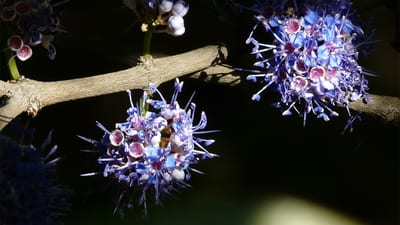
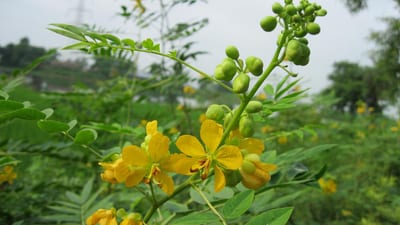
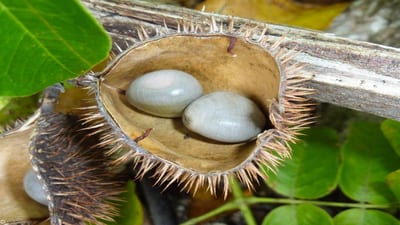
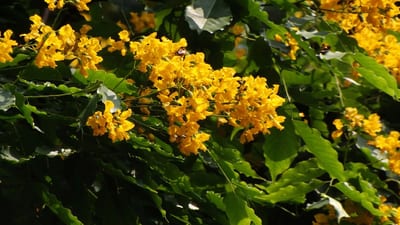
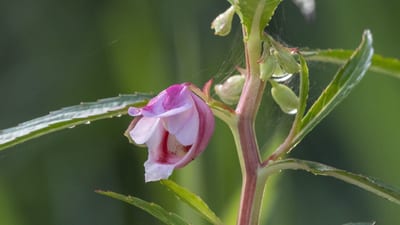
Flowers are borne in many-flowered racemose inflorescences, each flower 11-18 mm long on a pedicel 3-5 mm long. Petals are blue, purplish, or white and glabrous. The fruit is a sessile, pubescent pod 2.5-3(-5) cm long and 10-12 mm in diameter, containing 10-16 seeds. Seeds are yellowish to brown, 3-4.5 mm long and 3-4 mm wide.
Like many members of the Fabaceae, the species produces its seeds in a pod typical of the pea and legume family.
Where does Crotalaria verrucosa grow?
Crotalaria verrucosa is native to Sri Lanka.
What is its conservation status?
Under the National Conservation Status list of Sri Lanka (2012), Crotalaria verrucosa is assessed as Least Concerned (NCS 2012).
What is it called in Sinhala and Sanskrit?
In Sinhala the plant is known as Nil andanahiriya (නිල් අඬනහිරිය). In Sanskrit it is called Shanapushpi.
Can Crotalaria verrucosa be eaten?
No edible parts are recorded for this species.
| Attribute | Recorded detail |
|---|---|
| Scientific name | Crotalaria verrucosa |
| Family | Fabaceae |
| English name | Blue rattlepod |
| Sinhala name | Nil andanahiriya (නිල් අඬනහිරිය) |
| Sanskrit name | Shanapushpi |
| Status in Sri Lanka | Native |
| Conservation status | Least Concerned (NCS 2012) |
| Edible parts | None |
| Habit | Annual herb, to about 1 m tall |
| Stems | Erect, 4-angled, pubescent |
| Leaves | Simple, petiole 2-3 mm; blade 1-12 cm x 0.7-8 cm |
| Inflorescence | Racemose, many-flowered |
| Flowers | 11-18 mm long, pedicels 3-5 mm; petals blue, purplish, or white, glabrous |
| Fruit | Sessile, pubescent pod, 2.5-3(-5) cm long, 10-12 mm diameter, 10-16 seeded |
| Seeds | Yellowish to brown, 3-4.5 mm x 3-4 mm |
Other species in this genus
2 more, sharing the same genus.