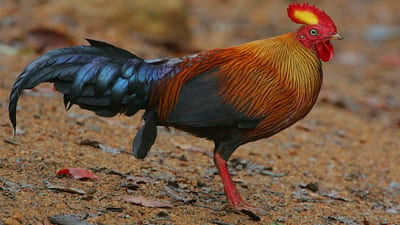
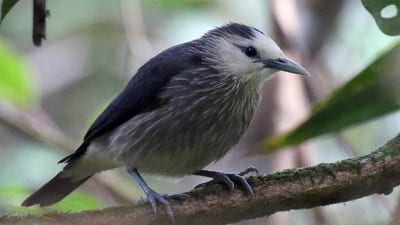
The Ceylon Spurfowl (Galloperdix bicalcarata, Forster 1781) is one of Sri Lanka's most compelling endemic birds — not because it is easy to spot, but precisely because it rarely is. Dense forest undergrowth, a cautious temperament, and a remarkable talent for ventriloquism combine to make every confirmed sighting feel genuinely earned. Birdwatchers who travel to Sri Lanka specifically for endemic species nearly always list the spurfowl among the targets they are most eager to find, and most relieved to tick off.
What does the Ceylon Spurfowl look like?
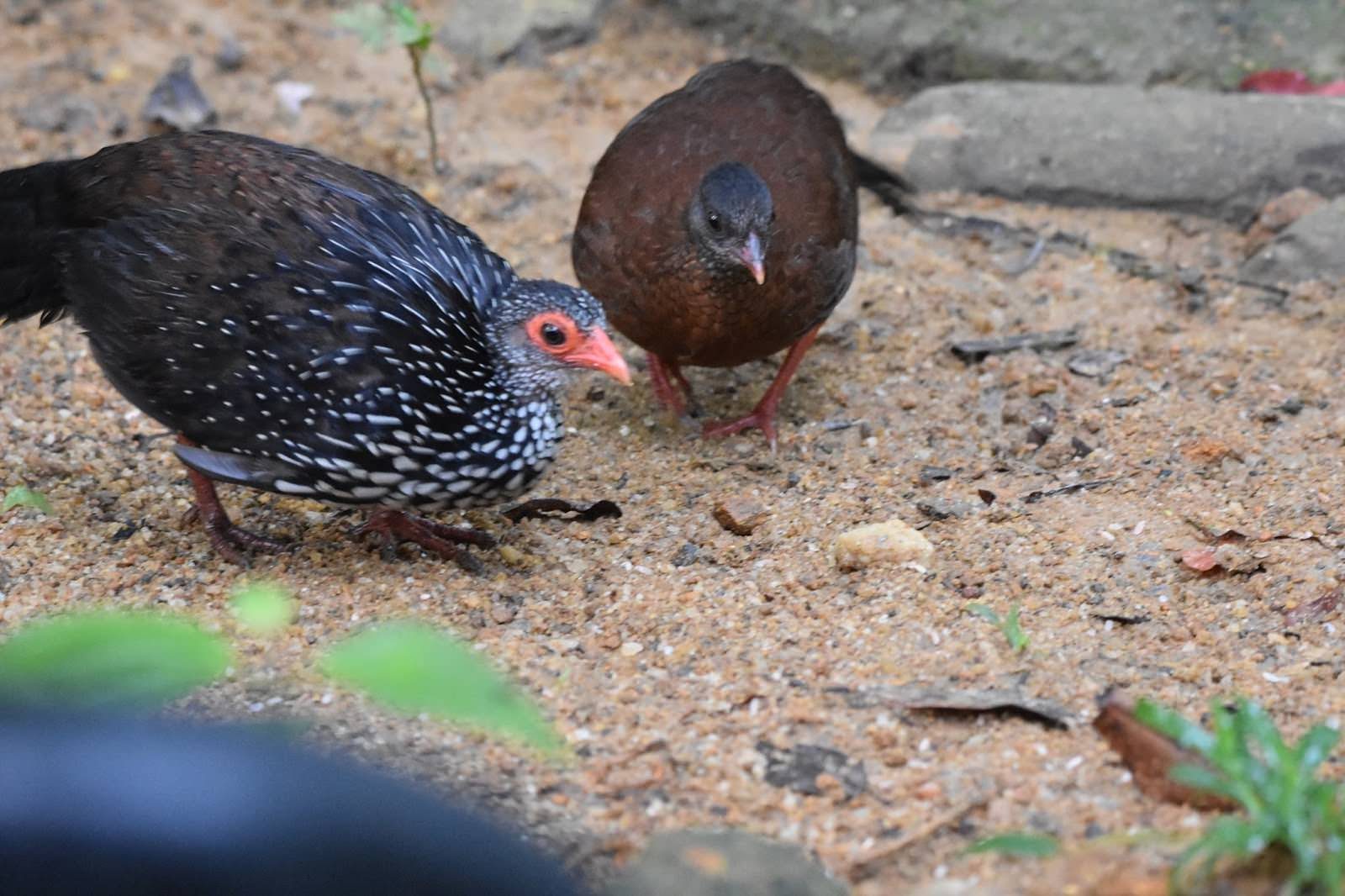
The bird is roughly the size of a half-grown domestic chicken — plump, short-tailed, and built for life on the forest floor. Sexual dimorphism is marked. Males are boldly patterned black and white, with white spotting on the upperparts; females are plainer, with a brown back and chestnut underparts. Both sexes have bare red facial skin around the eye, which catches the light in the rare moments you manage a clear view.
The common name refers to the leg spurs used by males in territorial contests. Males typically carry two or more spurs on each leg; females have one or two smaller spurs. These spurs are a reliable field feature when a bird steps into a gap in the vegetation.
Where in Sri Lanka can you find Ceylon Spurfowl?
The species is endemic to Sri Lanka and absent from the Indian subcontinent. It occurs across the wet zone and in suitable patches of the intermediate zone — anywhere mature forest provides a closed canopy, dense leaf litter, and minimal human disturbance. Key sites include the Sinharaja Forest Reserve, Kitulgala and the adjacent Makandawa rainforest, Horton Plains National Park, and the forested slopes around Knuckles Conservation Forest.
Sinharaja, as Sri Lanka's largest surviving lowland rainforest, is widely regarded as the most reliable location. Mixed-species bird waves that move through Sinharaja in the early morning frequently flush spurfowl from the undergrowth, giving patient observers a fleeting look.
Why is the Ceylon Spurfowl so hard to see?
Three behaviours work against the observer. First, the bird is inherently shy and retreats deep into cover at the slightest disturbance. Second, it is an expert ventriloquist: its calls seem to originate from a different direction than the bird's actual position, a trait that frustrates even experienced birders. Third, it moves while calling, so the apparent source shifts continuously. The result is that most visitors hear the spurfowl far more often than they ever see it.
Early morning — within the first hour after dawn — offers the best chance. The cackling chorus that males produce at first light is one of the most distinctive sounds in Sri Lankan forest, a rapid, accelerating series of notes that carries a surprising distance through dense canopy.
When does the Ceylon Spurfowl breed?
Breeding has been recorded across two broad windows: November through March or April, and again during July and August. The nest is a shallow scrape in the earth, usually tucked beneath a rock overhang, a root system, or dense low vegetation. A sparse lining of dead leaves provides minimal insulation. Clutch size is typically two eggs, uniformly whitish and measuring around 42 × 31 mm. Nestlings closely resemble adult females but are somewhat paler overall, with a brownish-red iris and a dusky red bill that darkens as they mature.
What does the Ceylon Spurfowl eat?
Like other members of the genus Galloperdix, Ceylon Spurfowl are omnivores that forage by scratching through leaf litter. Their diet includes seeds, fallen fruit, insects, and small invertebrates. This foraging behaviour — methodical raking of the forest floor — is sometimes audible before the bird itself comes into view, a useful cue for patient observers who have frozen in position and are simply listening.
How does the Ceylon Spurfowl behave socially?
Males are territorial, particularly during the breeding season, and will call persistently to defend a home range. They are typically encountered singly or in pairs; loose family groups can sometimes be seen after the breeding season when juveniles accompany adults. The species does not form the large flocks associated with some other galliforms, and communal roosting is not well documented in the literature.
What is the conservation status of the Ceylon Spurfowl?
The species is currently assessed as Least Concern on the IUCN Red List, reflecting a range that, while restricted to Sri Lanka, remains reasonably well covered by protected areas. Ongoing threats include forest fragmentation in the wet zone, encroachment on forest margins, and, in some areas, hunting pressure. The continued integrity of reserves such as Sinharaja and the Knuckles range is critical to the species' long-term stability.
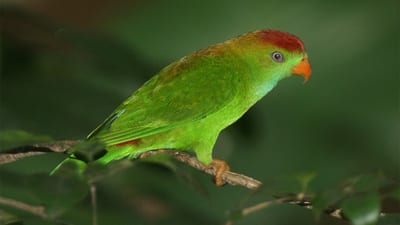
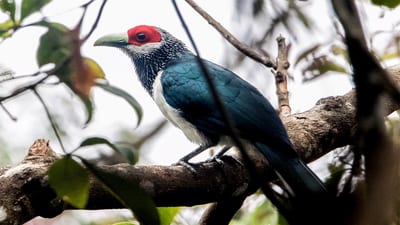
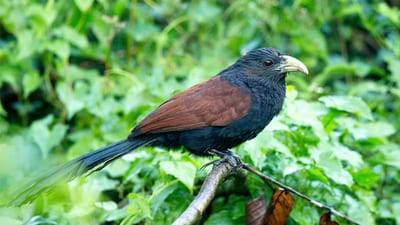
Sri Lanka's network of protected forests also shelters several other wet-zone endemics, so any serious birding itinerary targeting the spurfowl will naturally overlap with searches for Sri Lanka Blue Magpie, Green-billed Coucal, and the various endemic babblers that move in the same mixed-species flocks.
Tips for birders planning a Ceylon Spurfowl encounter
- Arrive at the forest edge before first light. The dawn chorus is the most reliable acoustic cue, and activity drops sharply by mid-morning.
- Move slowly and stop often. A stationary observer waiting in likely habitat is far more productive than one walking steadily along a trail.
- Listen for scratching. The sound of leaf litter being turned over can betray a bird that is otherwise invisible.
- Use a local guide. Guides who work Sinharaja or Kitulgala regularly have refined mental maps of territories and known calling posts.
- Be patient with ventriloquism. When you hear a call, resist the urge to move immediately toward it — the bird may be much closer, or in a completely different direction, than the sound implies.