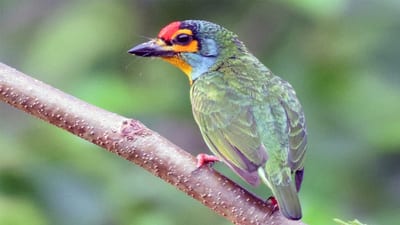
The Ceylon Bush Warbler (Elaphrornis palliseri) is one of Sri Lanka's most elusive endemic birds — a small, secretive species that slips through dense undergrowth in the island's highland wet forests, heard far more often than it is seen. For serious birdwatchers visiting Sri Lanka, an encounter with this bird is a genuine prize.
What does the Ceylon Bush Warbler look like?
This is a compact, plainly marked bird with earthy-brown upperparts and a graduated tail that it often cocks slightly. The most reliable field marks are a rich, buffy throat, a short and indistinct grey eyebrow, and a notably pale iris. The overall appearance is uniform, with few bold markings — which is precisely what separates it from other small brown birds sharing its limited montane range. There are no wing bars, no streaking, and no bright patches to catch the eye in the filtered light of the forest floor.
In size and shape it sits somewhere between a typical warbler and a babbler, moving low through wet vegetation with the hunched, secretive posture common to the family. Most observers get only a glimpse before the bird drops back into cover.
How do you identify the Ceylon Bush Warbler by sound?
Sound is usually the first — and sometimes the only — clue that a Ceylon Bush Warbler is present. The song is a short, musical phrase rendered as chiwee-chiwee-chiwee, repeated at measured intervals from dense cover. In addition to the song, the bird produces a sharp, single wit call and a wet, softer chip note. Experienced birders recommend spending time quietly at the forest edge at dawn, when singing activity is highest and the ambient noise of the forest has not yet built up.
Where can you find the Ceylon Bush Warbler in Sri Lanka?
The species is strictly confined to the wet zone highlands and mountains of Sri Lanka, typically above around 1,200 metres. It inhabits the dense undergrowth and understory of wet montane forests, favouring areas where moisture-loving vegetation grows thickly along stream margins, forest trails, and gullies. It is almost always seen singly or in pairs, moving deliberately on or very near the ground.
Key sites where the Ceylon Bush Warbler has been reliably recorded include Horton Plains National Park, the forests around Nuwara Eliya, and Hakgala Strict Nature Reserve. It also occurs in other suitable highland forest above about 1,200 metres. All of these locations sit within a relatively compact highland zone, making it practical to target this species during a multi-day upcountry circuit.
When is the best time to look for the Ceylon Bush Warbler?
The Ceylon Bush Warbler can be encountered year-round within its montane range, but singing activity tends to peak during and just before the breeding season, which generally falls between the dry inter-monsoon periods — broadly from January through April. At this time, males are more vocal and marginally more willing to move into slightly more exposed positions. Mornings, particularly the first two hours after dawn, consistently produce the best results regardless of season.
Rain is a constant feature of the Sri Lankan highlands. A lightweight waterproof layer and quiet, muted clothing will make any birdwatching session more productive, and rubber-soled boots help on slippery forest paths.
Is the Ceylon Bush Warbler threatened?
The species is classified as Near Threatened on the IUCN Red List, reflecting the ongoing pressure on Sri Lanka's highland wet forests from agriculture, plantation expansion, and infrastructure development. Because the Ceylon Bush Warbler is entirely dependent on intact forest understory, any further fragmentation of its habitat carries significant consequences for the population. Visiting established protected areas and using licensed local guides who support conservation directly contributes to the long-term viability of sites where the species survives.
What other endemic birds might I see in the same habitat?
The Ceylon Bush Warbler shares its highland forest habitat with a remarkable concentration of Sri Lankan endemics. Birders targeting this species in Horton Plains or the Nuwara Eliya area will often encounter the Sri Lanka Whistling Thrush, Dull-blue Flycatcher, Sri Lanka Wood Pigeon, and Yellow-eared Bulbul in the same morning outing. The cloud forest zones above 1,500 metres are particularly productive, supporting a distinct community of birds that cannot be found elsewhere on the island.
- Sri Lanka Whistling Thrush — forages along rocky streams; often seen near waterfalls
- Dull-blue Flycatcher — sits quietly on low perches in the forest understory
- Sri Lanka Wood Pigeon — large, distinctive, found in the forest canopy
- Yellow-eared Bulbul — vocal and relatively approachable; common in highland gardens and forest edge
How do I plan a birdwatching trip to see the Ceylon Bush Warbler?
A focused two- to three-night stay in the Nuwara Eliya or Horton Plains area is the most efficient approach. From Colombo, the highland zone is typically reached by train or road in four to five hours; the scenic train route through the tea country is itself worth the journey. Accommodation at or near the park boundary cuts down on early morning travel time, which is critical when dawn birding is the priority.
Hiring an experienced local bird guide is strongly recommended. The Ceylon Bush Warbler's secretive behaviour and habit of calling from dense cover means that familiarity with its specific song, known favoured spots, and the patience to wait quietly are the decisive factors between a sighting and a miss. Lakpura can arrange private guided birdwatching excursions to highland sites, including transport and accommodation logistics, through its tailored touring options.
Quick reference: Ceylon Bush Warbler at a glance
| Feature | Detail |
|---|---|
| Scientific name | Elaphrornis palliseri |
| Endemic status | Sri Lanka endemic |
| IUCN status | Near Threatened |
| Habitat | Wet montane forest understory |
| Altitude range | Typically above 1,200 m |
| Key field marks | Buffy throat, pale iris, grey eyebrow |
| Song | chiwee-chiwee-chiwee |
| Calls | Sharp wit; soft wet chip |
| Best sites | Horton Plains, Hakgala, Nuwara Eliya forests |
| Best time | Early morning; January–April for peak song |