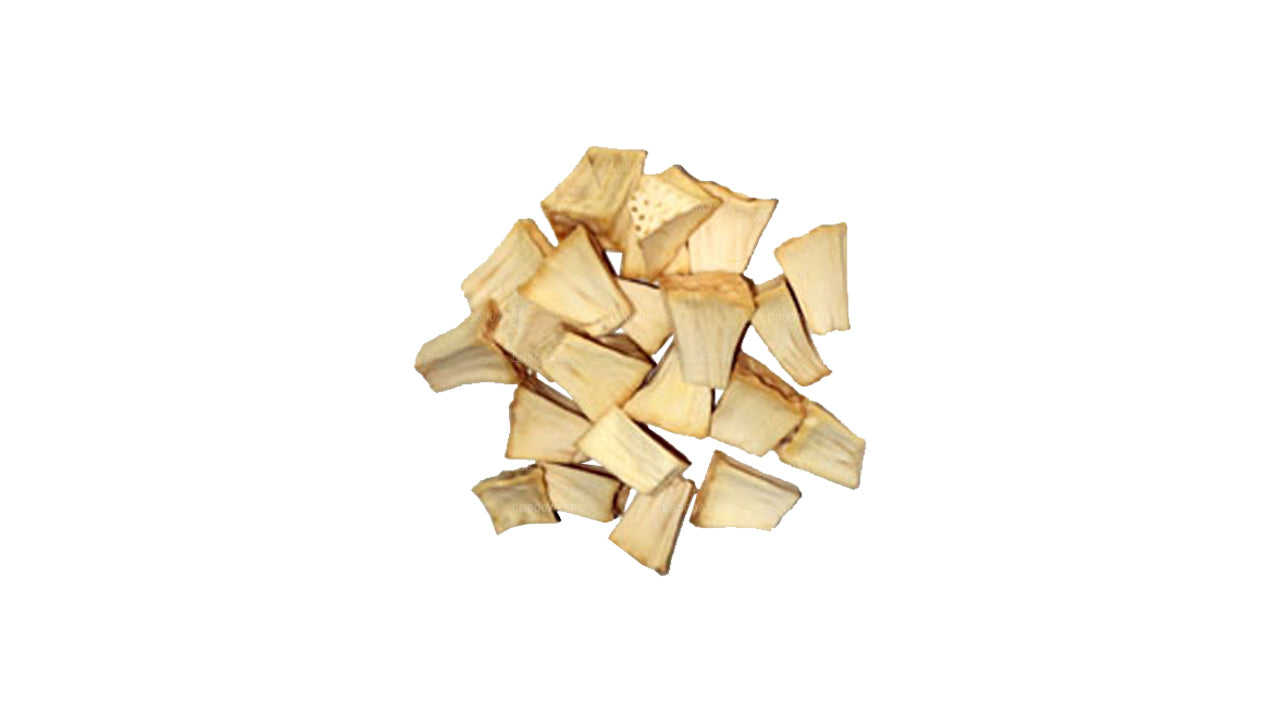




Artocarpus incisus, commonly known as breadfruit, is a large tropical tree that has been cultivated across South and Southeast Asia for centuries. In Sri Lanka it is known locally as del (දෙල්) and holds a respected place in both the island's traditional cuisine and its long-standing Ayurvedic pharmacopoeia. The tree belongs to the Moraceae family — the same broad family as the jackfruit and mulberry — and thrives in the warm, humid lowland conditions that characterise much of Sri Lanka's coastal belt.
What does Artocarpus incisus look like?
The breadfruit tree is an evergreen that can reach 20–25 metres in height under favourable conditions. Its deeply lobed, glossy leaves are large and distinctive, making the tree easy to identify even from a distance. The fruit itself is roughly spherical, typically 15–30 cm in diameter, with a green, patterned rind that becomes yellowish as it matures. The flesh inside is creamy white and starchy when unripe, softening and sweetening as the fruit ripens. Most cultivars grown in Sri Lanka are seedless, which is the form most valued for food.
The tree produces latex — a sticky, milky sap — throughout its bark and leaves, which has traditional uses in local craft and medicinal preparations. Flowering and fruiting patterns vary by region, but trees in Sri Lanka's low country typically bear fruit more than once a year.
What are the traditional Ayurvedic uses of Artocarpus incisus?
Artocarpus incisus is formally catalogued among the Ayurvedic medicinal plants of Sri Lanka, reflecting centuries of documented use in indigenous healing systems. In Ayurveda, different parts of the tree — the fruit, leaves, bark, and latex — are attributed with distinct properties.
- Fruit: Considered nourishing and grounding (associated with qualities that balance vata). Unripe breadfruit is used in preparations intended to support digestive function.
- Latex: Traditionally applied topically to treat skin conditions, including rashes and fungal complaints.
- Leaves: Dried and powdered leaves have been used in formulations aimed at supporting liver health and managing elevated blood sugar, though clinical evidence is still emerging.
- Bark: Decoctions made from the bark have been used in traditional practice to address inflammatory conditions.
Modern phytochemical research has identified flavonoids, phenolic compounds, and antioxidants in various parts of the plant, lending scientific interest to several of these traditional applications. Studies continue to examine its potential in managing metabolic and inflammatory conditions.
How is breadfruit used in Sri Lankan cooking?
In Sri Lankan kitchens, del is a versatile ingredient used across multiple stages of its ripeness. Unripe breadfruit has a dense, starchy texture that absorbs spice well, making it ideal for curries. The classic del curry — cooked with coconut milk, turmeric, green chilli, and a tempering of mustard seeds and curry leaves — is one of the most recognisable preparations in the country's culinary tradition.
As the fruit ripens, the flesh becomes sweeter and is sometimes eaten roasted or boiled as a simple accompaniment to rice. In some households, ripe breadfruit is mashed and combined with coconut to make a dessert preparation. The versatility of the fruit has made it a reliable food source in rural communities, particularly along the southwestern coast and in the Sabaragamuwa and Western provinces.
Beyond fresh preparation, breadfruit can be dried and ground into flour — an approach gaining renewed interest as a gluten-free, high-fibre alternative to refined wheat flour. Dehydrated breadfruit slices are also produced commercially, preserving the nutritional profile of the fresh fruit for longer storage and convenience.
Where does breadfruit grow in Sri Lanka?
Artocarpus incisus grows best in the island's wet zone, where annual rainfall is high and temperatures remain consistently warm. It is a common feature of home gardens in the Western, Southern, and Sabaragamuwa provinces, often planted alongside other multi-use trees such as Cocos nucifera (coconut) and Pongamia pinnata. The tree is well suited to the coastal lowlands and mid-country, though it does not perform as well at higher elevations where temperatures drop significantly.
Traditional home gardens — known as kandyan forest gardens — often feature breadfruit as one of the canopy species. These multi-storey garden systems have been recognised for their role in preserving biodiversity and supporting food security at the household level.
What is the nutritional value of breadfruit?
Breadfruit is a nutritionally significant food. It is a good source of complex carbohydrates and dietary fibre, and contains meaningful amounts of potassium, vitamin C, and B vitamins. Compared to many staple crops, it is relatively high in protein for a fruit, and its fibre content supports healthy digestion. The low glycaemic response of unripe breadfruit has attracted attention as a functional food for managing blood glucose levels.
| Nutrient | Approximate amount per 100g (raw, mature) |
|---|---|
| Energy | ~103 kcal |
| Carbohydrates | ~27 g |
| Dietary fibre | ~4.9 g |
| Protein | ~1.1 g |
| Potassium | ~490 mg |
| Vitamin C | ~29 mg |
Values are approximate and can vary by cultivar and ripeness stage. Dehydrated forms concentrate these nutrients further but also reduce moisture-sensitive vitamins.
How does breadfruit relate to Sri Lanka's broader botanical heritage?
Sri Lanka's botanical traditions are among the richest in Asia. The island's Ayurvedic system, which predates modern pharmacology by over two millennia, draws on a catalogue of several hundred plant species — Artocarpus incisus among them. This tradition is documented in classical texts such as the Deshiya Chikitsa and remains a living practice today, supported by government-recognised Ayurvedic hospitals and registered practitioners.
The Sinharaja Forest Reserve, a UNESCO World Heritage Site, is a reminder of the extraordinary plant diversity that underlies this tradition. Many of Sri Lanka's medicinal plants are endemic to the island's rainforest ecosystems, underscoring the importance of conservation alongside continued ethnobotanical research.
For visitors interested in exploring Sri Lanka's living relationship with plants and food, agricultural and village experiences offer a grounded way to encounter these traditions directly — from home gardens where del trees grow alongside spice crops, to small-scale farms where traditional cultivation methods are still practised.
Other species in this genus
4 more, sharing the same genus.