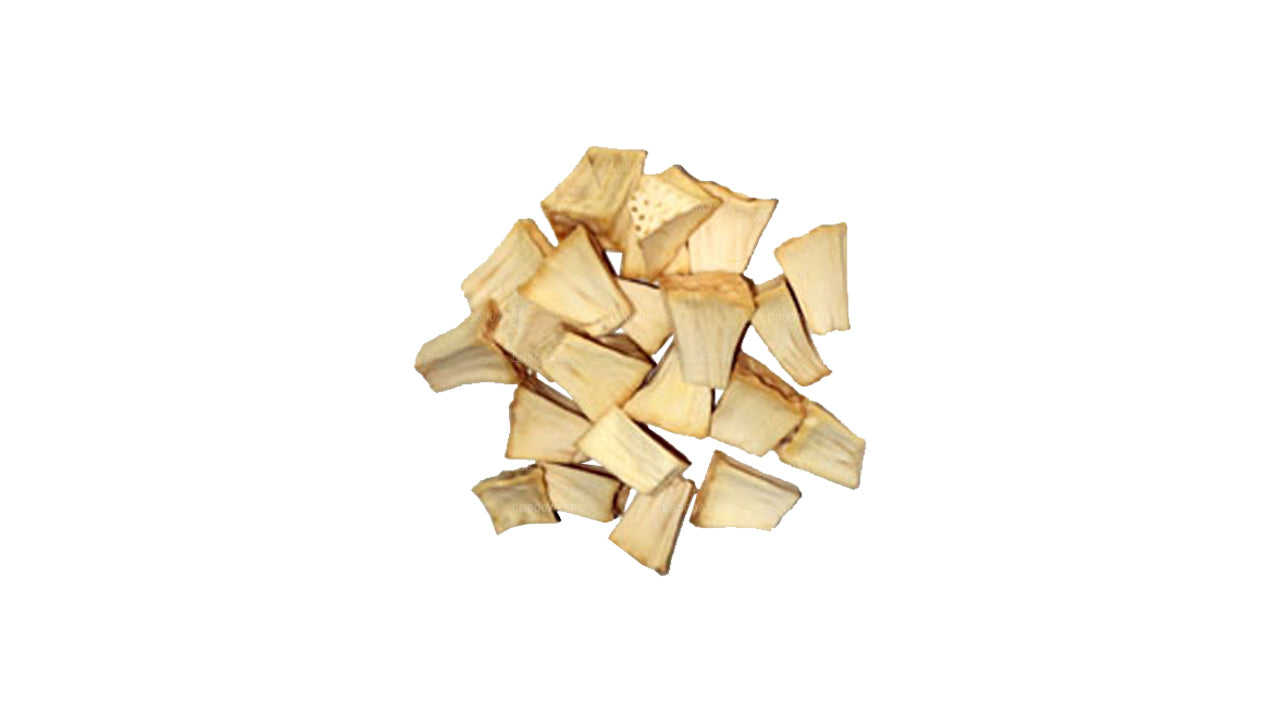




Artocarpus altilis, commonly known as breadfruit and called del (දෙල්) in Sinhala, is one of the most nutritionally significant trees in Sri Lanka's traditional landscape. A member of the mulberry family (Moraceae), it has been cultivated across the island for centuries — in home gardens, temple grounds, and village farms — valued equally for its culinary versatility and its place in Ayurvedic medicine.
What is Artocarpus altilis and where does it grow in Sri Lanka?
Breadfruit is a large tropical tree that typically reaches 15–20 metres in height. It thrives in the island's wet and intermediate zones, where rainfall and warmth are consistent throughout the year. In Sri Lanka you will find it growing abundantly in the low country — particularly in coastal and mid-country villages — as well as in wetter highland regions.
The tree produces large, round or oblong fruits with a distinctive green, patterned skin. Unlike many other fruit trees, a single breadfruit tree can yield a substantial harvest during its fruiting seasons, making it an important food-security crop for rural households. The seedless cultivars common to Sri Lanka are propagated vegetatively, typically through root cuttings.
How is breadfruit used in Sri Lankan cooking?
In Sri Lankan kitchens, del is far more than a curiosity — it is a staple ingredient that appears across many regional recipes. Unripe breadfruit is cooked much like a starchy vegetable: sliced and simmered in coconut-based curries, tempered with mustard seeds and curry leaves, or boiled and mashed. Ripe fruit has a sweeter flavour profile and is sometimes eaten fresh or incorporated into desserts.
One of the most popular traditional preparations is del curry, where young fruit is pressure-cooked with coconut milk, turmeric, and a blend of Sri Lankan spices. Some households also dry and grind the fruit into a flour used in flatbreads and rotis. A quick comparison of breadfruit's culinary forms:
- Unripe fruit: curries, stir-fries, boiled accompaniments
- Ripe fruit: fresh eating, sweet preparations
- Dehydrated slices: long-shelf-life snack, portable nutrition
- Flour: flatbreads, baked goods, gluten-free baking
- Seeds (where present): roasted or boiled, similar to chestnuts
Given how central coconut is to Sri Lankan cooking, del curry is often prepared alongside Cocos nucifera-derived ingredients — coconut milk, scraped coconut, and coconut oil — making the two trees natural kitchen partners.
What are the Ayurvedic and medicinal properties of Artocarpus altilis?
Artocarpus altilis holds a recognised place in Sri Lanka's catalogue of Ayurvedic medicinal plants. Different parts of the tree are attributed with distinct therapeutic properties:
- Leaves: traditionally used to help manage blood pressure and support liver health; leaf decoctions are referenced in classical Ayurvedic texts
- Latex (milky sap): applied topically in traditional practice to soothe skin conditions and treat fungal infections
- Roots: bark preparations are noted in ethnobotanical records as being used for respiratory ailments
- Fruit: recognised as a good source of dietary fibre, complex carbohydrates, and several micronutrients including potassium, vitamin C, and B vitamins
Modern nutritional research supports some of these traditional claims. The fruit's high fibre content is associated with stable blood sugar response, and its relatively low glycaemic index compared to refined carbohydrates has attracted interest as a functional food. Sri Lanka's Department of Ayurveda formally includes Artocarpus altilis in its plant registry, recognising it within the broader system of traditional medicine practised on the island.
What is the ecological role of the breadfruit tree in Sri Lanka?
Beyond the kitchen and the dispensary, the breadfruit tree plays a meaningful ecological role. Its large canopy provides shade that lowers local temperatures and supports understorey biodiversity — a feature particularly valued in home gardens, where the tree often forms the highest canopy layer. The wood, which is lightweight and resistant to sea worms, has historically been used in boat-building and furniture-making in coastal communities.
Breadfruit trees also contribute to soil health through leaf litter, and their rapid growth makes them a candidate for agroforestry systems aimed at carbon sequestration. In Sri Lanka's wet-zone forests and forest margins — areas that overlap with habitats like the Sinharaja Forest Reserve buffer zones — the tree is part of a broader mosaic of useful species that communities have cultivated for generations.
How does Artocarpus altilis compare to related species found in Sri Lanka?
Sri Lanka is home to several species within the Artocarpus genus, and it helps to distinguish them:
| Species | Common Name | Sinhala Name | Primary Use |
|---|---|---|---|
| Artocarpus altilis | Breadfruit | Del (දෙල්) | Culinary staple, Ayurveda |
| Artocarpus heterophyllus | Jackfruit | Kos (කොස්) | Fruit, timber, young fruit curry |
| Artocarpus nobilis | Ceylon breadfruit | Rat del (රට දෙල්) | Timber, limited culinary use |
While jackfruit is perhaps better known internationally, breadfruit holds its own as a distinct and important crop — particularly because its starch-rich flesh can substitute for rice or bread in the diet, an attribute that historically made it a buffer against rice shortages in Sri Lankan villages.
Where can travellers encounter breadfruit culture in Sri Lanka?
For visitors interested in Sri Lanka's agricultural and botanical heritage, several experiences offer genuine engagement with breadfruit and related traditions. Village-based tours in the wet zone — particularly in Galle, Matara, and Kalutara districts — often pass through home gardens where del trees grow alongside banana, papaya, and coconut. Rural cooking demonstrations frequently feature del curry as one of the dishes prepared.
Visitors exploring the spice-growing regions of the island will also notice breadfruit as part of the polyculture garden model, where plants like Syzygium aromaticum (cloves) and Ceylon black pepper grow alongside food trees such as del. This layered, multi-species approach to cultivation reflects centuries of agronomic knowledge refined for Sri Lanka's tropical conditions.
What is the nutritional profile of dehydrated breadfruit?
Drying breadfruit slices is one of the oldest methods of preserving the harvest for use beyond the fruiting season. Dehydrated del retains much of its complex carbohydrate content while reducing water activity to extend shelf life significantly. The drying process concentrates flavour and results in a versatile ingredient: it can be rehydrated for cooking, ground into flour, or eaten directly as a snack.
Nutritionally, dehydrated breadfruit is a meaningful source of energy, dietary fibre, and minerals. It is naturally gluten-free, making it of interest to those seeking wheat alternatives. For travellers wishing to take home a genuine Sri Lankan botanical product, dried breadfruit is one of the more authentic options available — rooted in tradition rather than invented for the tourist market.
Other species in this genus
4 more, sharing the same genus.