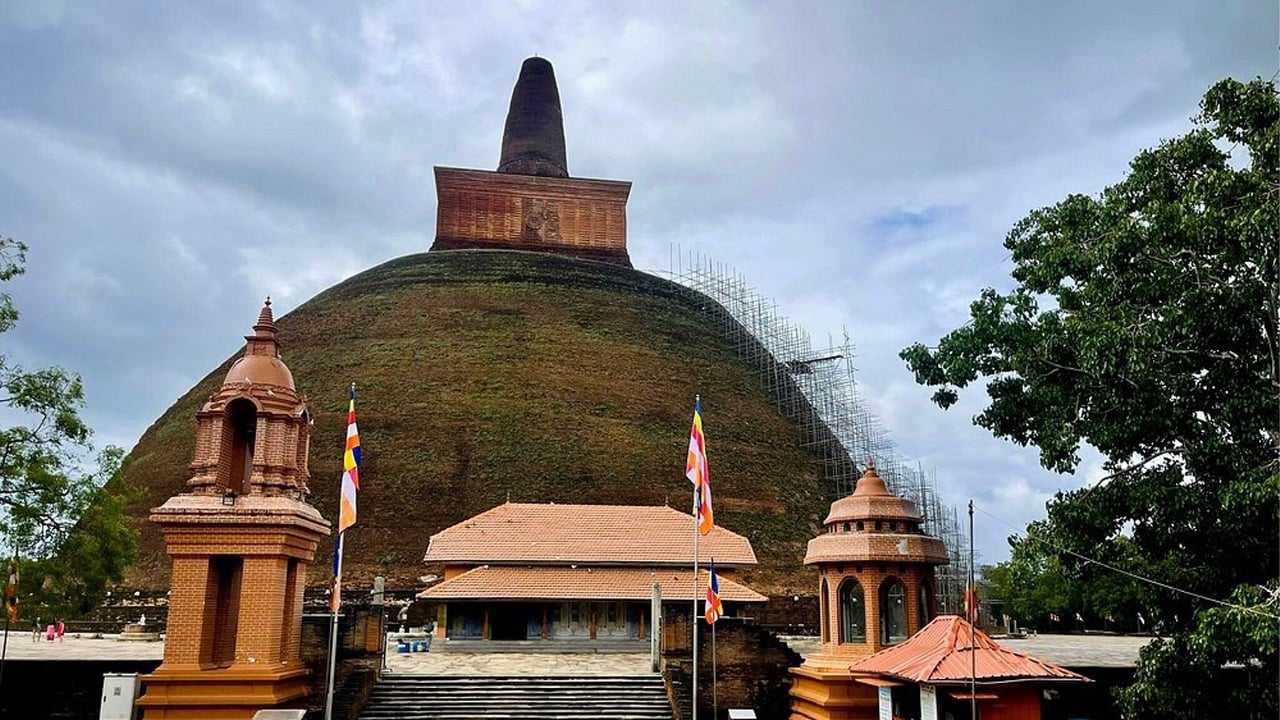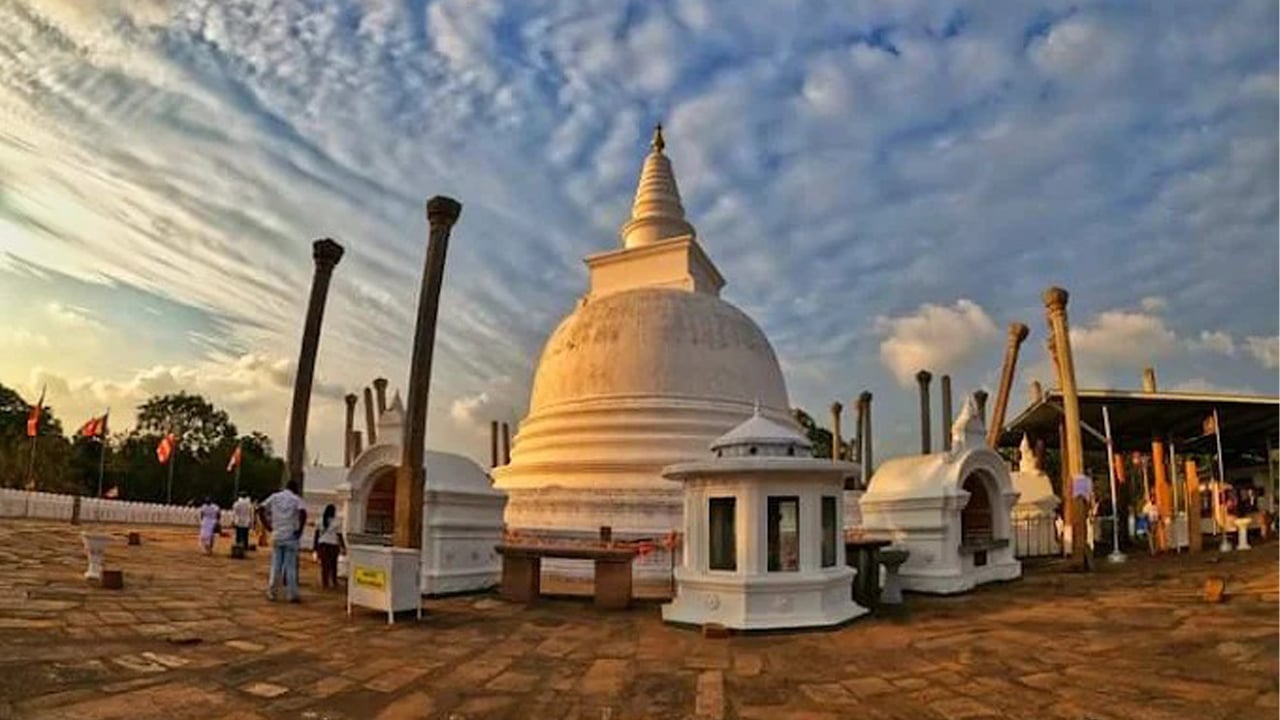
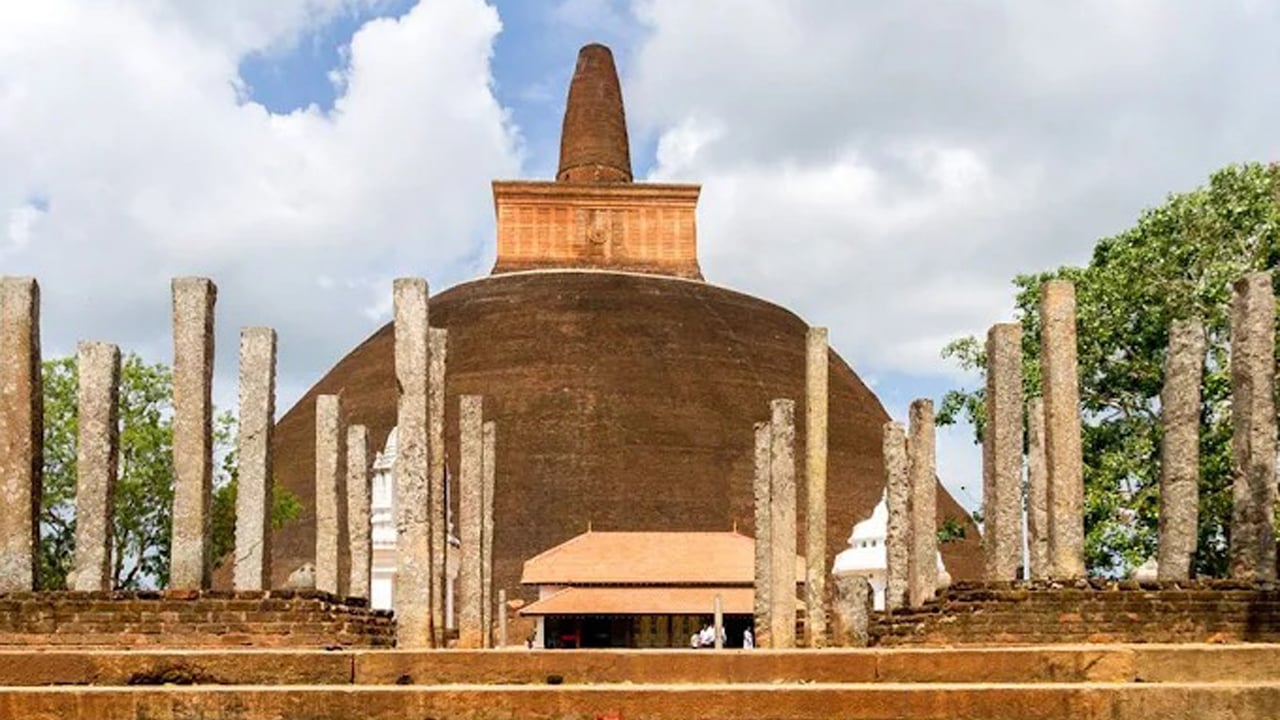
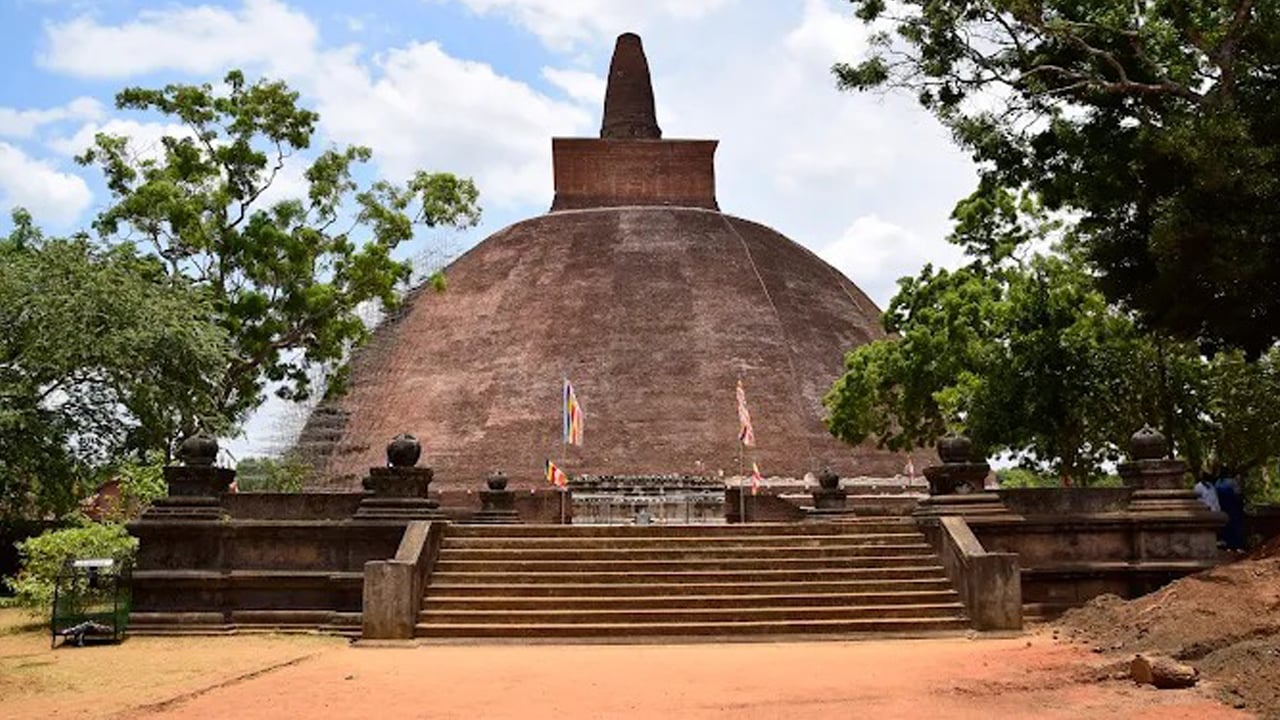

Rising from the ancient plains of Anuradhapura, Abhayagiri Stupa stands as one of the most significant Buddhist monuments ever built in Sri Lanka. At its peak it rivalled the great pyramids of Egypt in sheer mass, and even today — worn by centuries of monsoon and jungle — it commands the skyline and the imagination in equal measure. For anyone serious about understanding Sri Lankan history and Buddhism, a visit here is not optional.
What is the history of Abhayagiri Stupa?
Abhayagiri was founded in the 1st century BCE by King Vattagamani Abhaya (also known as Valagamba), who dedicated the site to a monk who had supported him during a period of exile. The name itself — Abhaya-giri, meaning "Fearless Hill" — reflects both the king's gratitude and the commanding presence the structure was intended to project.
Over the following centuries the stupa grew into the spiritual and intellectual heart of a vast monastic complex. The Abhayagiri Monastery became a renowned centre for Mahayana and Vajrayana Buddhist scholarship, attracting monks and pilgrims from as far as China and India. The Chinese pilgrim Fa Hsien visited in the early 5th century CE and recorded a community of around five thousand monks living and studying here — one of the largest monastic populations in the ancient world.
The complex declined after the fall of Anuradhapura around the 10th century CE, and the jungle gradually reclaimed it. Serious archaeological work began under British colonial administration in the 19th century and has continued under Sri Lanka's Central Cultural Fund and the Department of Archaeology ever since. Abhayagiri is now part of the Anuradhapura Sacred City, a UNESCO World Heritage Site inscribed in 1982.
How large is Abhayagiri Stupa?
The stupa's original height is estimated at around 115 metres, which would have made it one of the tallest structures on earth at the time of its construction. The dome diameter at the base is roughly 109 metres. Today the structure has settled and eroded considerably, but the remaining mass is still immense — the sheer scale becomes apparent only when you walk around its base and look upward.
The brick core is built using a technique that has fascinated structural engineers: millions of hand-made bricks fired to withstand the tropical climate, laid in patterns designed to distribute load and resist moisture over millennia. The stupa-building tradition of ancient Sri Lanka reached its zenith here and at the nearby Jetavanaramaya.
What can you see at Abhayagiri today?
The main dome is the obvious centrepiece, but the surrounding monastic precinct rewards careful exploration. Key features include:
- The Samadhi Buddha Statue — a 4th-century seated Buddha carved from dolomite marble, considered one of the finest examples of ancient Sri Lankan sculpture. Former Indian prime minister Jawaharlal Nehru reportedly kept a photograph of it for comfort during his imprisonment.
- Twin Ponds (Kuttam Pokuna) — a pair of bathing ponds built for the monastery's monks, linked by an underground channel and decorated with makara balustrades. The engineering precision of the water supply system is remarkable.
- Ratnaprasada — the "Jewel Palace", featuring a celebrated moonstone threshold carving considered among the best-preserved examples of its kind in Sri Lanka.
- Mahasena's Palace ruins — the remnants of a royal residence associated with the monarch who later built the Jetavanaramaya stupa nearby.
- The Abhayagiri Museum — on-site and housing artefacts recovered from the complex, including stone carvings, inscribed tablets, and decorative architectural fragments.
The site is spread across a large area, so allow at least two to three hours to explore it properly. Comfortable walking shoes and sun protection are essential.
When is the best time to visit Abhayagiri Stupa?
Anuradhapura lies in Sri Lanka's dry zone, which means the most reliable weather for visiting falls between December and April. Temperatures during this period are warm but manageable — typically in the low 30s Celsius — and rainfall is minimal. The site is open year-round, and early morning visits (around 6–8 am) are particularly rewarding: the light is softer, the heat is bearable, and the pilgrim traffic is lighter than at midday.
The full-moon day of Poson (June) draws large crowds of Buddhist pilgrims to Anuradhapura, as it commemorates the introduction of Buddhism to Sri Lanka. Visiting then offers a rare glimpse of living religious practice at an ancient site, though accommodation should be booked well in advance.
How do I get to Abhayagiri Stupa from Colombo?
Anuradhapura is approximately 205 kilometres north of Colombo. The most comfortable option for independent travellers is a private car or driver, which takes around three and a half to four hours depending on traffic. Intercity trains run from Colombo Fort station to Anuradhapura — journey time is roughly four to five hours and the ride is pleasant. Buses are frequent but significantly slower.
Once in Anuradhapura, the Abhayagiri complex is located in the northern part of the Sacred City. Renting a bicycle at the entrance to the archaeological zone is a practical and popular way to move between sites; tuk-tuks are also readily available. The site is well signposted.
Is Abhayagiri part of a wider itinerary?
Most visitors combine Abhayagiri with the other major monuments of Anuradhapura — Jetavanaramaya, Sri Maha Bodhi, Ruwanwelisaya, and Thuparamaya — in a single full-day circuit. A longer itinerary might extend to Polonnaruwa, the medieval capital roughly 100 kilometres to the east, which contains its own exceptional Buddhist ruins and is easily reached as an overnight or day trip.
For wildlife enthusiasts, Wilpattu National Park lies around 30 kilometres west of Anuradhapura and is one of Sri Lanka's oldest and largest national parks, offering the possibility of leopard sightings in a remarkably undisturbed landscape.
Practical information for visitors
| Detail | Information |
|---|---|
| Opening hours | Open daily; the archaeological zone is accessible from dawn to dusk |
| Dress code | Modest clothing required — shoulders and knees covered; remove shoes at sacred structures |
| Photography | Permitted throughout the site; be respectful near worshippers |
| Combined ticket | A single ticket covers most monuments in the Anuradhapura Sacred City (purchased at the Cultural Triangle ticket office) |
| Nearest town | Anuradhapura city centre, approximately 3 km south of the complex |
Guides are available at the site entrance. Engaging a knowledgeable guide significantly enriches the visit — many of the stone carvings and structural details that appear abstract at first glance carry deep iconographic meaning that a good guide can explain clearly.
Nearby places
14 places within about 25 km, nearest first.
- Sandagiri stupaunder 1 km
- Abhayagiri Monasteryunder 1 km
- Abhayagiri Museumunder 1 km
- Sandahiru Stupaunder 1 km
- Kuttam Pokunaunder 1 km
- Moonstone at Mahasen Maligayaunder 1 km
- Eth Pokunaunder 1 km
- Lankaramaya Stupaunder 1 km
- Abhayagiriya Dana shalawaunder 1 km
- Samadhi Statueunder 1 km
- Stone Bridge and Library (Pothgula)under 1 km
- panda wewa2 km
- Srawasthipura Railway Station3 km
- Nachchaduwa Wewa4 km