

Vesak cards are one of the quieter yet deeply felt customs of Vesak Poya — the full-moon day in May that marks the birth, enlightenment, and passing of the Buddha. Across Sri Lanka and among Buddhist communities worldwide, sending a card during this period is a way of sharing metta (loving-kindness) with friends, family, and neighbours. The gesture is small, but the sentiment it carries is central to the spirit of the occasion.
What makes a Vesak card different from an ordinary greeting card?
Unlike secular greeting cards, Vesak cards draw on a visual and literary vocabulary rooted in Theravada Buddhist culture. Common design elements include:
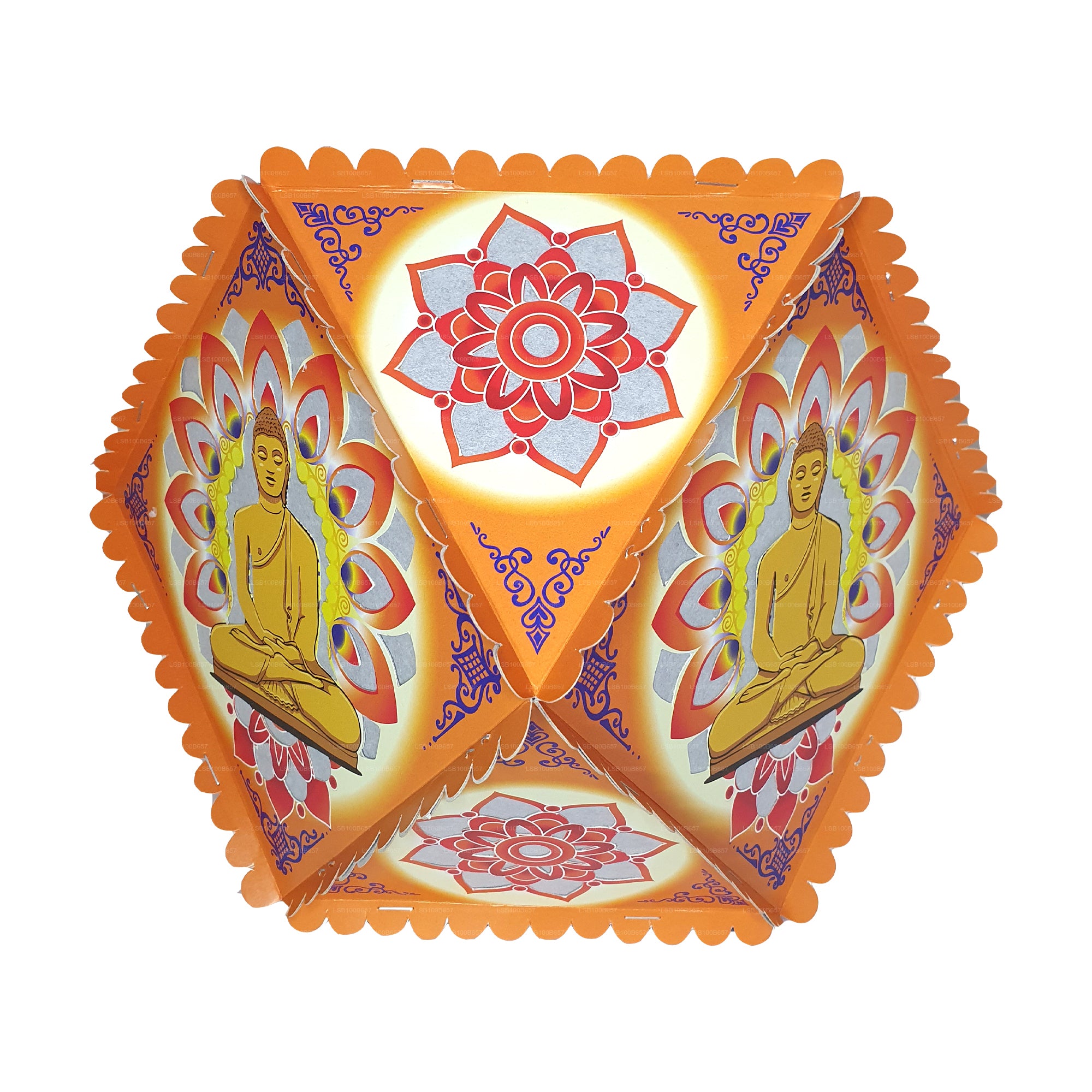
- Vesak lanterns (koodu and atapattam) — the paper or bamboo lanterns hung outside homes and temples throughout the island
- Vesak thorana — ornate illuminated pandals that depict scenes from the Jataka tales
- Lotus flowers and Bodhi leaves — universal symbols of purity and awakening in Buddhist iconography
- Vesak flags — the five-coloured flags representing qualities of the Buddha
The written content is equally considered. Many cards include a verse from the Dhammapada, a traditional Vesak stanza in Pali, or a short message of goodwill written in Sinhala, Tamil, or English. The tone is always one of calm reflection rather than festive excitement.
What are traditional Vesak card wishes and messages?
Classic Vesak greetings draw on the three central virtues that the day celebrates: wisdom (prajna), compassion (karuna), and generosity (dana). A simple message might read "May the blessings of the Triple Gem bring you peace and happiness this Vesak" or offer a quotation attributed to the Buddha on the nature of kindness. In Sinhala, phrases invoking the blessings of the Dhamma remain the most widely used. Tamil-language cards are common in the north and east of the island, and among Sri Lankan Tamil Buddhist communities. Bilingual and trilingual cards that carry the greeting in Sinhala, Tamil, and English have grown increasingly popular as a way of acknowledging the shared cultural significance of the day across communities.
How are Vesak cards made by hand?
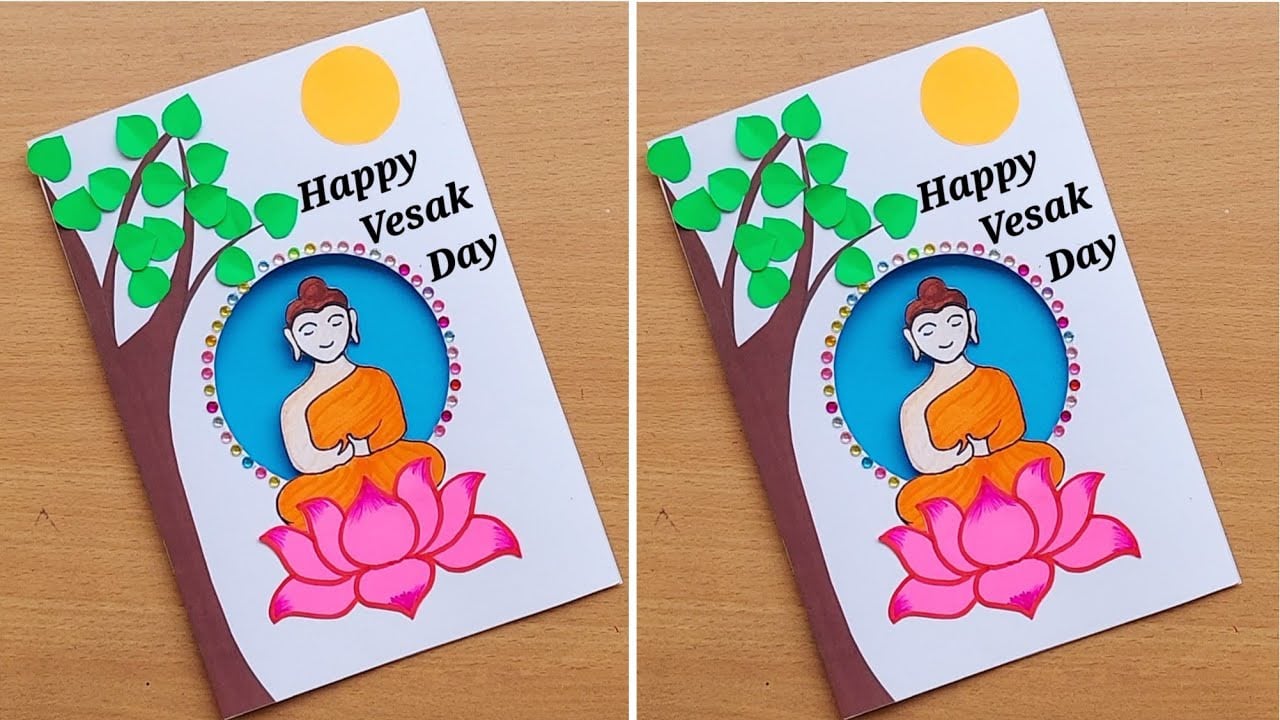
Handmade Vesak cards have a long tradition in Sri Lankan schools and Dhamma schools (Daham Pasalas), where children are guided to make cards as a mindful activity in the weeks before the Poya. Typical techniques include:
- Watercolour or pencil illustrations of lanterns, lotus flowers, and Bodhi trees
- Paper quilling — rolling thin strips of coloured paper into shapes — to create decorative borders and motifs
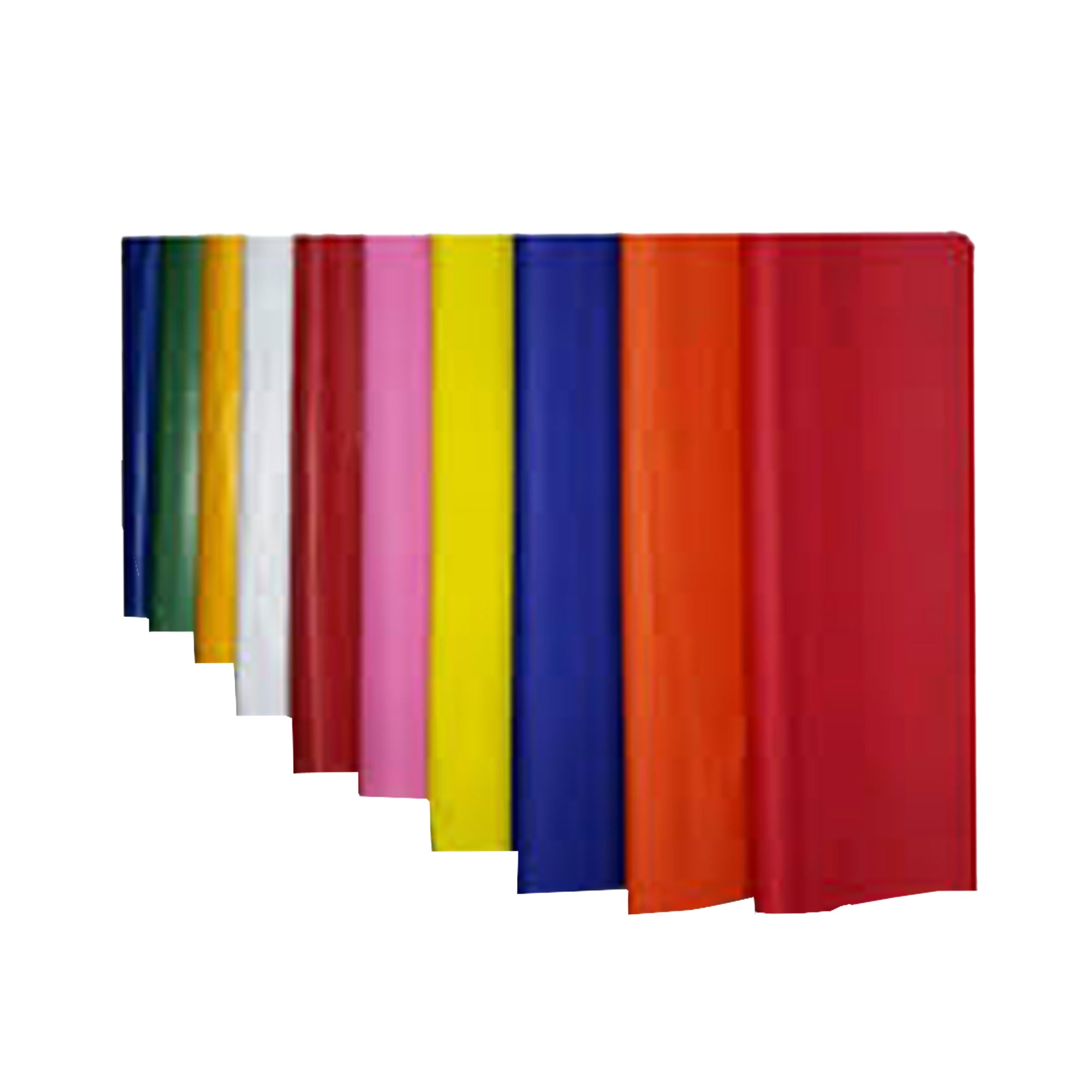
- Collage work using Vesak flag paper and tissue
- Calligraphy of Pali stanzas or Sinhala blessings
The act of making the card by hand is itself considered a form of mindful practice, echoing the observance of sil that many Sri Lankans undertake during the Poya period. A card made with care and attention carries more meaning than a printed one, which is why handmade cards continue to be valued even as commercial alternatives have become readily available.
What is the difference between printed and digital Vesak cards?
Commercially printed Vesak cards have been widely available in Sri Lanka since at least the mid-twentieth century. Stationery shops, temple gift counters, and supermarkets stock them in the weeks leading up to Vesak. They range from simple single-fold cards to multi-panel designs with gold foil detailing and ribbon ties.
Digital Vesak cards — shared via messaging apps, email, and social media — have become the dominant mode of exchange among younger Sri Lankans and the large diaspora community living abroad. E-cards allow the sender to personalise the greeting text, choose from animated lantern or lotus designs, and reach recipients in multiple countries simultaneously. For Sri Lankans living far from the island, a digital Vesak card can be a meaningful way to stay connected to the rhythms of the celebration — the sound of bakthi gee devotional songs, the glow of the thorana panels, the quiet of a Poya evening — even from thousands of kilometres away.
How are Vesak cards connected to wider Vesak traditions?
A Vesak card rarely arrives in isolation. It is typically exchanged alongside other acts of generosity that define the season: visiting a dansala (a free food and drink stall set up by individuals or organisations as an act of merit), lighting a lantern at home, or taking part in a procession to a local temple. The card formalises the goodwill that flows through all these gestures, giving it a tangible, lasting form. In this sense, it fits naturally within the broader calendar of Buddhist observances in Sri Lanka — which also includes significant celebrations such as the Esala Perahera Festival in Kandy later in the year.
In homes, Vesak cards are often displayed alongside the lanterns hung at the entrance — a small gallery of blessings received. In temples, community boards sometimes carry cards sent by devotees who cannot attend in person. The physical card, in particular, is rarely discarded quickly; it tends to remain in a visible place throughout the Vesak season before being kept or respectfully set aside.
What should you write in a Vesak card?
The most meaningful Vesak messages are brief and sincere. A short verse, a quotation from the Dhammapada, or a simple expression of goodwill — wishing the recipient peace, health, and wisdom — is entirely appropriate. Longer messages risk losing the meditative quality the occasion calls for. If writing to someone who is not Buddhist, framing the message around universal values (kindness, reflection, compassion) rather than specifically religious language ensures the card is received in the spirit intended.
A few widely used formats:
- A Pali stanza followed by its translation and a personal note
- A hand-drawn image with a one-line blessing beneath it
- A printed card with a handwritten addition — a sentence or two in the sender's own words
Where can you find or buy Vesak cards in Sri Lanka?
In the weeks before Vesak Poya, Vesak cards appear in bookshops, temple precincts, market stalls, and supermarket stationery aisles across the country. Colombo has the widest selection, with specialist religious goods shops carrying hand-crafted and premium printed cards alongside lantern-making supplies. Online platforms, including Lakpura, carry a selection of handmade paper cards, quilled greeting cards, and Vesak-specific stationery that can be shipped domestically or internationally — useful for Sri Lankan families abroad who want to send something tangible rather than a digital message.
Other species in this genus
3 more, sharing the same genus.
Related reading
6 pages on closely related subjects.