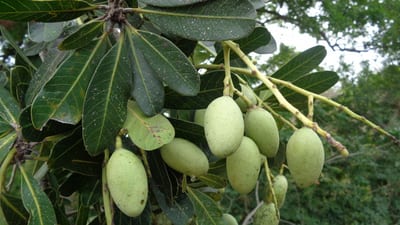
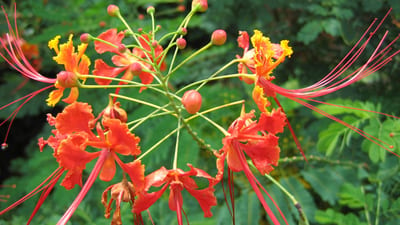
Uvaria zeylanica is a woody climbing shrub native to Sri Lanka and parts of South and Southeast Asia. Recognised as part of the island's rich catalogue of Ayurvedic medicinal plants, it belongs to the family Annonaceae — the same broad botanical family that includes many tropical fruit-bearing species. In Sri Lanka, the plant grows across lowland forests and scrublands, typically thriving in warm, humid conditions at lower elevations.
What is Uvaria zeylanica and where does it grow in Sri Lanka?
Uvaria zeylanica is a scandent shrub — meaning it uses surrounding vegetation for support as it climbs — with elongated lance-shaped leaves and small, typically yellowish or pale flowers. The genus Uvaria contains several hundred species distributed across tropical Africa, Asia, and Australia, but zeylanica specifically refers to Ceylon (the historical name for Sri Lanka), indicating the species was first formally described from specimens collected on the island.
In Sri Lanka, it is found across a range of habitats including dry zone forests, coastal scrub, and the margins of wet zone jungle. Forests such as the Sinharaja Forest Reserve and adjoining lowland areas support populations of Annonaceae species, and Uvaria zeylanica has been recorded from several of these ecosystems. The plant prefers well-drained soils and tends to colonise forest edges rather than dense interior canopy.
How is Uvaria zeylanica used in Ayurvedic medicine?
Traditional Ayurvedic and folk medicine systems in Sri Lanka have drawn on Uvaria zeylanica for several therapeutic applications. Different parts of the plant — including the roots, bark, and leaves — have been used in local preparations. Traditional practitioners have employed the plant in formulations aimed at addressing inflammatory conditions, fevers, and certain digestive complaints.
The roots, in particular, have attracted attention in ethnobotanical research for their bioactive chemical profile. Species within the Uvaria genus are known to contain acetogenins, alkaloids, and flavonoids — compound classes that are active areas of interest in contemporary phytochemical research. However, it is important to note that traditional uses documented in Ayurvedic literature do not automatically constitute clinically validated treatments; anyone seeking Ayurvedic care should consult a qualified practitioner.
Sri Lanka's Ayurvedic tradition is one of the most codified in Asia, with formal medical institutions, licensed physicians, and a government department dedicated to indigenous medicine. Plants like Uvaria zeylanica sit within this system as part of a broader pharmacopeia that also includes well-known species such as Pongamia pinnata and Acacia chundra.
What is the botanical classification of Uvaria zeylanica?
| Category | Classification |
|---|---|
| Kingdom | Plantae |
| Order | Magnoliales |
| Family | Annonaceae |
| Genus | Uvaria |
| Species | U. zeylanica |
| Common habitat | Lowland and dry zone forests, coastal scrubland |
| Growth form | Woody climbing shrub (scandent) |
What role does Uvaria zeylanica play in Sri Lanka's ethnobotanical heritage?
Sri Lanka's geographic isolation as an island, combined with its varied climatic zones — from semi-arid lowlands in the north to cloud forests in the central highlands — has produced an exceptionally high level of plant endemism. A significant proportion of the island's flowering plant species are found nowhere else on Earth, and many of these have been integrated into local healing traditions over centuries.
Uvaria zeylanica represents the kind of species that forms the backbone of community-level traditional medicine: not widely commercialised or exported in large volumes, but well known to village healers (vedamahattayas) and Ayurvedic physicians who gather or cultivate it locally. Ethnobotanical surveys conducted by Sri Lankan universities and the Department of Ayurveda have helped document these uses before knowledge of wild plant harvesting practices is lost.
Compound Ayurvedic preparations — such as Yogaraja Guggulu or Kaishore Guggulu — illustrate how individual plant ingredients are combined according to classical formulae. Uvaria zeylanica, while typically used in simpler preparations, contributes to this layered pharmacological tradition.
Is Uvaria zeylanica under any conservation pressure?
Like many plants that depend on native forest habitat, Uvaria zeylanica faces indirect pressure from deforestation, land conversion for agriculture, and the degradation of coastal scrub ecosystems. While the species is not currently listed among Sri Lanka's most critically threatened plants, sustained habitat loss across the island's dry zone and coastal margins could reduce its range over time.
Sri Lanka has made substantial investments in protected area networks — including national parks and forest reserves managed by the Department of Wildlife Conservation and the Forest Department — which also incidentally protect the habitats of plants like Uvaria zeylanica. Supporting eco-responsible tourism in these areas contributes to the broader conservation funding that keeps such ecosystems intact.
Can travellers encounter native medicinal plants like Uvaria zeylanica in Sri Lanka?
For visitors with an interest in botany or traditional medicine, Sri Lanka offers several avenues for genuine engagement. Ayurvedic wellness centres and herbal gardens around Kandy and Matale provide guided introductions to medicinal plants in cultivated settings. More adventurous travellers can explore forest edges and nature trails where wild specimens of Annonaceae and other medicinal species grow naturally.
Botanical walks within reserves such as Horton Plains National Park or the Makandawa Rainforest region offer exposure to Sri Lanka's extraordinary plant diversity in situ. A knowledgeable local guide significantly enhances these experiences, providing context that field guides alone cannot offer.
Other species in this genus
1 more, sharing the same genus.