Terminalia arjuna, known in Sinhala as Kumbuk, is one of the most respected medicinal trees in Sri Lanka's Ayurvedic pharmacopoeia. A large deciduous tree that commonly grows along riverbanks and in moist lowland forests, it has been valued for centuries across South and Southeast Asia both for its therapeutic properties and its ecological role in riparian landscapes. In Sri Lanka, it features prominently in classical Ayurvedic formulations and continues to be cultivated and wildcrafted for use in traditional medicine today.
What does Terminalia arjuna look like?
Arjuna is a tall, spreading tree that can reach heights of 20 to 25 metres under favourable conditions. Its buttressed trunk is distinctive, with smooth, grey-green bark that peels away in thin, papery flakes to reveal a pinkish or pale cream surface beneath — a useful identification feature in the field. Leaves are oblong, slightly leathery, and arranged alternately along the branches. Small, pale yellow-white flowers appear between March and June, followed by hard, fibrous, winged fruits that mature later in the year.
In Sri Lanka, the Kumbuk tree is a characteristic sight along the banks of major rivers and tank bunds in the dry and intermediate zones. You may encounter mature specimens near ancient reservoirs in the Polonnaruwa area, where the species has grown undisturbed for generations alongside historic water management systems.
What is Terminalia arjuna used for in Ayurveda?
The bark of Terminalia arjuna is the primary part used medicinally. It is collected, dried, and processed into a range of Ayurvedic preparations including decoctions, powders, and fermented liquids. The tree belongs to the same genus as Terminalia chebula (Aralu) and Acacia chundra, both well-known in the Sri Lankan herbal tradition, though each plant carries a distinct therapeutic profile.
In classical Ayurvedic texts, arjuna bark is associated principally with cardiovascular support. It is described as having astringent (kashaya) properties and is categorised under preparations that strengthen heart function (hridaya). Traditional preparations include:
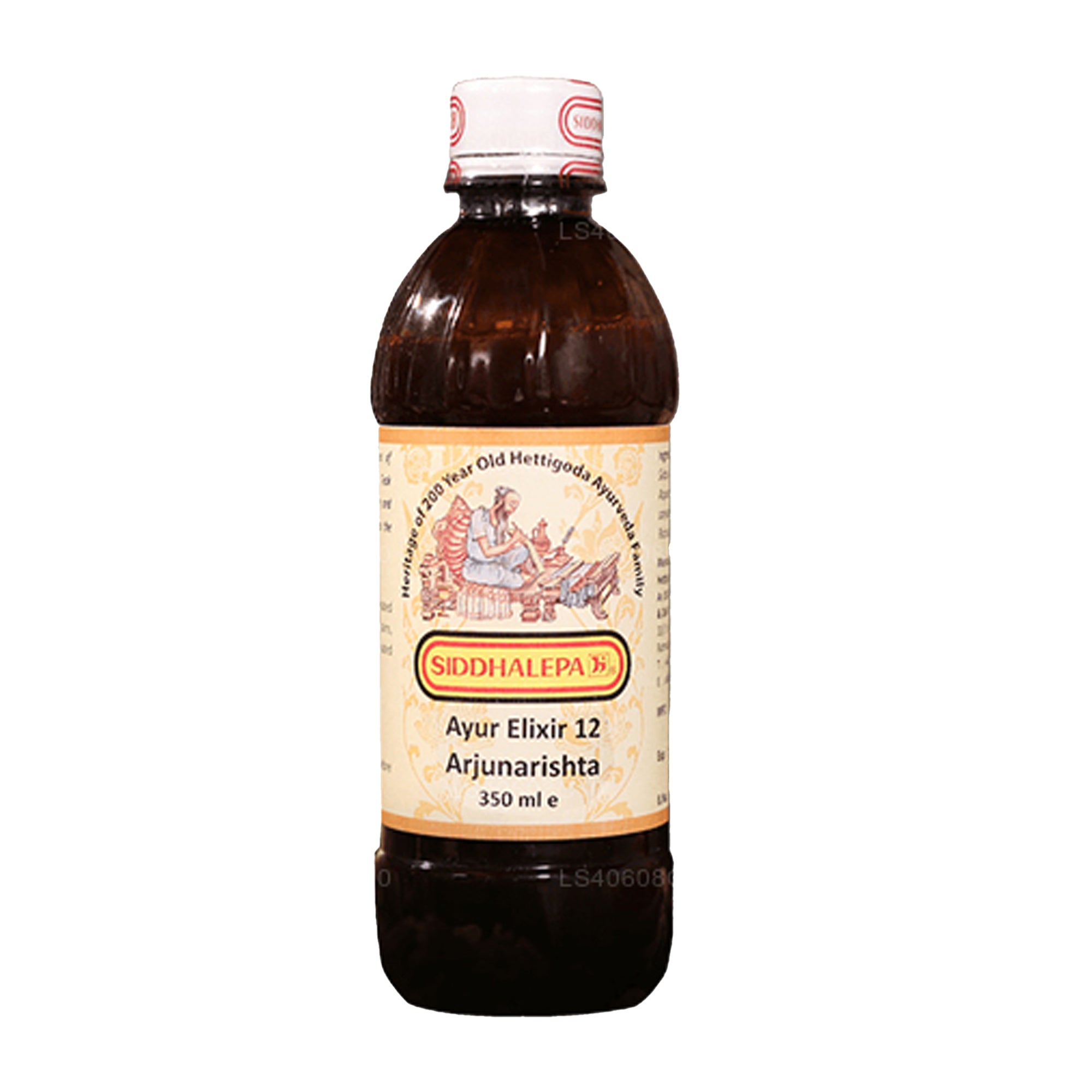
- Arjunarishtaya — a fermented herbal tonic in which arjuna bark is the principal ingredient, used to support cardiac health and circulation
- Arjuna kwatha — a water-based decoction of the bark taken as a daily supplement
- Arjuna churna — a dried bark powder, sometimes blended with other herbs or taken with warm milk
- Topical preparations, where the bark's astringent qualities are applied to support wound healing in traditional practice
Beyond cardiology, Ayurvedic practitioners in Sri Lanka have traditionally used arjuna preparations as a general tonic, and in formulations addressing liver function and bone health, though these applications are considered secondary to its cardiac role.
Where does Terminalia arjuna grow in Sri Lanka?
Terminalia arjuna favours moist, well-drained soils close to water sources. In Sri Lanka it is most commonly found in the dry zone and intermediate zone, particularly along the banks of rivers, irrigation canals, and ancient tank systems. The species is also cultivated in home gardens and Ayurvedic herb gardens across the island. It tolerates seasonal flooding well, which makes it well-suited to the Sri Lankan lowland river environment.
Unlike some medicinal trees that have become scarce through over-harvesting, Kumbuk remains relatively common in Sri Lanka, partly because it regenerates readily and is a recognised component of riparian ecosystems. Conservation of riverbank vegetation — including large arjuna trees — is increasingly discussed in the context of protecting these waterway habitats.
How is arjuna bark processed into Ayurvedic products?
Bark is typically harvested from mature trees, ideally in the dry season when the concentration of active compounds is considered highest in traditional practice. After collection, the bark is cleaned, dried in shade or low-temperature sunlight, and then either powdered or added to a liquid medium for fermentation. The fermented preparation, Arjunarishtaya, requires the bark to steep alongside other herbal ingredients and natural sweeteners over a controlled period, producing a mild alcoholic vehicle that helps extract and preserve active constituents. This process follows formulations codified in classical Ayurvedic texts and is carried out today by both large licensed manufacturers and smaller traditional practitioners in Sri Lanka.
How does Terminalia arjuna differ from other Terminalia species in Sri Lanka?
Sri Lanka hosts several species within the Terminalia genus, and it is worth distinguishing them clearly. Terminalia chebula (Aralu) is one of the three fruits of the famous Ayurvedic compound Triphala and is used primarily for digestive and detoxifying purposes. Terminalia bellirica (Bulu) is the second fruit of Triphala, with overlapping but distinct properties. Terminalia catappa (Kottamba, or Indian almond) is a coastal tree whose leaves and seeds have separate traditional and culinary applications. Terminalia arjuna, by contrast, is valued almost exclusively for its bark and is oriented toward cardiovascular and tonic applications rather than digestive or nutritional ones.
What should travellers know about Ayurvedic plants in Sri Lanka?
Sri Lanka has one of the world's oldest living traditions of Ayurvedic medicine, with documented practice spanning more than 2,000 years. The island's diverse ecosystems — from the rainforests of Sinharaja Forest Reserve to the dry zone scrublands — support an exceptionally rich flora of medicinal plants. Visitors with an interest in herbal medicine can explore Ayurvedic herb gardens, visit government-certified Ayurvedic hospitals, and purchase quality-assured preparations from licensed manufacturers. When buying herbal products, look for certification from Sri Lanka's Department of Ayurveda to ensure product authenticity and quality standards are met.
For those interested in the broader world of Sri Lankan spices and medicinal plants, the island's tradition of working with plants like Syzygium aromaticum (cloves) and Pongamia pinnata reflects the same deep integration of botanical knowledge into everyday life that makes Terminalia arjuna significant — not as an exotic curiosity, but as a living part of Sri Lanka's cultural and medical heritage.
Are there any scientific studies on Terminalia arjuna?
Research interest in Terminalia arjuna has grown considerably over the past three decades. Studies published in peer-reviewed journals have investigated constituents including glycosides (arjunoside, arjunine), flavonoids, and tannins. Research has explored potential effects on cardiovascular parameters, lipid profiles, and antioxidant activity, though much of this work has been conducted in laboratory or small clinical settings. Mainstream medical organisations generally treat Ayurvedic preparations as complementary rather than replacing conventional cardiac care, and reputable Ayurvedic practitioners in Sri Lanka are consistent in advising patients to consult qualified physicians for serious conditions. The traditional use of arjuna, documented in texts such as the Charaka Samhita and Sushruta Samhita, predates modern clinical frameworks by millennia and continues to be a living reference point for practitioners across South Asia.
Other species in this genus
4 more, sharing the same genus.