
Cissampelos pareira var. hirsuta, known in Sinhala as Diyamitta, is a slender climbing or ground-trailing vine native to Sri Lanka and parts of tropical Asia. It belongs to the family Menispermaceae and has been documented in the official catalogue of Ayurvedic medicinal plants of Sri Lanka, reflecting centuries of recorded use in traditional healing systems.
What does Diyamitta look like?
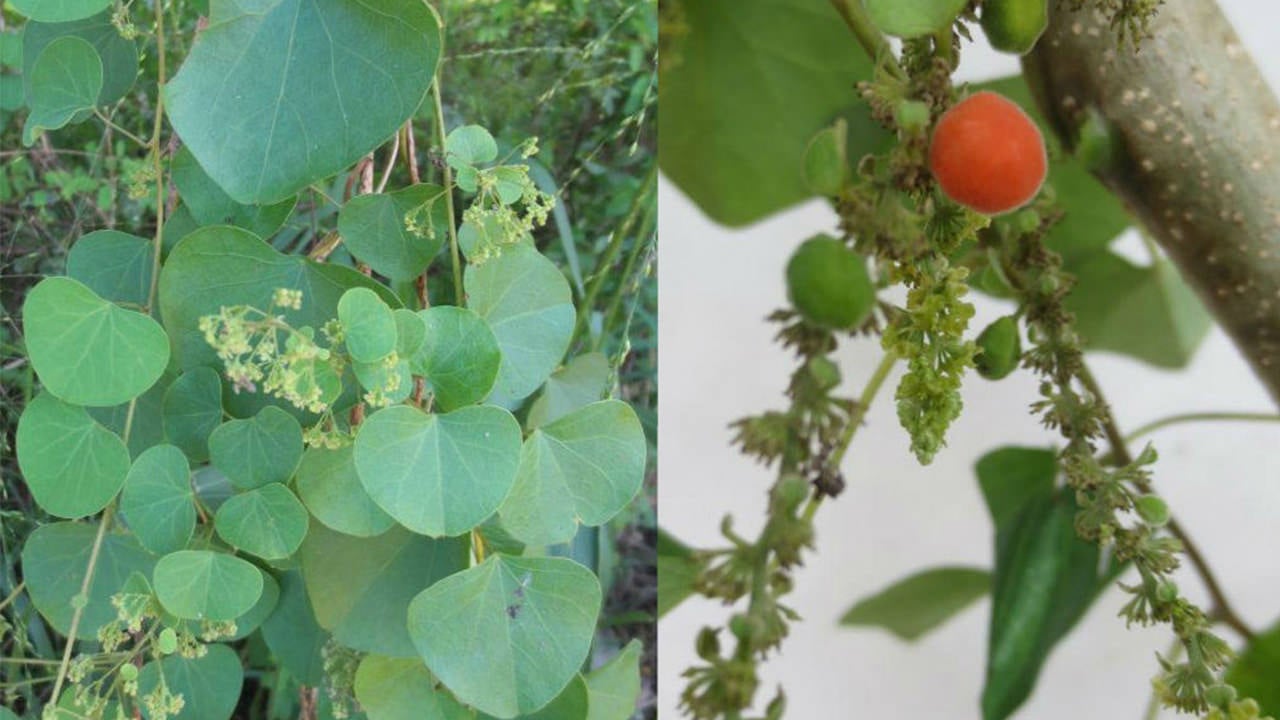
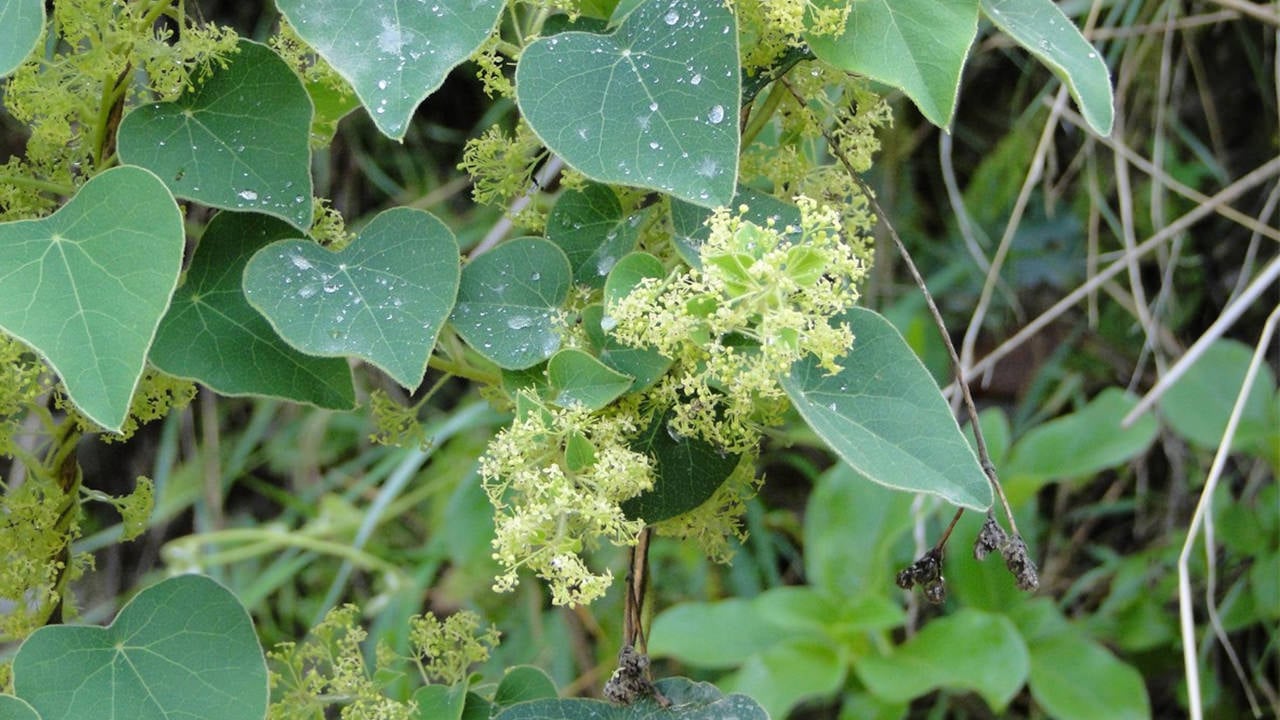
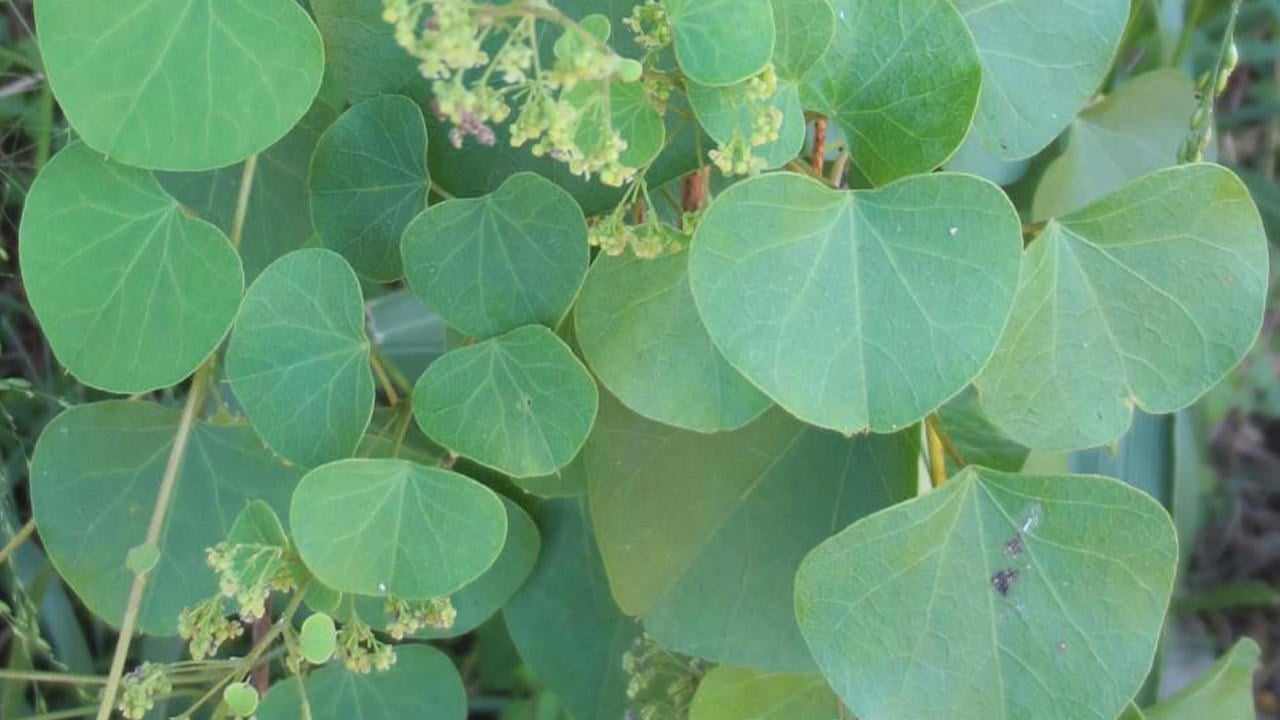
The plant grows as a twining vine, either sprawling along the ground or ascending a support plant. Its leaf blades are broadly ovate and may appear with or without a notably hairy texture — the varietal name hirsuta refers specifically to this hairiness on leaves and stems. Flowers are small and yellow-green in colour. As with other members of Menispermaceae, male and female inflorescences (referred to in traditional texts as Poomangi and Jayangi respectively) are borne on separate plants, making it a dioecious species. Fruit is typically a small drupe that turns red when ripe.
What are the traditional medicinal uses of Diyamitta?
In Sri Lankan Ayurvedic practice, virtually every part of the Diyamitta plant — leaves, stems, roots, and the whole plant — is considered therapeutically valuable. The plant is regarded as having a cooling quality, which informs many of its classical applications.
- Fever: A decoction of the plant is traditionally prepared and taken to bring down body temperature.
- Dysentery and digestive complaints: Leaf juice or a cooled decoction is consumed to address acute dysentery. The leaves may also be eaten directly as part of the treatment.
- Skin conditions: Crushed leaves applied topically are said to neutralise localised toxic reactions, rashes, and certain inflammatory skin conditions.
- Urethritis and urinary complaints: The diuretic properties attributed to Diyamitta make it a traditional choice for supporting urinary tract health.
- Haemorrhoids and warts: The plant features in formulations targeting vidradhi-type conditions — a classical Ayurvedic category that covers abscesses, warts, and growths.
- Breast milk purification: Diyamitta is listed in traditional texts among plants believed to support lactation quality.
Beyond these specific uses, the plant is credited with broader properties: blood purification, appetite regulation, and detoxification. Roots have also been used in traditional fermentation, specifically to initiate rice-based fermented preparations. Powdered or pasted leaves can be incorporated into food as a functional ingredient.
What active properties does Cissampelos pareira contain?
Phytochemical research on Cissampelos pareira has identified several alkaloids — including hayatine, cissamine, and various bisbenzylisoquinoline compounds — that are thought to underlie its diuretic, antipyretic, and antimicrobial activities. The plant is also associated with analgesic and antispasmodic effects in pharmacognostic literature. As with many Ayurvedic plants, the full pharmacological profile continues to be studied; the traditional uses described above pre-date modern clinical validation and should be understood in that context.
Related Ayurvedic compounds that incorporate cooling and detoxifying herbs can be found in traditional formulations such as Kaishore Guggulu, which similarly targets blood purification and inflammatory conditions in classical texts.
How is Diyamitta used in Ayurvedic preparations?
Diyamitta enters Ayurvedic practice in several forms depending on the condition being addressed:
- Decoction (kashaya): The plant is simmered in water and the cooled liquid consumed, particularly for fever and dysentery.
- Fresh leaf juice (swarasa): Juice expressed from fresh leaves is used both internally and, for skin applications, externally.
- Paste (kalka): Crushed or ground leaves are applied as a poultice to affected skin areas.
- Whole plant in food: Leaves may be incorporated into dishes as a paste, functioning as both flavouring and a functional ingredient.
- Root in fermentation: Roots are used in the preparation of traditional rice-based fermented drinks.
The form of preparation is generally matched to the specific ailment and the part of the body being treated. Ayurvedic practitioners may combine Diyamitta with complementary herbs — such as those found in classical compound formulas — to enhance or balance its therapeutic profile.
Where does Diyamitta grow in Sri Lanka?
The vine is widely distributed across Sri Lanka's lowland and mid-elevation zones, typically found in disturbed forest margins, secondary scrub, home gardens, and along roadsides. It is not restricted to a single climatic zone and can be encountered across both dry and wet regions of the island. Its adaptability as a ground creeper or climber means it often establishes itself around existing vegetation with minimal cultivation effort. For those interested in Sri Lanka's botanical heritage more broadly, the country's rainforest ecosystems — such as the Sinharaja Forest Reserve — harbour a remarkable diversity of medicinal plant species, many of which remain subjects of ongoing ethnobotanical research.
Is Diyamitta safe to use?
Traditional Ayurvedic texts prescribe Diyamitta within specific formulations and dosages. As with all medicinal plants, unsupervised self-administration — particularly of concentrated decoctions or large quantities of fresh plant material — is not recommended without guidance from a qualified Ayurvedic practitioner. Pregnant or breastfeeding individuals, and those managing chronic health conditions, should seek professional advice before use. The plant appears on Sri Lanka's official Ayurvedic medicinal plant catalogue, meaning it is recognised within the country's regulated traditional medicine framework.
What is Diyamitta's place in Sri Lanka's Ayurvedic tradition?
Sri Lanka has maintained an unbroken tradition of Ayurvedic medicine for over two thousand years, supported today by a national regulatory framework, Ayurvedic hospitals, and an extensive pharmacopoeia of documented plant species. Cissampelos pareira var. hirsuta sits within this living tradition as a plant valued for its accessibility — it grows widely and requires no complex processing — and its broad therapeutic scope. Its inclusion in the national Ayurvedic plant catalogue ensures that knowledge about its preparation and use is preserved and standardised for contemporary practice.