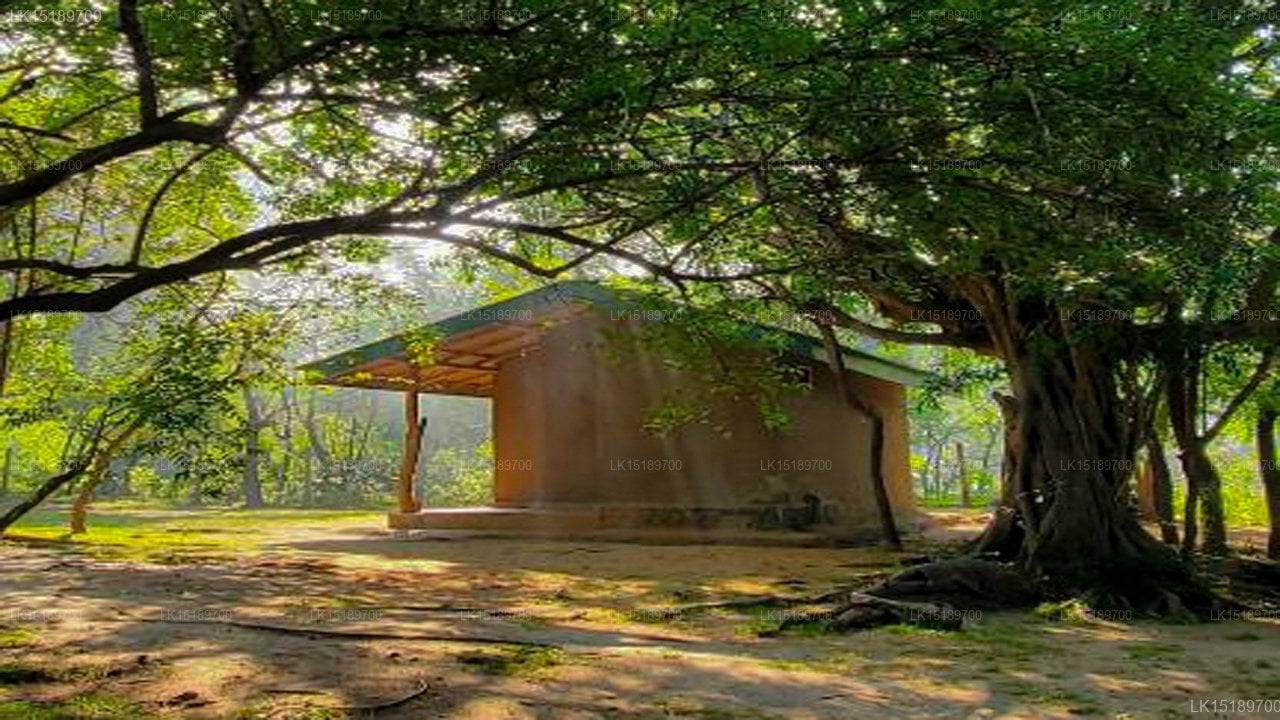
Sethway Village sits on the edge of Sri Lanka's Cultural Triangle, where ancient irrigation tanks meet dense scrub forest and the rhythms of rural life have changed little over centuries. Positioned close to Minneriya National Park, the village offers travellers something genuinely different from the circuit of ancient monuments nearby: an unhurried encounter with the farming communities, wildlife corridors, and craft traditions that have sustained this landscape since the time of the Polonnaruwa kings.
Where exactly is Sethway Village, and how do I get there?
Sethway Village lies in the North Central Province, within easy reach of Minneriya National Park and the broader tank-country plains. The nearest major heritage town is Polonnaruwa, roughly 25–35 km to the east, making it a natural base for guests who want both wildlife and history in a single region. The drive from Colombo typically takes around four to five hours via the A6 highway through Kurunegala and Dambulla. From Sigiriya or Dambulla, the journey is considerably shorter — around 30 to 45 minutes depending on the route. Private transfers are the most practical way to arrive, as public transport connections to the village itself are limited.
What makes Sethway Village worth visiting?
The appeal of Sethway Village is not a single monument or attraction but the cumulative experience of living briefly alongside a community that works in close relationship with the land. Guests typically encounter paddy cultivation, traditional cooking methods using wood-fire clay stoves, and small-scale herbal gardens that reflect the region's longstanding knowledge of Ayurvedic plants. The surrounding scrubland and tank margins support a wide range of birdlife, and elephants frequently move through the area at dusk and dawn, particularly during the dry season months when Minneriya's gathering is at its peak.
- Walking tours through working paddy fields and village gardens
- Demonstrations of traditional Sri Lankan cooking and rice preparation
- Early-morning and late-afternoon wildlife-watching along tank bunds
- Craft and artisan visits — pottery, weaving, and traditional medicine
- Cycle rides through village lanes and tank-edge paths
When is the best time to visit Sethway Village?
The North Central Province has two broad seasonal rhythms. The dry season, roughly from May to September, is when Minneriya National Park draws its most significant elephant concentrations — sometimes several hundred animals gathering around the receding tank waters, a spectacle known locally as "The Gathering." This period also sees clear skies and cooler evenings, making village walks and outdoor activities comfortable. The inter-monsoon and northeast monsoon months (October to January) bring rain that turns the paddy fields a deep green and fills the tanks, giving the landscape a markedly different but equally atmospheric character. February to April tends to be the hottest period, though mornings remain pleasant for wildlife and village activity.
What wildlife can I expect near Sethway Village?
The village is flanked by the broader Minneriya-Giritale-Kaudulla wildlife corridor, one of the most significant elephant habitats in Asia. Elephants are the headline species, but the region is also home to leopards, sloth bears, spotted deer, and a rich assemblage of waterbirds that use the ancient tanks as staging and feeding grounds. Painted storks, open-billed storks, cormorants, and several species of kingfisher are commonly seen from tank bunds at dawn. The scrub forest edges around the village also support grey langurs and monitor lizards. Guests who combine a village stay with a jeep safari into Minneriya are likely to see elephants at close range, particularly between June and September.
How does Sethway Village connect to the broader Cultural Triangle?
The Cultural Triangle — encompassing the ancient cities of Anuradhapura, Polonnaruwa, and Sigiriya — surrounds Sethway Village on three sides. The hydraulic civilisation that built the great tanks of the North Central Province is the same civilisation that created the monuments visitors travel from across the world to see. Spending time in a working village within this landscape helps contextualise those monuments: the tanks were not decorative but essential, irrigating fields that fed populations of tens of thousands. The Sigiriya rock fortress is typically 30–40 km to the northwest, reachable as a half-day excursion from the village area.
What should I eat and experience in the village?
Meals in and around Sethway Village lean heavily on the traditions of the North Central Province: red and white raw rice cooked in clay pots, fresh coconut sambol, dried fish curries, and a range of locally grown vegetables including ash plantain, drumstick, and bitter gourd. Traditional rice varieties, some with heritage links stretching back to ancient agricultural practice, are still cultivated in the area. Guests with an interest in Sri Lanka's culinary roots will find the cooking demonstrations and shared meals some of the most memorable parts of a stay. The area also has access to fresh produce from tank-irrigated gardens, and local palm-sugar preparations — including kithul treacle — frequently appear at the table.
Is Sethway Village suitable for families and children?
Village experiences in this part of Sri Lanka tend to be well-suited to families who are comfortable with a slower pace and basic or eco-lodge style accommodation. Children typically respond well to encounters with working animals, garden walks, and hands-on cooking, and the open tank-edge landscapes are safe for supervised walks. The proximity of elephant habitat means evening and early-morning wildlife sightings can happen without the formality of a jeep safari, though guests should always follow host guidance on safe distances. Families combining a village stay with a hot-air ballooning experience over the Cultural Triangle will find the two activities complement each other well, offering ground-level and aerial perspectives on the same landscape.
How does Sethway Village compare to other village experiences in Sri Lanka?
Sri Lanka has a growing number of immersive village and community-stay options, from the tea-country homesteads of the Hill Country to the wetland villages of the southwest coast. What distinguishes the Minneriya area is the combination of dry-zone ecology, UNESCO-recognised heritage within easy reach, and one of the most significant wild elephant populations on the island. Visitors who have already experienced the jungle lodges of Yala or the paddy-field stays near Ella will find the tank-country atmosphere of Sethway Village distinctly different — drier, more open, and with a stronger connection to the ancient hydraulic engineering that defines this part of Sri Lanka.
Nearby places
12 places within about 25 km, nearest first.
- Elephant Gathering At Minneriya National Parkunder 1 km
- Templatesunder 1 km
- Minneriya Railway Stationunder 1 km
- Muwan Palassa Resort, Minneriyaunder 1 km
- Elephant Gatheringunder 1 km
- Minneriya Lake1 km
- Minneriya City2 km
- Minneriya National Park2 km
- Kaudulla Village2 km
- Hingurakgoda City5 km
- Thonigala Rock Inscription11 km
- Kaudulla National Park15 km
Related reading
10 pages on closely related subjects.