Driving yourself around Sri Lanka puts you fully in charge of the pace — stopping at a roadside fruit stall, doubling back to photograph a paddy field, or arriving at a national park gate before the tour-bus crowds. It is entirely possible for foreign visitors, but it rewards careful preparation. This guide covers everything you need to know before you turn the key.
Can foreigners drive in Sri Lanka?
Yes. Visitors holding a valid driving licence from their home country are legally required to obtain a Sri Lankan recognition permit before they drive. The Department of Motor Traffic issues these permits, though the process is often handled more conveniently through a licensed agent. Lakpura can arrange a Temporary Driving Licence for Foreigners on your behalf, which is valid for a tourist visit and covers both cars and motorcycles depending on the class endorsed.
Your international driving permit (IDP), if you have one, is useful supporting documentation but does not on its own authorise you to drive in Sri Lanka — you still need the local recognition permit.
What are the road conditions like?
Sri Lanka drives on the left, a legacy of British rule. The Southern Expressway (E01) and Central Expressway stretches are modern, well-signed, and relatively fast. Most other roads are single-carriageway A-roads or narrower B-roads, where conditions vary considerably. Expect slow-moving trucks on mountain gradients, tuk-tuks pulling out without signalling, cattle on rural lanes, and pedestrians sharing the road edge in towns.
Hill-country routes — particularly the roads toward Ella and around Horton Plains — are winding and can be mist-covered in the mornings. Allow significantly more travel time in the highlands than map distances suggest. Pothole density increases on less-maintained provincial roads, so an SUV with decent ground clearance is worth considering if your itinerary ventures off main routes.
Fuel stations are widespread in towns but can be sparse in remote areas such as the Dry Zone interior near Wilpattu National Park. Top up whenever you drop below half a tank.
Which vehicle should I rent for a self-drive trip?
The right vehicle depends on your route, group size, and budget. The table below outlines the main categories available through Lakpura:
| Category | Best for | Examples |
|---|---|---|
| Economy car | Coastal and expressway routes, couples or solo travellers | Suzuki Alto K10, Perodua Axia |
| Standard saloon | Island-wide touring, small families | Toyota NZE, Toyota Axio Hybrid, Perodua Bezza, Toyota Allion |
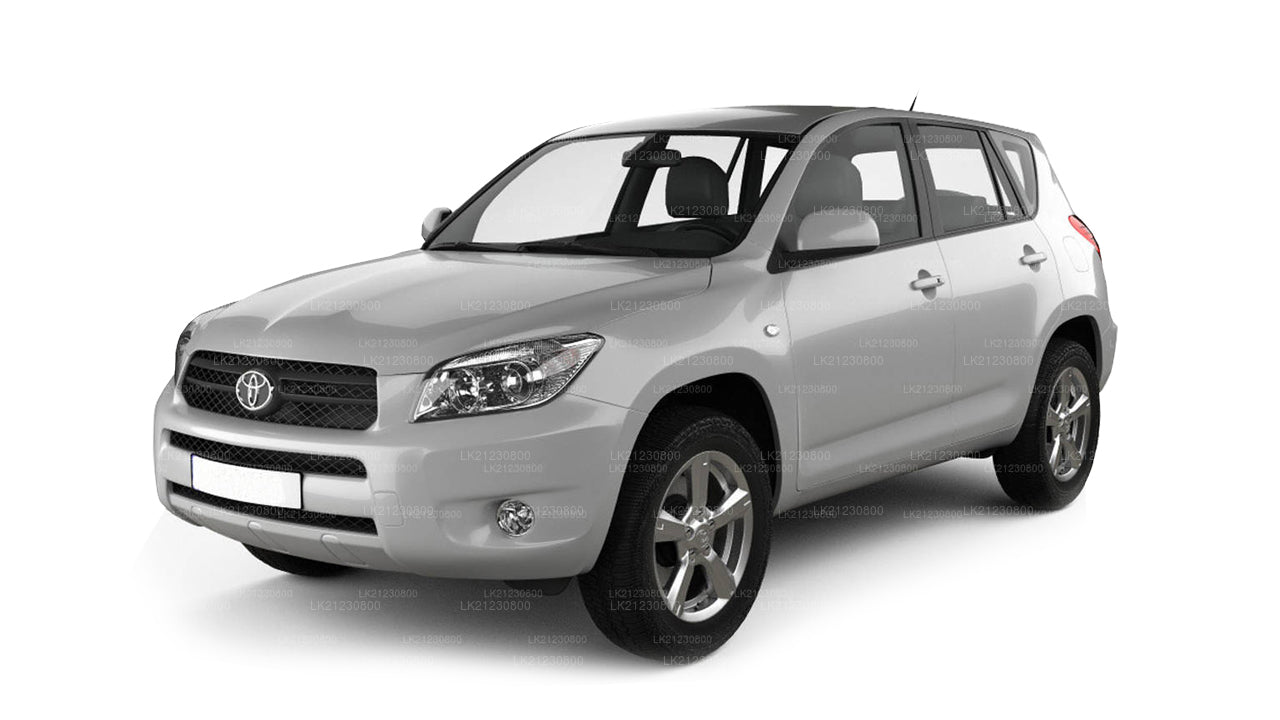
| Standard SUV | Hill country, unpaved approach roads, larger groups | Toyota RAV4, Toyota Land Cruiser Prado |
| Standard van | Groups of 5–8, equipment-heavy itineraries | Mitsubishi L300, Toyota Regius |
| Motorcycle / scooter | Solo explorers, short coastal hops | Honda Dio 110cc, Honda X Blade, TVS NTORQ 125cc, Aprilia 150cc |
| Tuk-tuk | Short scenic routes, novelty touring | Tuk Tuk 300cc |
Hybrid and automatic options are available for drivers who prefer not to deal with a manual gearbox on steep inclines — worth considering for anyone tackling the central highlands.
What documents do I need to carry while driving?
- Your original home-country driving licence
- Sri Lankan temporary driving licence / recognition permit
- Vehicle registration document (provided by the rental company)
- Insurance certificate (third-party insurance is mandatory; check whether your rental includes comprehensive cover)
- Your passport or a clear copy
Police checkpoints are routine in Sri Lanka, particularly at provincial boundaries and near security-sensitive areas. Having all documents organised and accessible avoids delays.
What are the rules of the road I should know?
- Speed limits: typically 100 km/h on expressways, 70 km/h on national highways, and 50 km/h in built-up areas — though always follow posted signs.
- Seat belts: compulsory for front-seat occupants.
- Mobile phones: handheld use while driving is illegal.
- Alcohol: drink-driving laws apply and penalties are significant.
- Horn use: widely used to signal overtaking on blind mountain bends — listen as well as look before pulling out.
- Wildlife crossings: in areas bordering national parks, slow down at dusk and dawn when elephants and leopards occasionally cross roads.
Is self-driving better than hiring a driver?
Both options suit different travellers. Self-driving gives maximum flexibility and a genuine sense of independence — particularly appealing on a motorcycle along the southern coast or in a 4WD exploring the north. It does, however, place the full navigational and safety burden on you, and route-finding in dense urban areas such as Colombo can be genuinely stressful.
Hiring a car with a driver removes that stress entirely and adds local knowledge: a good driver knows which road is flooded after rain, which side street leads to the best short-eat, and how to negotiate a parking spot near the Sigiriya rock fortress. For families with young children, or travellers planning an ambitious multi-province circuit, a private driver often represents better value than it first appears.
Many visitors combine both: rent a motorcycle for day rides from a fixed base and rely on a driver for long inter-city transfers.
Which routes work best for a self-drive holiday?
A few itineraries that lend themselves particularly well to independent driving:
- The southern coastal circuit — Colombo south along the coastal highway through Galle, Mirissa, Tangalle, and back inland. Roads are good, distances are manageable, and accommodation options are plentiful.
- The Cultural Triangle loop — Colombo north to Dambulla, across to Polonnaruwa, and back via Kandy. A mix of expressway and A-road, roughly 3–4 days at an unhurried pace.
- The hill-country climb — Kandy to Nuwara Eliya to Ella. Spectacular scenery, modest distances, but allow at least 3 hours per leg due to the roads. An SUV or a car with a strong engine is advisable.
- The northern peninsula — Colombo to Jaffna via the A9 (the famous "Highway of Tears" now fully open and improving). A long drive best split over two days, rewarding for travellers interested in the country's recent history and Tamil heritage.
Practical tips before you set off
- Download an offline map (Google Maps or Maps.me) before leaving your accommodation — mobile data can be patchy in forested and mountain areas.
- Agree on fuel policy with your rental company upfront: full-to-full is the clearest arrangement.
- Photograph the vehicle thoroughly before accepting it so any pre-existing damage is documented.
- Check whether your rental includes 24-hour roadside assistance — if not, save the company's emergency number and the nearest police station number for your area.
- Carry small-denomination Sri Lankan rupees for toll booths on the expressways and for parking fees.
- If you plan to enter a national park such as Udawalawe, note that private vehicles must be accompanied by a licensed tracker inside the park boundary — self-driving to the gate and hiring a jeep from there is the standard arrangement.
Related reading
8 pages on closely related subjects.