The Toyota Allion sits at a comfortable midpoint in the Sri Lankan car-hire market: more spacious than a compact city car, more fuel-efficient than a large sedan, and well-suited to the mix of urban traffic and long highway runs that most island itineraries involve. Whether you are planning a self-drive circuit or simply want to understand the car before you book, this guide covers what the Allion is, where it came from, and how it performs as a travel vehicle in Sri Lanka.
What is the Toyota Allion, and how did it come about?
Toyota launched the Allion in December 2001 as a direct replacement for the long-running Toyota Carina, which had earned a loyal following across Asia over several decades. Rather than carry the Carina name forward, Toyota chose a fresh identity — "Allion" is derived from the French word for alliance — to signal that this was a genuinely new direction rather than an incremental update.
The brief given to Toyota's designers was captured in two words: upscaled and luxurious. The result was a four-door sedan that looks noticeably more assertive than its predecessor, with a wider stance, a raked roofline, and bodywork that shares design cues with Toyota's broader range from that era. It was positioned as an advanced medium sedan intended to define Toyota's approach to the segment in the 21st century.
Which Allion generation is most common in Sri Lanka?
The Allion has gone through several production cycles, but the generation most frequently seen on Sri Lankan roads — and the one available through Lakpura's fleet — is the 260 series, which represents a mature refinement of the original platform. The 260 retains the practical cabin dimensions and smooth powertrain that made earlier Allions popular, while adding revised exterior detailing and interior quality improvements.
Engine options across the Allion's history have included 1.5-litre and 1.8-litre four-cylinder petrol units. The 1.5-litre variant is particularly common in Sri Lanka and returns reasonable fuel economy on the open roads connecting cities like Colombo, Kandy, and Galle, as well as on the expressways that now link much of the western coast.
How does the Toyota Allion perform as a self-drive car in Sri Lanka?
Sri Lankan roads vary considerably — from smooth expressways to narrow mountain lanes and the occasional unpaved track leading to a smaller village or nature reserve. The Allion is best suited to paved routes and performs well on the Southern Expressway, the E01 corridor, and the hill-country roads leading up toward Ella and the central highlands, provided conditions are dry.
Key practical points for drivers considering an Allion self-drive:
- Ground clearance: Standard sedan clearance — adequate for well-maintained roads but not ideal for rough tracks or flooded crossings during the monsoon months.
- Seating: Comfortable for four adults with luggage for a week-long circuit. Five passengers is possible but reduces boot space significantly.
- Automatic transmission: Most Allions in the Sri Lankan hire fleet are automatic, which is an advantage in Colombo traffic and on steep hill-country gradients.
- Fuel type: Petrol. Filling stations are widely available in towns and along main highways; less so on remote mountain routes, so plan accordingly.
What are the main differences between the Allion and similar Toyota models available in Sri Lanka?
| Model | Segment | Best for |
|---|---|---|
| Toyota NZE 141 | Compact sedan | Solo travellers or couples on a tighter budget; city-heavy itineraries |
| Toyota Allion 260 | Medium sedan | Small families or two couples; mixed urban and highway driving |
| Toyota Axio Hybrid | Compact hybrid sedan | Eco-conscious travellers; strong fuel economy over long distances |
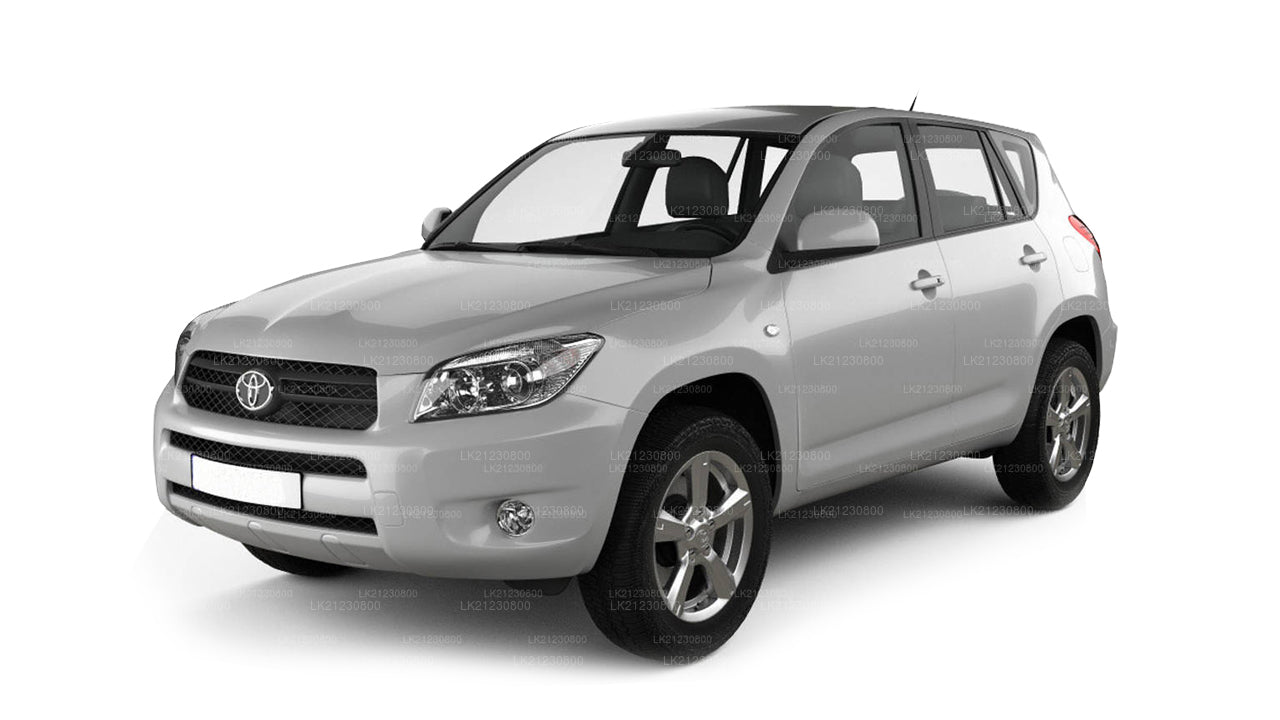
| Toyota RAV 4 | Standard SUV | Groups needing higher clearance; visits to national parks with rougher access roads |
| Toyota Land Cruiser Prado | Premium SUV | Off-road capability; larger groups; remote or wet-season destinations |
If your itinerary includes a private driver rather than self-drive, a similar choice of vehicles applies — your Lakpura contact can advise on the right fit based on group size and route.
What should I know before self-driving in Sri Lanka?
Sri Lanka drives on the left, as in the United Kingdom, Australia, and India. Traffic in Colombo can be dense during morning and evening peak hours, and tuk-tuks, motorcycles, and pedestrians frequently share the road in smaller towns. First-time drivers in Sri Lanka often find the adjustment manageable but benefit from starting on quieter roads before tackling city centres.
A valid driving licence from your home country is generally accepted, but an International Driving Permit (IDP) is strongly recommended for foreign visitors. Lakpura's rental terms specify the documentation required at the time of booking, so confirm this before arrival to avoid delays at collection.
Fuel, insurance, and any applicable tolls on the expressways are the driver's responsibility unless explicitly included in the hire package. Check the booking details carefully.
Is the Toyota Allion available with a driver through Lakpura?
Lakpura's primary Allion offering is configured as a self-drive vehicle. If you prefer a chauffeur-driven arrangement — which many visitors find more relaxing, particularly on longer cross-island routes — Lakpura operates a separate fleet of driver-accompanied vehicles. Speaking directly with the reservations team will establish the most practical option for your itinerary and group size.
What is the Toyota Allion's legacy among Sri Lankan motorists?
The Allion arrived in Sri Lanka during a period when Japanese medium sedans dominated the private-car market, and it quickly earned a reputation for reliability and reasonable running costs. Used Allions remain among the more common vehicles on Sri Lankan roads today, which means spare parts and servicing are widely available — a practical consideration for anyone hiring one for an extended self-drive circuit. The model sits comfortably in the mainstream, trusted by local families and now by visiting travellers looking for a dependable, appropriately sized car.
Related reading
12 pages on closely related subjects.