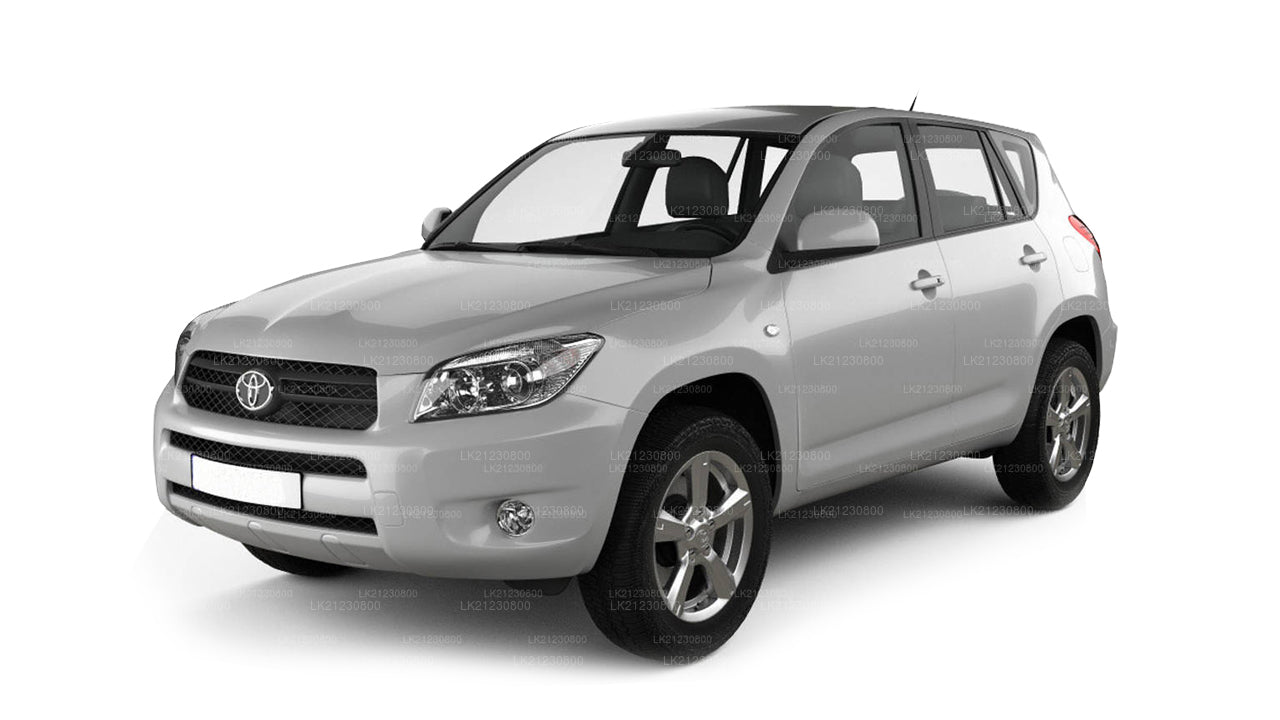
The Toyota Harrier is a mid-size luxury crossover SUV that has become one of the most requested vehicles for private travel in Sri Lanka. Combining a refined cabin, capable all-wheel-drive hardware, and modern safety systems, it suits everything from a smooth airport run to a winding ascent through the hill country. Travelers who want more space and composure than a standard sedan — without the bulk of a full-size Land Cruiser — consistently find the Harrier to be the right fit.
What makes the Toyota Harrier a good choice for touring Sri Lanka?
Sri Lanka's road network is varied: wide expressways link Colombo to the south and north, but narrower, sharply curved roads dominate the central highlands and many national-park access routes. The Harrier handles both comfortably. Its independent suspension absorbs rough tarmac and gravel sections without transferring the jarring into the cabin, while the raised ride height provides clearer visibility on winding mountain passes near Ella or Horton Plains National Park.
Inside, the cabin typically seats five adults with genuine legroom in the rear, and the boot accepts two large suitcases alongside day bags — practical for families or small groups traveling between multiple destinations. Leather upholstery, automatic climate control, and a touchscreen infotainment system with navigation are standard across most variants available in Sri Lanka.
Which routes and destinations suit the Toyota Harrier best?
The vehicle performs particularly well on the following journey types:
- Airport transfers — The Southern Expressway and E03 motorway make transfers from Bandaranaike International Airport to Colombo or Galle fast and relaxed in the Harrier's quiet cabin.
- Hill-country itineraries — Routes from Kandy toward Nuwara Eliya, Ella, and the tea estates involve steep gradients and hairpin bends; the Harrier's all-wheel-drive system provides reassuring traction, especially after rain.
- Cultural Triangle circuits — A day looping through Sigiriya, Polonnaruwa, and Dambulla covers long distances on mostly paved A-roads, where the Harrier's highway composure is an advantage.
- Southern coast touring — Coastal roads between Galle, Mirissa, and Tangalle are straightforward driving; the Harrier's boot easily absorbs beach and snorkeling gear alongside luggage.
- Wildlife park transfers — Getting to Udawalawe National Park or Wilpattu National Park from the nearest city involves stretches of rural road where a higher-clearance vehicle matters. Note that actual game drives inside the parks require a designated park jeep — the Harrier serves as the comfortable transfer to and from the park gates.
What are the standard features of a Toyota Harrier rental in Sri Lanka?
Specifications vary slightly by model year, but vehicles offered through reputable rental operators in Sri Lanka are typically the 2.0-litre petrol or 2.5-litre hybrid variant. Expect the following as standard:
| Feature | Detail |
|---|---|
| Seating | 5 passengers |
| Drivetrain | All-wheel drive (most variants) |
| Air conditioning | Dual-zone automatic climate control |
| Upholstery | Leather or premium fabric |
| Infotainment | Touchscreen with navigation and Bluetooth |
| Safety | Multiple airbags, ABS, stability control, rear camera |
| Luggage capacity | Typically 2 large + 2 carry-on bags |
Should I hire the Harrier with a driver or as a self-drive vehicle?
Most visitors to Sri Lanka opt for a vehicle with a driver, and for good reason. Sri Lanka drives on the left, but traffic patterns — particularly around Colombo and in busy market towns — can be challenging to navigate without local knowledge. An experienced driver also doubles as a practical guide, suggesting roadside stops, handling parking, and communicating with locals when needed.
If you prefer to drive independently, a valid international driving permit (IDP) alongside your home-country license is required by law. Self-drive rentals are available but carry important considerations: fuel, toll fees, and any traffic fines become the driver's responsibility, and insurance terms vary significantly between operators. Review the rental agreement carefully before signing.
For those considering a chauffeured experience, Lakpura's private driver service covers the full island with English-speaking drivers trained on long-distance touring routes.
When is the best time to book a Toyota Harrier rental in Sri Lanka?
Demand for quality vehicles peaks between December and April, when the south and west coasts are in their dry season and international visitor arrivals are highest. Travelers planning itineraries during this window — particularly over the Christmas–New Year period or around Esala Perahera in July–August — should book several weeks in advance to secure a well-maintained vehicle.
Outside peak season, availability is generally easier to arrange, and some operators offer more competitive rates during the shoulder months of May, June, and September. Regardless of season, roads in the highlands can be affected by monsoon rainfall, so build buffer days into hill-country itineraries from May through July.
How does the Toyota Harrier compare to other SUVs available in Sri Lanka?
Sri Lanka's rental market offers a range of SUVs at different price and size points. The Harrier sits in the mid-to-upper tier, above compact crossovers like the Toyota RAV4 in terms of cabin refinement, and below full-size body-on-frame SUVs like the Toyota Land Cruiser Prado in terms of off-road capability. For paved and occasionally graded road itineraries — which describes the vast majority of Sri Lankan tourist circuits — the Harrier's on-road composure and fuel efficiency make it a more practical daily choice than the heavier Land Cruiser options.
Groups larger than five, or those planning to access very remote jungle tracks, should consider stepping up to a larger vehicle or arranging a dedicated 4WD through their tour operator.
Are there any practical tips for traveling Sri Lanka in a hired SUV?
- Confirm whether the quoted rate includes fuel, driver accommodation, and driver meals — these are often charged separately on longer tours.
- Always carry your passport or a copy, as identification may be requested at national park gates and some checkpoints.
- Air conditioning is effective at sea level and in the lowland cities; at altitude (above roughly 1,500 m), ambient temperatures are cooler and you may not need it at all.
- Toll roads on the expressways require Sri Lankan rupees or a compatible electronic card; your driver will handle this if you are using a chauffeured service.
- Plan for longer travel times than map apps suggest: the Colombo-to-Kandy route, for instance, takes around 2.5–3 hours under normal conditions, not the 90 minutes the distance alone might imply.
Related reading
11 pages on closely related subjects.