
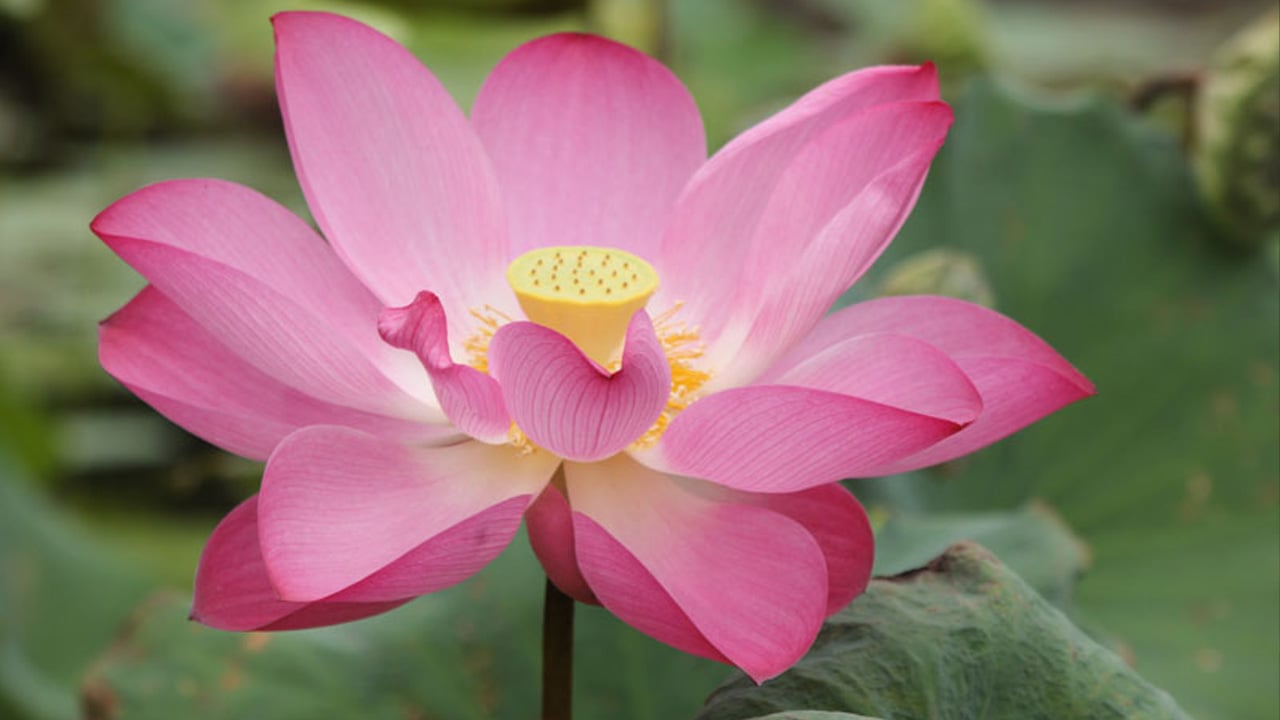
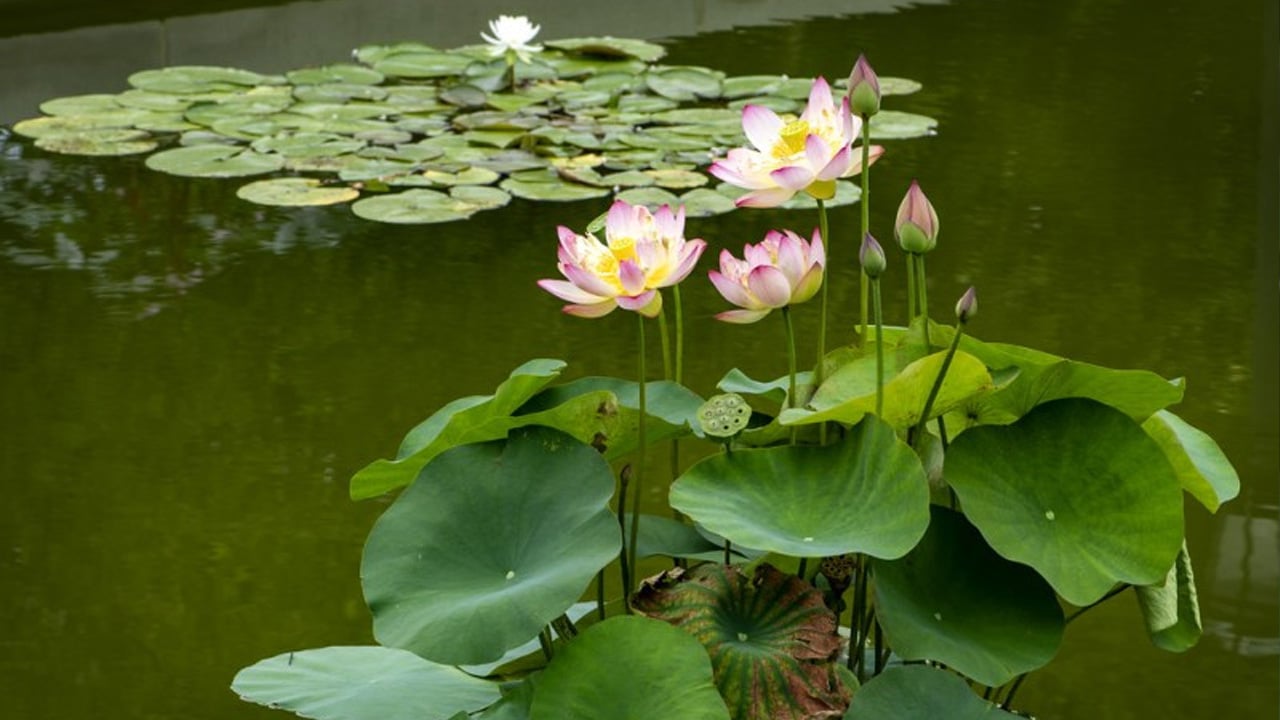
The Sacred Lotus (Nelumbo nucifera), known in Sinhala as Nelum, is one of the most symbolically charged plants on earth. It rises from muddy water to produce a flower of remarkable clarity — a quality that has made it a central image in Buddhist and Hindu thought for millennia. In Sri Lanka, the lotus is woven into daily religious life, architectural motifs, and even the country's modern skyline, as seen in the Colombo Lotus Tower.
What does the Sacred Lotus look like?
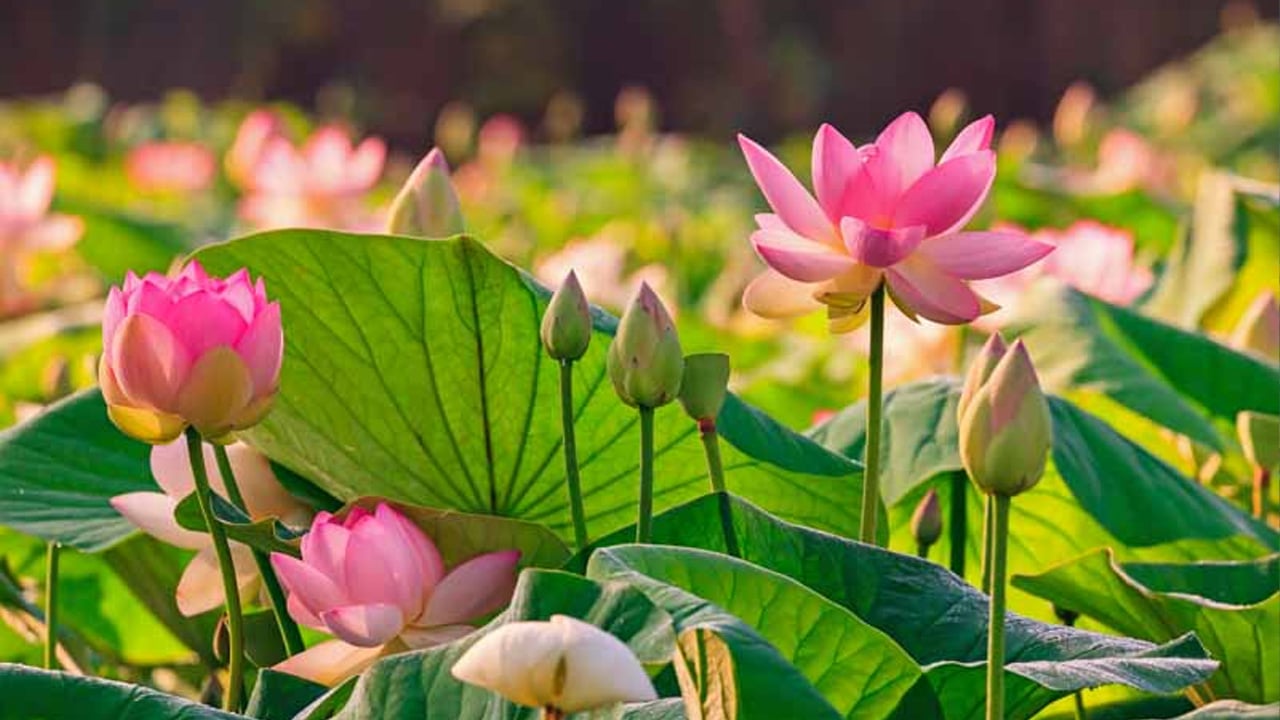
The Sacred Lotus is an aquatic perennial with a distinctive silhouette. Its large, round leaves — often 60 cm or more across — sit on the water's surface and repel water so completely that droplets bead and roll off without wetting the leaf. Scientists call this the lotus effect, and it has inspired water-resistant coatings in engineering and materials science.
The flowers are large and showy, rising on long stems well above the waterline. They appear in white, soft pink, and occasionally deep rose or lilac, depending on the variety. Each bloom opens in the morning and closes by mid-afternoon, cycling through this rhythm for several days before the petals fall and a distinctive seed pod takes their place. The rhizome (root) grows horizontally through the bed of shallow ponds, lakes, and wetlands where the plant thrives.
The seeds are notable for their extraordinary longevity. Viable lotus seeds recovered from ancient lake sediments have been dated at over a thousand years old — a biological record rarely matched in the plant kingdom, and a trait that underscores the lotus's association with endurance and rebirth.
What is the cultural and religious significance of the lotus?
Few plants carry as much symbolic weight across as many traditions as the Sacred Lotus.
- Buddhism: The lotus is perhaps the defining symbol of the Buddhist path. Growing from murky water yet remaining unsullied, it represents purity of body, speech, and mind, as well as the potential for spiritual awakening from within the ordinary world. The unfolding petals are read as a metaphor for the gradual opening of wisdom. Images of the Buddha seated on a lotus throne appear throughout Sri Lankan temple art, from ancient ruins at Polonnaruwa to living temples across the island.
- Hinduism: The lotus is the seat of Lakshmi, goddess of prosperity, and of Brahma, the creator. It appears in depictions of Vishnu, who is said to hold a lotus in one hand. The Sanskrit word padma — one of many names for the lotus — appears extensively in Hindu scripture and mantra.
- Ancient Egypt: In a separate tradition, the blue lotus (Nymphaea caerulea) and the white lotus were associated with creation and the rising sun. Carvings in Egyptian temples show the lotus as the flower from which the sun god Ra emerged at the beginning of time.
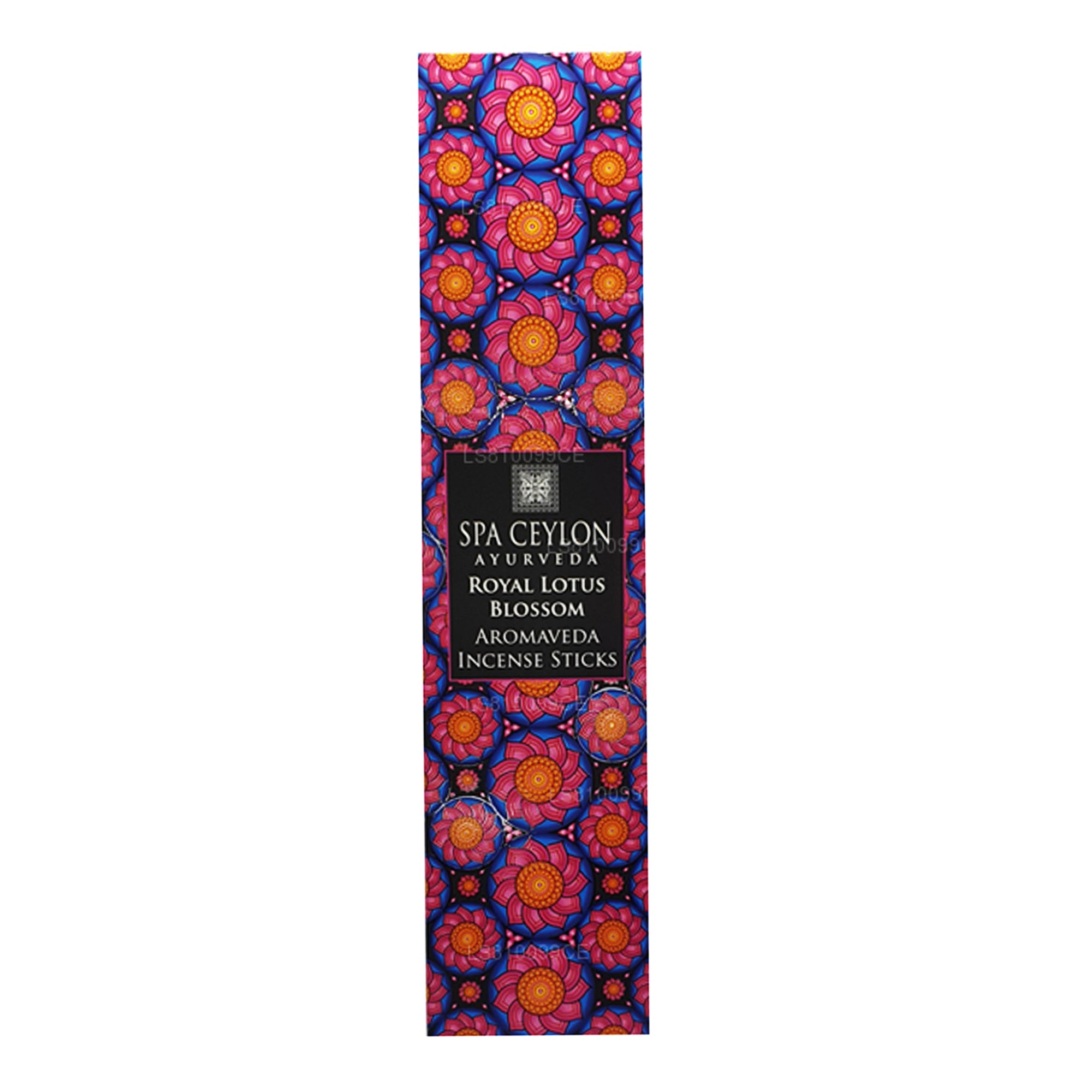
In Sri Lanka, lotus flowers are offered at temples daily. Devotees carrying fresh blooms to shrines is a sight as ordinary as it is ancient, and the flower's symbolism extends into architecture, textiles, and ceremony. The Esala Perahera Festival in Kandy, one of the grandest Buddhist pageants in Asia, incorporates lotus motifs throughout its ritual objects and decorations.
Where does the Sacred Lotus grow in Sri Lanka?
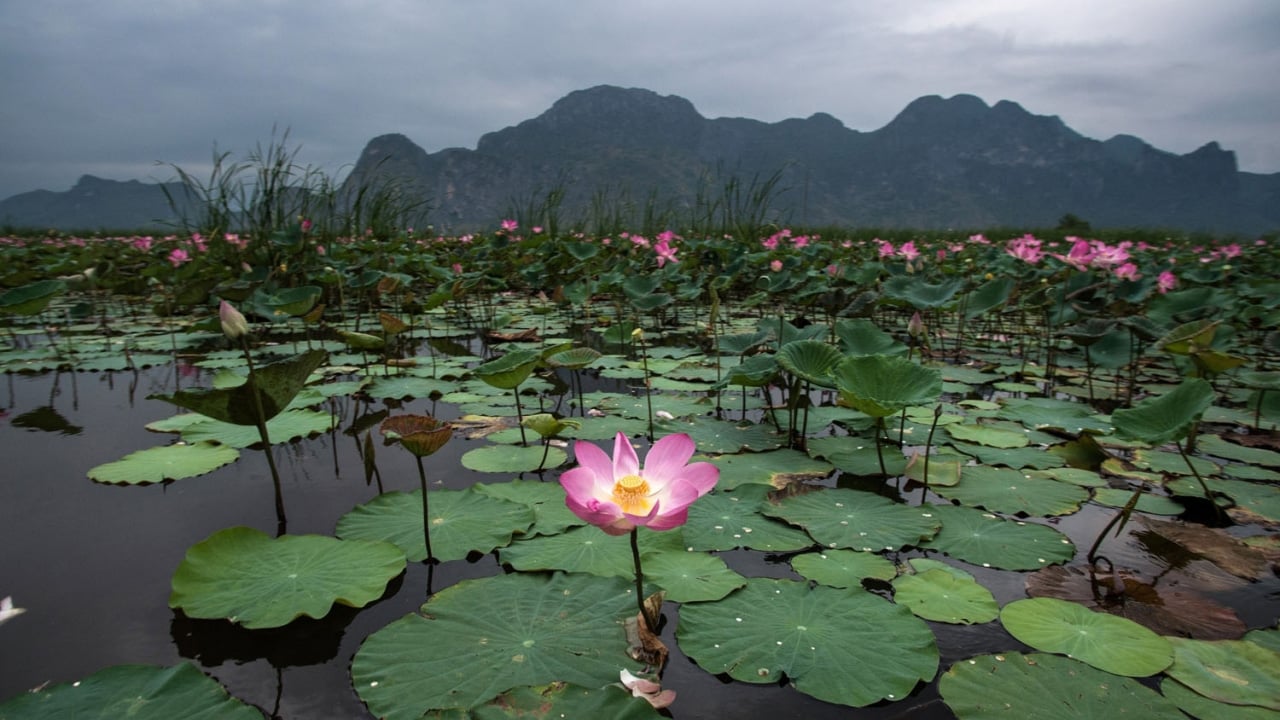
The Sacred Lotus is found across the island in shallow freshwater bodies — irrigation tanks, temple ponds, village reservoirs, and wetland margins. Lotus ponds attached to ancient temples are common features of Sri Lanka's sacred geography. Many of the country's centuries-old irrigation tanks, particularly in the dry zone, support lotus colonies that have been growing there for generations.
Wetland ecosystems such as the backwaters along the Madu Ganga estuary host aquatic vegetation including lotus and water lilies, contributing to the rich biodiversity of these areas. The plant provides shelter and food for waterbirds, insects, and fish, making it a keystone species in shallow freshwater habitats.
How is the lotus used in food and cooking?
The lotus is one of the more useful food plants in Asian cuisine, with almost every part of the plant consumed in some form.
- Rhizome (lotus root): Sliced crossways to reveal its lacy internal pattern, the rhizome is stir-fried, braised, pickled, or added to soups. Its texture is crisp when fresh and becomes tender when slow-cooked. It is popular across South and East Asian cuisines.
- Seeds: Dried or fresh lotus seeds have a mild, starchy flavour and appear in Chinese desserts, congee, and sweet pastes used in mooncakes. They are also eaten as a snack.
- Leaves: The large leaves serve as a natural wrapper for steaming rice and other foods, imparting a subtle grassy fragrance to the contents.
- Petals: Young petals are occasionally used as a garnish or steeped in teas and infusions.
What are the traditional medicinal uses of the lotus?
Ayurvedic and traditional Chinese medicine have both drawn on the lotus for centuries. Different parts of the plant are used for different purposes, and while rigorous clinical evidence for many traditional claims remains limited, the plant's use is well-documented historically.
- Seed extracts are used in formulations aimed at calming the nervous system and supporting sleep.
- Rhizome preparations have been used to support digestion and address inflammatory conditions.
- Leaf and flower preparations appear in texts addressing circulatory health and fever.
- Stamens and seed pods feature in traditional formulas for astringent and tonic effects.
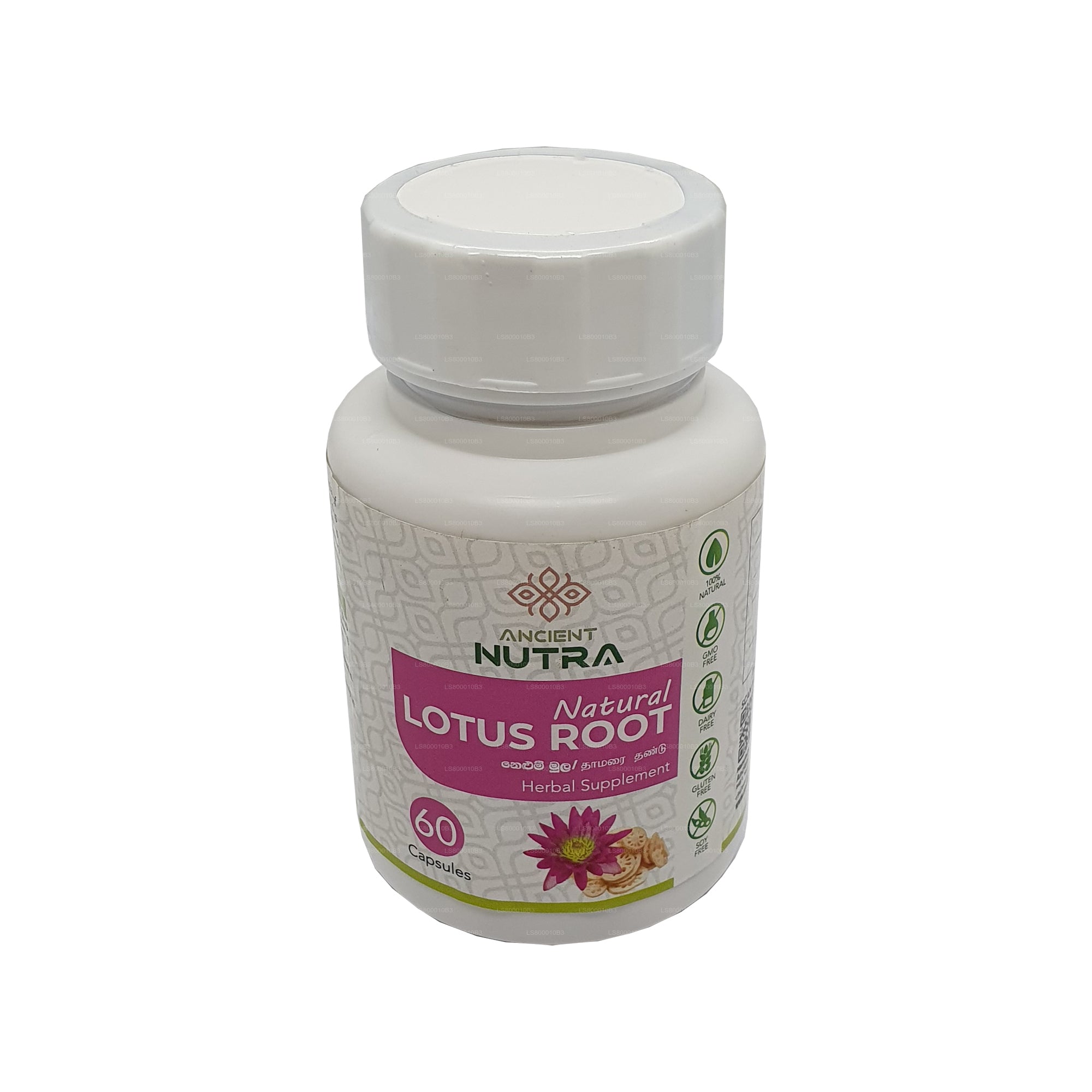
Lotus root is also a source of dietary fibre, vitamin C, and several B vitamins, which partly accounts for its continued use in functional foods and supplements.
What is the ecological role of the Sacred Lotus?
Beyond its cultural status, the Sacred Lotus plays a practical role in aquatic ecosystems. Its broad floating leaves shade the water beneath, reducing algal blooms and moderating water temperature. The plant's roots stabilise sediment in shallow ponds and tanks, and its above-water structure provides nesting and resting sites for waterbirds. Insects — including bees, beetles, and flies — visit the flowers for pollen and nectar, making the lotus an important component of freshwater pollinator networks.
The plant is also notable for a rare biological phenomenon: thermoregulation. The flowers of Nelumbo nucifera generate their own heat, maintaining a temperature range of 30–36 °C inside the bloom even when ambient temperatures drop significantly. This is thought to attract cold-blooded insect pollinators and is one of only a handful of documented examples of thermogenesis in flowering plants.
How is the lotus connected to Sri Lankan identity?
The lotus holds a quiet but pervasive place in Sri Lankan national identity. It appears on religious flags, in temple architecture, and in the decorative arts. The stupas that punctuate the Sri Lankan landscape are often built on a lotus-petal base, the flower's form serving as a literal foundation for Buddhist monuments. Lotus ponds in front of temple entrances are a consistent architectural feature dating back to the Anuradhapura period.
In contemporary Sri Lanka, the lotus continues to inspire design — from hotel names and wellness brands to the telecommunications tower that defines the Colombo skyline. Its journey from the mud of an irrigation tank to the centre of religious and civic life makes it one of the island's most enduring symbols.
Related reading
2 pages on closely related subjects.