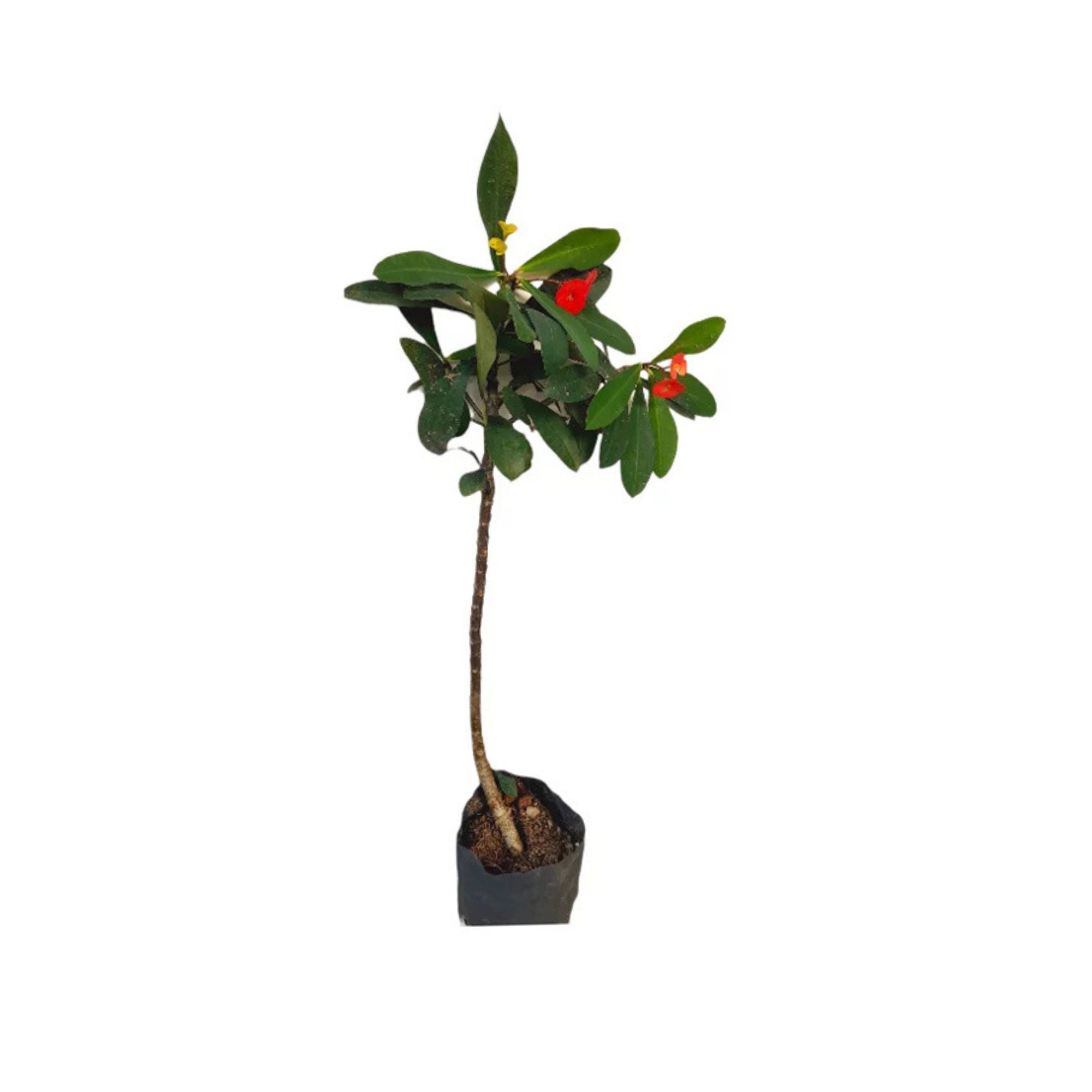
The Pinwheel Flower, known in Sri Lanka as Wathusudda, is a low-growing succulent cultivated across tropical gardens for its vivid, wheel-shaped blooms. Botanically classified as Portulaca grandiflora, it belongs to the family Portulacaceae and is prized equally by home gardeners and landscape designers for its resilience in hot, dry conditions and the cheerful colour it brings to otherwise difficult planting spots.
What does the Pinwheel Flower look like?
Few ornamental plants pack as much visual impact into such a compact form. The flowers are broadly circular, composed of five wide, overlapping petals that radiate outward from a dense cluster of stamens — an arrangement that gives the plant its common name. Blooms appear in pink, red, orange, yellow, and white, and individual plants can carry multiple colours simultaneously when grown from mixed-seed varieties.
The foliage is equally distinctive. Leaves are thick, fleshy, and oval-shaped — characteristic of succulents that have evolved to store water against prolonged dry spells. Plants typically reach 15–30 cm in height and spread up to around 45 cm, forming a trailing mat that fills gaps in borders or cascades over the edge of containers.
Where is the Pinwheel Flower native to?
Portulaca grandiflora originates from the grasslands and open rocky slopes of South America, principally Argentina, southern Brazil, and Uruguay. In its native range it grows in nutrient-poor, well-drained soils under intense sun — conditions that explain why it adapts so readily to Sri Lanka's dry-zone landscapes and coastal gardens. Today it is cultivated across tropical and subtropical regions worldwide as both an annual and a short-lived perennial, depending on local climate.
In Sri Lanka, Wathusudda is commonly found brightening up home gardens, temple courtyards, and roadside verges from the coastal lowlands up to mid-elevation areas. Its tolerance for sandy, low-fertility soils makes it particularly well suited to the island's drier northern and south-eastern districts.
What does the Pinwheel Flower symbolise?
Across various cultures, flowers of the Portulaca genus are loosely associated with joy and resilience — qualities reflected in their habit of blooming prolifically even in difficult conditions. In Sri Lanka, Wathusudda carries no strong formal ceremonial role, but its bright colours make it a popular choice for decorating garden entrances and festival spaces. The flowers typically open fully in direct sunlight and close toward evening, a behaviour that has led some traditions to link the plant with themes of impermanence and renewal.
Members of the Portulaca genus have occasionally been used in traditional medicine systems for their reported anti-inflammatory properties, though clinical evidence remains limited and the Pinwheel Flower is not a primary medicinal plant in Sri Lankan Ayurvedic practice.
How is the Pinwheel Flower used in gardens?
- Ornamental bedding: Planted in drifts along sunny borders, Wathusudda creates a carpet of colour through the warmer months with minimal irrigation.
- Container growing: Its trailing habit makes it well suited to pots, window boxes, and hanging baskets where it softens hard edges.
- Ground cover: In hot, exposed areas where many plants struggle — dry slopes, gravel gardens, coastal margins — the Pinwheel Flower provides effective and low-maintenance ground cover.
- Pollinator support: The open, accessible flower structure attracts bees and butterflies, making it a practical choice for gardens aiming to support local pollinators.
For visitors exploring Sri Lanka's remarkable botanical diversity, the Sinharaja Forest Reserve offers a striking contrast — a dense rainforest environment where moisture-loving species thrive in conditions almost entirely opposite to those favoured by the Pinwheel Flower.
How do you grow and care for the Pinwheel Flower?
The Pinwheel Flower rewards growers who give it what it genuinely needs: full sun and well-drained soil. Under those conditions, it requires very little additional attention.
| Care factor | Requirement |
|---|---|
| Sunlight | Minimum 6 hours of direct sun daily; flowers close in shade |
| Watering | Moderate during the growing season; allow soil to dry between waterings to prevent root rot |
| Soil | Well-drained, sandy or loamy; tolerates low-fertility soils |
| Temperature | Thrives in warm to hot climates; not frost-tolerant |
| Fertilisation | A balanced fertiliser applied around once a month supports flowering, though plants manage well in poor soil |
| Pruning | Deadheading spent blooms extends the flowering period; light pruning in early spring encourages compact growth |
Overwatering is the most common problem. Because the Pinwheel Flower evolved in seasonally dry environments, waterlogged or heavy clay soils cause the roots to rot quickly. If planting in containers, ensure drainage holes are unobstructed and avoid sitting pots in water-filled saucers.
In Sri Lanka's wet zone, where rainfall can be heavy and persistent, raised beds or containers with a gritty soil mix help replicate the plant's preferred growing conditions. In the dry zone and intermediate zone, Wathusudda generally thrives with little intervention beyond initial watering until established.
Are there different varieties of Pinwheel Flower?
Commercial seed selections have expanded significantly from the original species. Modern cultivars include double-flowered forms with densely packed petals, compact varieties bred for uniform height in formal bedding schemes, and heat-tolerant hybrids capable of staying open longer into the afternoon than older types. Colour mixes sold under trade names often contain eight or more distinct shades, allowing a single planting to produce a polychrome display throughout the flowering season.
For growers in Sri Lanka interested in dehydrated or dried botanicals — useful for craft, culinary, or wellness purposes — the broader Portulaca family sits alongside a growing local interest in preserved plant products.
Related reading
1 pages on closely related subjects.