Psilanthus tranvancorensis is a shrub in the coffee family, Rubiaceae, recorded as native to Sri Lanka. Known locally as Gas pichcha, it is not used as a food source, as none of its parts are considered edible.
What does Psilanthus tranvancorensis look like?
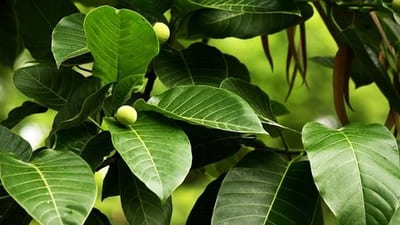
This is a shrub that grows to about 2.5 m in height. Its leaves are somewhat variable in shape, ranging from broadly ovate to elliptic or oblanceolate, and typically measure 6 to 12 cm long by 3 to 6 cm wide. The leaves are coriaceous, or leathery in texture, and smooth (glabrous) on both surfaces, with an acute to shortly acuminate tip and an acute to cuneate base.
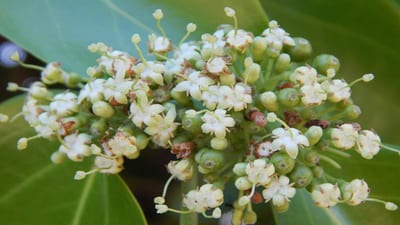
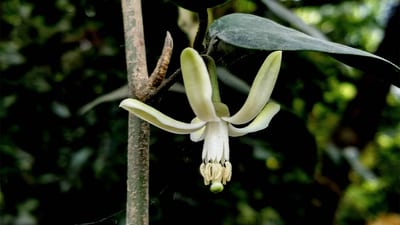
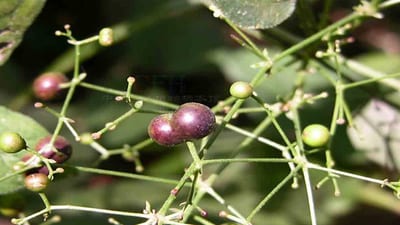
The inflorescence bears one to five flowers, usually three to five, each with five parts (5-merous) and white in colour. The central flower in a cluster is usually without bracts or bracteoles, while the surrounding flowers each carry a single pair of bracts. The fruit is depressed-globose in shape, about 14 by 20 mm, ripening to a blue-black colour.
Where does Psilanthus tranvancorensis grow in Sri Lanka?
The species is native to Sri Lanka, meaning it occurs here as part of the island's natural flora. Rubiaceae, the family to which it belongs, is a large, mostly tropical plant family that includes shrubs, trees and herbs found across much of Sri Lanka's nature and forest habitats, from lowland forest to hill country.
What is its conservation status?
No formal conservation designation is recorded for this species in Lakpura's indigenous plant register.
What is it called in Sinhala?
In Sinhala, Psilanthus tranvancorensis is known as Gas pichcha.
Can Psilanthus tranvancorensis be eaten?
No part of this plant is recorded as edible. It should not be treated as a food source.
| Attribute | Detail |
|---|---|
| Scientific name | Psilanthus tranvancorensis |
| Family | Rubiaceae |
| Sinhala name | Gas pichcha |
| Status in Sri Lanka | Native |
| Edible parts | None |
| Life form | Shrub to 2.5 m |
| Leaves | Broadly ovate to elliptic or oblanceolate, 6–12 x 3–6 cm, coriaceous, glabrous |
| Inflorescence | 1 (3–5) flowered, 5-merous, white |
| Fruit | Depressed globose, 14 x 20 mm, blue-black when ripe |