


Nallur is one of the most historically layered and spiritually significant towns in Sri Lanka. Situated on the outskirts of Jaffna in the Northern Province, it served as the capital of the Jaffna Kingdom for several centuries before Portuguese colonial rule disrupted the region in the sixteenth century. Today Nallur endures as a living centre of Tamil heritage, its identity shaped by generations of religious devotion, classical arts, and community resilience.
What is Nallur best known for?
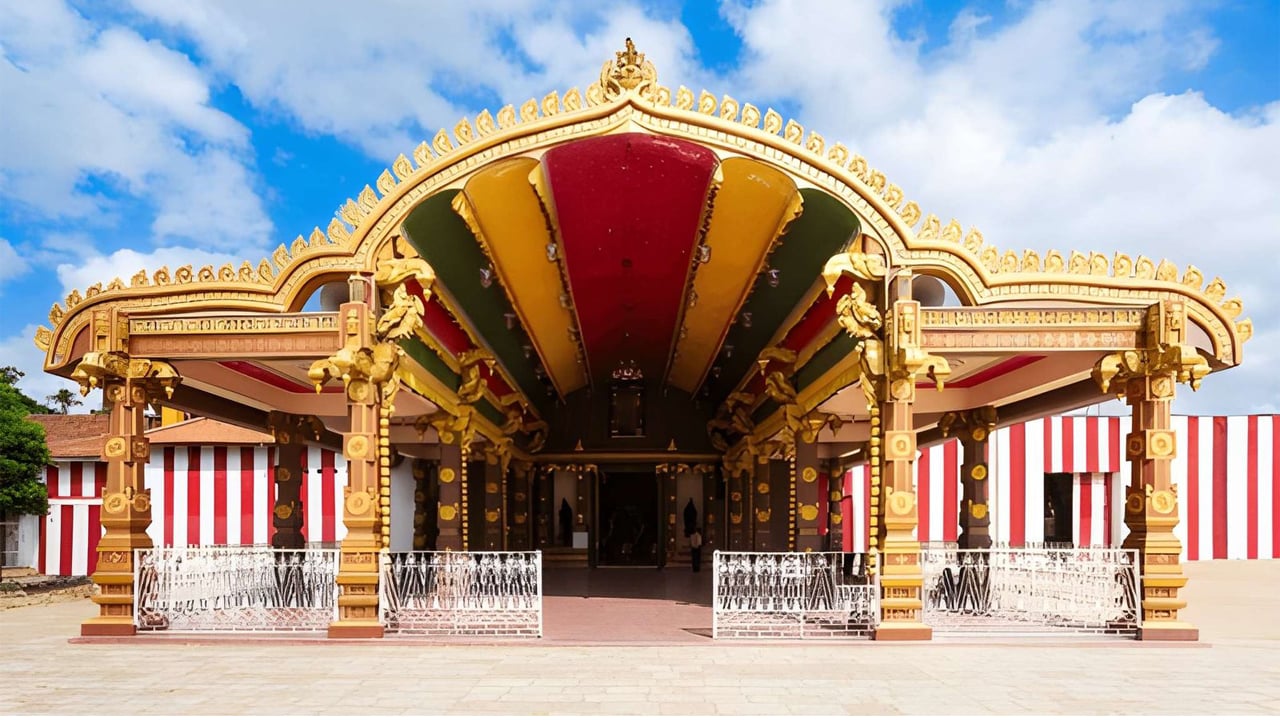
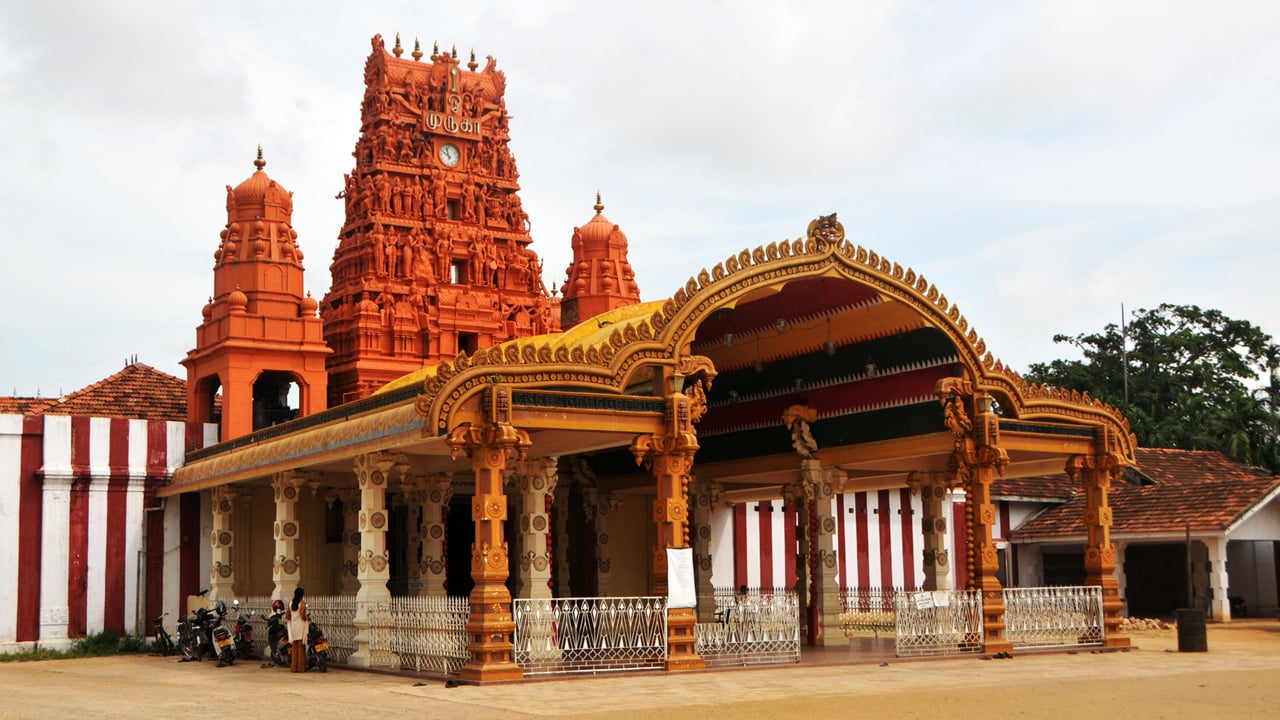
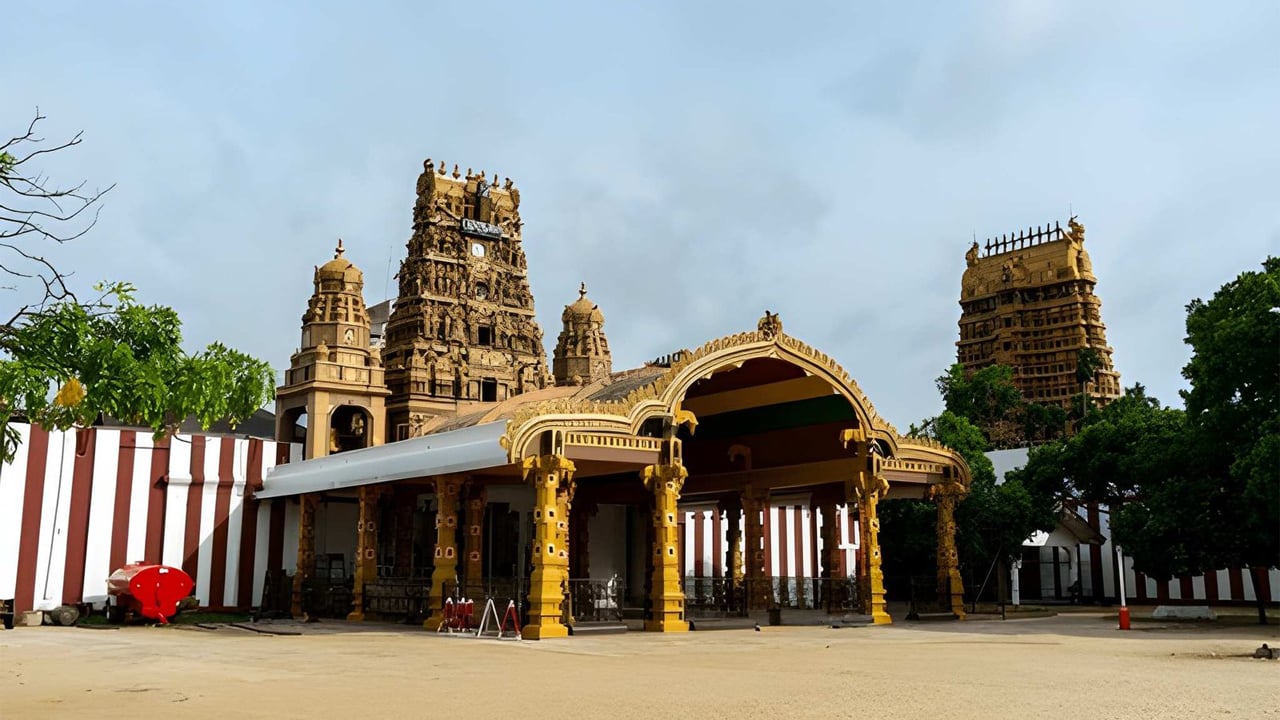
The Nallur Kandaswamy Kovil — a Shaivite Hindu temple dedicated to Lord Murugan — is the defining landmark of the town and one of the most revered temples in Sri Lanka. The current structure, rebuilt and expanded over centuries after repeated colonial-era demolitions, is distinguished by its golden gopuram (entrance tower), intricate Dravidian carvings, and the sacred flagstaff around which the annual festival orbits. Devotees travel from across Sri Lanka, India, and the Tamil diaspora to pray here throughout the year.
Beyond the temple, Nallur preserves traces of the Jaffna Kingdom's royal past. Archaeological evidence of the old palace grounds and ceremonial spaces can still be traced in the urban fabric of the town, offering a tangible link to pre-colonial northern Sri Lanka.
When is the best time to visit Nallur?
Nallur is accessible year-round, but the period between late July and late August brings the town to its most intense and atmospheric state. The Nallur Festival — formally the Nallur Ther Thiruvizha — is a 25-day Hindu festival that culminates in a grand chariot procession through the streets surrounding the temple. During this period the roads fill with pilgrims, the air resonates with Carnatic music and temple drums, and the elaborate rituals draw enormous crowds of devotees and curious travellers alike.
Outside festival season, mornings at the temple are calm and contemplative — an ideal time to observe daily puja ceremonies and appreciate the architecture without the press of crowds. The dry season from January to April generally offers the most comfortable weather for visiting the north.
What can I see and experience in Nallur?
The Nallur Kandaswamy Kovil is the centrepiece, but the town and its immediate surroundings offer several complementary points of interest.
- Temple complex and gopuram: The layered gateway tower, gilded with elaborate sculpted figures from Hindu mythology, is best observed in the golden light of early morning or late afternoon. Entry to the outer precincts is open to visitors of all faiths, though modest dress (sarong wrap for men, covered shoulders and legs for women) is required and shoes must be removed at the entrance.
- Nallur chariot route: The ceremonial road circumnavigating the temple is lined with mature trees and smaller shrines. Walking this route gives a sense of how the festival procession unfolds and the scale of the gathering it accommodates.
- Jaffna's broader heritage: Nallur sits within easy reach of Jaffna city, where the Dutch-era fort, Jaffna Public Library, and the morning fish market at Chunnakam offer additional cultural depth. The Jaffna peninsula's lagoon landscape — flat, luminous, and unlike anywhere else in Sri Lanka — is itself worth an unhurried afternoon.
- Local cuisine: Northern Tamil cooking is distinct from the food found elsewhere in Sri Lanka. Look for pittu with shark curry, murungai (drumstick) dishes, and the palm-sap-based beverages that reflect the region's coconut and palmyra culture. Palmyra (Borassus flabellifer) is the symbolic tree of the north and appears constantly in local craft, food, and daily life.
How do I get to Nallur from Colombo?
The most practical options for reaching Nallur from Colombo involve either road or rail travel to Jaffna, from which Nallur is just a short three-wheeler ride away.
| Mode | Approximate Duration | Notes |
|---|---|---|
| Private car / driver | Around 6–7 hours | Most flexible; scenic A9 highway via Vavuniya passes through historically significant terrain |
| Intercity bus | Around 6–8 hours | Regular services from Colombo Bastian Mawatha bus stand |
| Train (Colombo to Jaffna) | Around 7–8 hours | The Northern Line; book in advance as sleeper seats sell quickly |
| Domestic flight | Around 1 hour | SriLankan Airlines operates Colombo–Jaffna flights; subject to schedule changes |
Once in Jaffna, Nallur is roughly 2–3 kilometres from the city centre. Three-wheelers (tuk-tuks) are the standard local option and fares are negotiable.
What should I know before visiting the Nallur Kandaswamy Kovil?
The temple follows traditional Hindu protocols. Non-Hindu visitors are welcome in the outer areas and can observe ceremonies, but access to inner sanctums may be restricted during puja times. Photography policies vary and it is courteous to ask before raising a camera near ongoing rituals. The temple is generally open in the early morning (around 6 am) and in the evening; midday typically sees a closure during the hottest hours.
During the festival period, accommodation in and around Jaffna books up rapidly. Planning at least two to three months in advance is sensible if you intend to coincide your visit with the main chariot procession days.
What is the historical significance of Nallur?
Nallur was the royal capital of the Jaffna Kingdom, which held political authority over much of northern Sri Lanka from the thirteenth century until the Portuguese arrived in the sixteenth century. The kingdom maintained its own tributary system, trade networks with southern India, and a sophisticated courtly culture that produced classical Tamil literature and temple arts. The Portuguese demolished the original Nallur Kandaswamy Kovil in 1620 as part of a broader campaign against Hindu institutions — an act of destruction that remains deeply significant in the collective memory of Sri Lanka's Tamil community.
Subsequent Dutch and British colonial periods saw a gradual restoration of temple worship. The temple was rebuilt in its current form in the eighteenth century under the patronage of the Kandyan-era administrator Sankili Kumaran's successors and local Tamil leaders. This history of destruction and revival gives Nallur a resonance that goes well beyond its religious function — it stands as a symbol of cultural continuity under pressure.
Sri Lanka's broader ancient heritage, including sites such as Polonnaruwa, reflects how multiple kingdoms and cultures shaped the island across millennia. Nallur adds an essential northern Tamil dimension to that story.
Is Nallur suitable for all types of travellers?
Nallur and Jaffna work well for culturally motivated travellers who want to move beyond the southern and central circuits that dominate most Sri Lanka itineraries. The north is not primarily a beach-and-wildlife destination; its appeal is historical, religious, and culinary. Families, solo travellers, and groups interested in living heritage, architectural photography, or Tamil classical culture will all find genuine substance here. Those visiting during festival season should be prepared for large crowds and the physical intensity of a major Hindu festival — an experience that rewards patience and openness.
Nearby places
12 places within about 25 km, nearest first.
- Jaffna Grand Mosqueunder 1 km
- Jaffna Public Libraryunder 1 km
- Archaeological Museum Jaffnaunder 1 km
- Nallur Kandaswamy Kovilunder 1 km
- Jaffna Fortunder 1 km
- Jaffna Clock Towerunder 1 km
- Jaffna Fish marketunder 1 km
- Nallur Kandaswamy Kovil Festival in Jaffnaunder 1 km
- Alfred Duraiappah Stadiumunder 1 km
- Jaffna Causeway And Chatty Beach1 km
- Kokuvil Railway Station2 km
- Nainativu Nagapooshani Amman Temple5 km