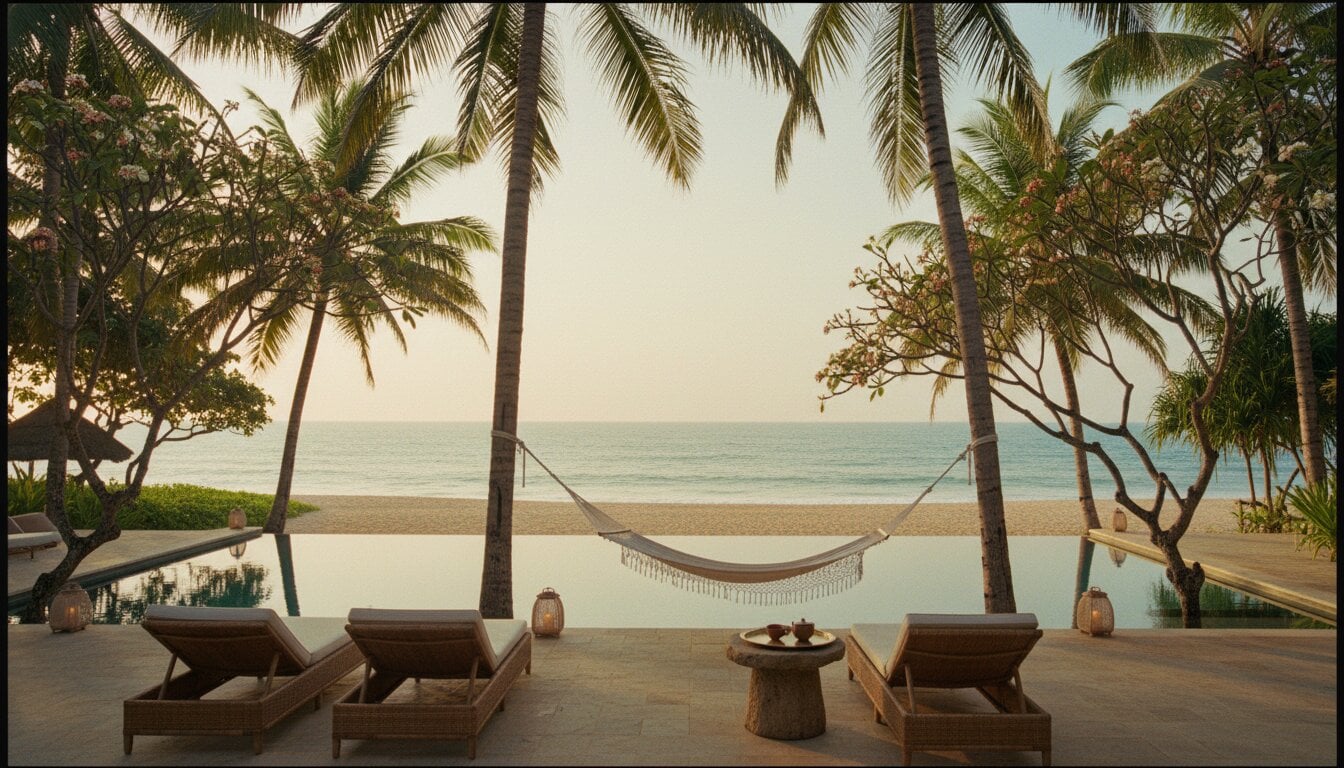
Ibbankatuwa Wewa is a historic irrigation tank situated close to Dambulla in Sri Lanka's North Central Cultural Triangle. Like many of the island's ancient reservoirs, it was engineered to store seasonal rainfall and feed the surrounding paddy lands, a tradition of hydraulic ingenuity that has shaped this region for more than two millennia. Today the tank serves both its original agricultural purpose and an unplanned second role: a quiet natural retreat that rewards visitors who venture beyond the better-known monuments of the area.
What is Ibbankatuwa Wewa known for?
The reservoir draws two distinct groups of visitors. Birdwatchers come for the waterbirds that congregate along the tank's margins — open-billed storks, painted storks, purple herons, and kingfishers are regularly spotted, particularly in the early morning hours when the water is still. Archaeology enthusiasts come for a different reason: the Ibbankatuwa Prehistoric Burial Ground, a megalithic cemetery dating to the Iron Age, lies within a short distance of the tank. Excavations at the site uncovered burial urns, skeletal remains, and grave goods that shed light on a pre-Buddhist community that once lived in this landscape, long before the Anuradhapura kings commissioned the grand tanks of the dry zone.
The combination of a living, working reservoir and an archaeological site of national significance makes Ibbankatuwa Wewa unusual among Sri Lanka's many heritage destinations.
What can I see around Ibbankatuwa Wewa?
The tank's bund (embankment road) offers an easy, flat walk with views across the water toward distant forest. In the late afternoon, the surface catches the light in a way that makes it a rewarding spot for photography without any technical difficulty. The surrounding land is a patchwork of paddy fields and scrub jungle typical of the dry zone, and village life continues in much the same rhythm it has for centuries.
The Ibbankatuwa Prehistoric Burial Ground itself is a protected site under the Central Cultural Fund. Visitors with a ticket can walk among the excavated burial pits, some still visible, and read the on-site interpretation boards that contextualise the finds. The site is modest in scale but historically significant — it provides rare physical evidence of Sri Lanka's pre-urban communities.
Dambulla Cave Temple, one of Sri Lanka's UNESCO World Heritage Sites, is only a few kilometres away and is almost always combined with a visit to the tank area. The ancient city of Sigiriya is similarly close, making Ibbankatuwa Wewa a natural add-on to any Cultural Triangle itinerary.
What wildlife can I spot at Ibbankatuwa Wewa?
The tank functions as a reliable wetland habitat in an otherwise dry landscape. Waterbirds are the headline attraction, with wading species and fish-eating birds present through much of the year. During the northern winter migration (roughly October to March), additional species pass through or overwinter at the reservoir. Crocodiles are occasionally seen basking on the banks — a reminder that this is a working natural ecosystem, not a manicured park.
The scrub jungle bordering the tank supports grey langur monkeys, mongoose, and a variety of dry-zone reptiles. Elephants from the surrounding forest sometimes visit the water's edge at dawn or dusk, particularly during the dry season when other water sources diminish.
When is the best time to visit Ibbankatuwa Wewa?
The dry season from December to April brings the clearest skies and the most comfortable temperatures for outdoor exploration. Water levels in the tank are typically at their fullest immediately after the north-east monsoon (November to January), which concentrates waterbirds along a smaller shoreline and makes sightings easier. The shoulder months of February and March balance good weather with relatively manageable visitor numbers across the broader Dambulla-Sigiriya area.
Early mornings offer the best birdwatching and the softest light for photography. Midday heat in the dry zone can be intense from March onwards, so plan site visits for before 10 a.m. or after 4 p.m.
How do I get to Ibbankatuwa Wewa from Colombo?
The tank lies roughly 148 km from Colombo, following the main highway north to Dambulla. By private vehicle the journey takes around three to three-and-a-half hours depending on traffic. Dambulla is a well-established hub for Cultural Triangle touring, so most visitors arriving by road pass through the town before continuing to Sigiriya or Polonnaruwa. The tank is signposted from the Dambulla–Sigiriya road; the turnoff is a short distance past the Dambulla Cave Temple complex.
There is no direct public bus service to the tank itself. Visitors arriving by intercity bus to Dambulla can hire a tuk-tuk or taxi for the remaining distance. Lakpura arranges private transfers from Colombo airport or any major hotel directly to the Dambulla area, which is the most convenient option for travellers combining several Cultural Triangle sites in a single trip.
Is there an entrance fee for Ibbankatuwa Wewa?
The tank itself, as a public reservoir, is freely accessible. The Ibbankatuwa Prehistoric Burial Ground requires a separate entrance ticket managed by the Central Cultural Fund. This ticket is distinct from the standard Cultural Triangle round ticket, so visitors should confirm current arrangements on arrival or through their tour operator. Ticket rates are set by the government and subject to periodic revision.
How does Ibbankatuwa Wewa fit into a broader Cultural Triangle itinerary?
Most visitors to this part of Sri Lanka are already moving between Dambulla, Sigiriya, and Polonnaruwa. Ibbankatuwa Wewa sits naturally between the first two. A half-day that combines the cave temple at Dambulla with a walk along the tank bund and a visit to the burial ground makes for a well-rounded morning before an afternoon at Sigiriya Rock. For guests based at one of the Sigiriya-area lodges — several of which overlook tanks of their own — Ibbankatuwa Wewa is a short drive that adds archaeological and ecological depth to what might otherwise be a purely monument-focused day.
Travellers with more time in the region may also consider the Dambulu Oya River, which flows through the same landscape and offers a complementary perspective on how water has defined life in this part of Sri Lanka's interior.
Nearby places
10 places within about 25 km, nearest first.
Related reading
1 pages on closely related subjects.