

Tucked immediately behind the celebrated Rangiri Dambulla Raja Maha Viharaya and adjoining the Sri Valagamba Pirivena, the Dambulu Somavathi Complex is one of the Dambulla area's least-visited yet most historically layered sites. Most pilgrims and tourists walk past without knowing it exists. Those who stop are rewarded with a direct connection to royal Sri Lankan history stretching back more than two thousand years.
What is the Somawathi Chaitya and why was it built?
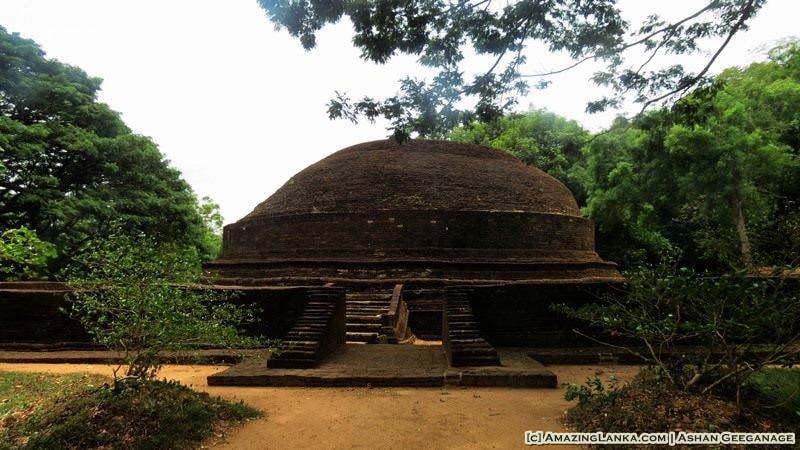
The centrepiece of the complex is the Somawathi Chaitya, a large brick stupa dedicated to the queen of King Valagamba (Vattagamani Abhaya), who reigned in the first century BC. The chaitya remains in the process of reconstruction, and its vast unfinished brick mass rises dramatically against the open sky — a striking, if incomplete, monument. Surrounding the stupa are an ancient Siri Pathula stone and several carved stone altar slabs, which give the site an open-air archaeological character unlike the enclosed cave shrines nearby.
The exact original scale of the chaitya is not fully documented, but its commanding presence even in its current state indicates that this was once a significant place of royal devotion.
What is Raja Mawatha and why does it matter?
The most compelling feature of the Dambulu Somavathi Complex is the ancient pathway known as Raja Mawatha — the Royal Road. This is the original route used by Sri Lanka's ancient kings and their retinues to ascend to the cave shrines at Dambulla. The path begins at this complex, rising up the rock face through a flight of hand-carved stone steps that still survive today.
Walking these steps, even partially, puts visitors on the same route taken by royalty more than two millennia ago. The treads are worn smooth in places, a quiet testament to centuries of devotional foot traffic. Short inscriptions are carved into the rock faces alongside the steps. Several of these have been deciphered and attributed to ancient rulers.
Among the most significant is a record attributed to King Kutakanna Abhaya, who reigned roughly between 41 and 19 BC. The inscription credits him with the construction of thirteen steps in the flight — a rare example of a precisely attributable royal building act surviving in stone at this site.
What else can visitors see at the Dambulu Somavathi Complex?
Beyond the stupa and the royal steps, the complex functions as an informal open-air collection of early stone craftsmanship. The altar slabs and the Siri Pathula stone are worth examining up close for their carving detail, though they are not labelled for general visitors — a guide familiar with the site adds significant value here.
The Sri Valagamba Pirivena adjoining the complex remains an active centre of Buddhist monastic education, and the atmosphere of the broader grounds is one of quiet religious continuity rather than tourist spectacle. Modest dress is expected, and visitors should follow any instructions given by resident monks or temple staff.
For those who have already visited Sigiriya, the Dambulu Somavathi Complex offers a complementary perspective on the same historical period — the era of King Valagamba, who is credited with commissioning the earliest Buddhist cave paintings at Dambulla after reclaiming his throne.
How does this site relate to the Dambulla Cave Temple?
The five cave shrines of the Rangiri Dambulla Raja Maha Viharaya, a UNESCO World Heritage Site, attract many thousands of visitors each year. Almost none of them enter via the Raja Mawatha, which is the approach the site's founding patrons actually used. The modern tourist entrance is a separate path on the opposite side of the rock. Visiting the Somawathi Complex and identifying the original royal ascent route therefore adds a layer of historical authenticity to any visit to the cave temple.
The cave temple and the Somawathi Complex are functionally adjacent, meaning both can be visited in a single stop without significant additional travel time. Plan to arrive in the cooler hours of the morning, when the stone steps are more comfortable to explore and the light on the unfinished stupa is at its most evocative.
How do I get to the Dambulu Somavathi Complex?
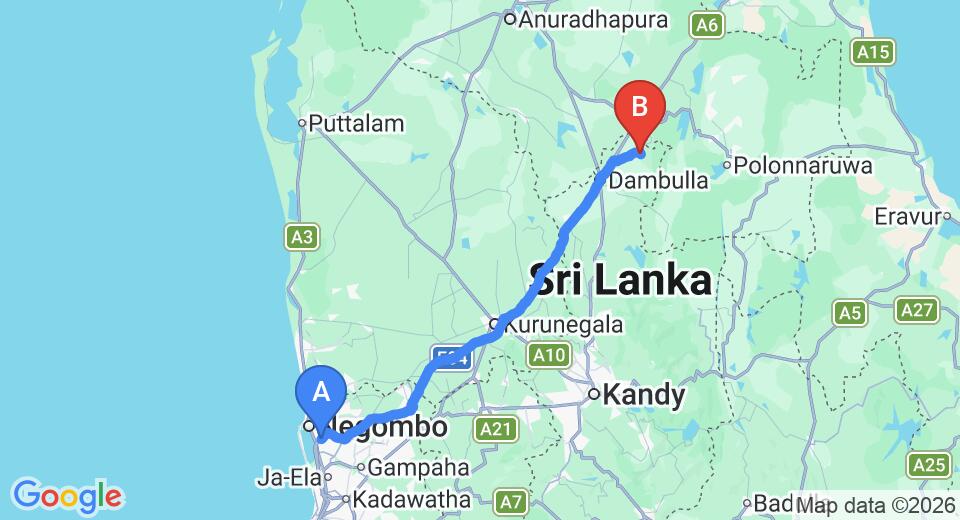
The complex is located in Dambulla town in the Matale District of the Central Province, roughly 148 km north of Colombo and around 70 km north of Kandy. It sits directly behind the main Dambulla Cave Temple compound. Most visitors arrive as part of a Cultural Triangle itinerary that also includes Polonnaruwa and Sigiriya. Private road transfers from Colombo or Kandy are the most practical option, since public bus connections, while available, are time-consuming for those with a full itinerary.
| From | Approximate Distance | Typical Drive Time |
|---|---|---|
| Colombo | ~148 km | 3–3.5 hours |
| Kandy | ~70 km | 1.5–2 hours |
| Sigiriya | ~18 km | 30–40 minutes |
| Polonnaruwa | ~65 km | 1–1.5 hours |
When is the best time to visit the Dambulu Somavathi Complex?
Dambulla sits in Sri Lanka's dry zone, which means it receives less rainfall than the hill country and remains accessible year-round. The driest and most comfortable months for exploration run broadly from January through April and again from July through September. Visiting early in the morning — before 9 am — is advisable not just for the cooler temperature but also because the complex tends to be quietest then, making it easier to observe the inscriptions and stonework without distraction.
The Dambulu Oya River area nearby offers additional context for the agricultural landscape that historically supported this region's monastic communities, and it can be incorporated into a longer half-day exploration of the Dambulla area.
Nearby places
15 places within about 25 km, nearest first.
- Dambulla Museumunder 1 km
- Dambulla Cityunder 1 km
- Gam Udawa Groundunder 1 km
- Popham's Arboretumunder 1 km
- Dambulla Sixers (Dambulla Thunders)under 1 km
- Dambulu Oya Riverunder 1 km
- Rangiri Dambulla International Stadium (Dambulla)1 km
- Dambulla Cave Temple1 km
- Dambulla Golden Temple1 km
- Ibbankatuwa Wewa2 km
- Menikdena monastery complex2 km
- Pleasure Island Boat Service, Dambulla2 km
- Loris Watching2 km
- Ibbankatuwa megalithic burial site3 km
- Talakiriyagama City7 km