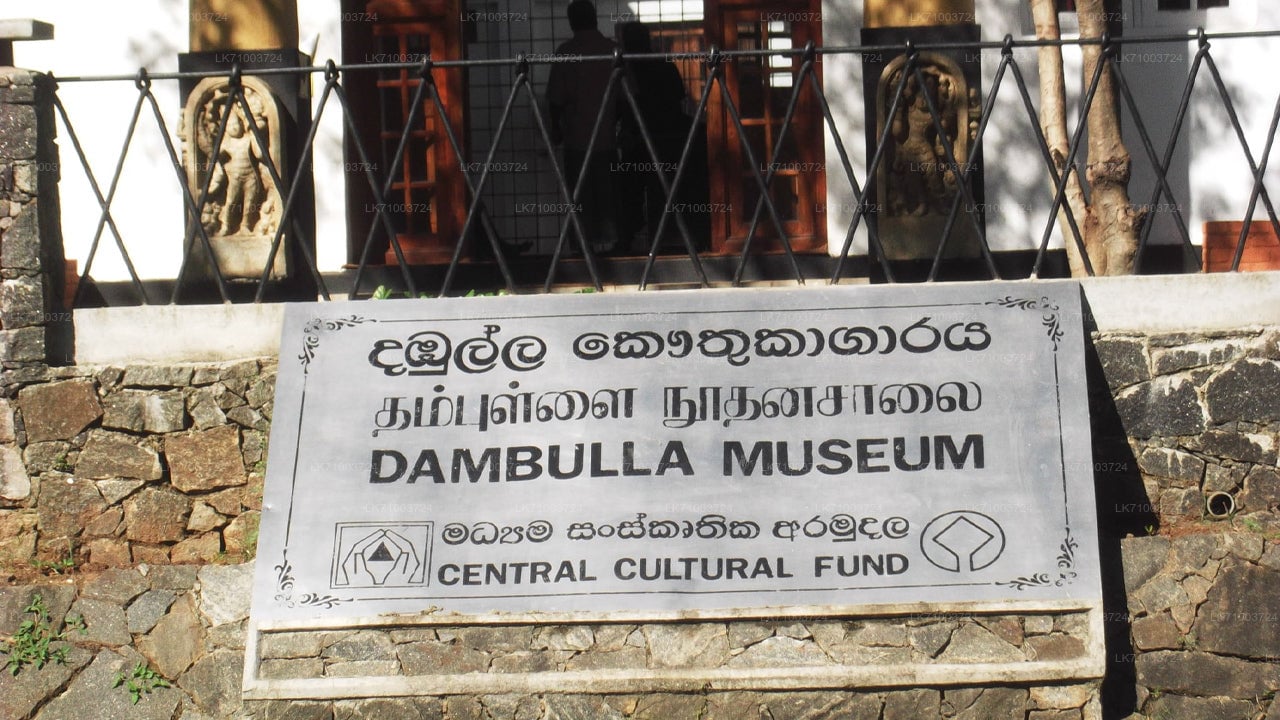
Tucked within the sacred grounds of Rangiri Dambulla Raja Maha Vihara, the Museum of Wall Paintings of the Central Cultural Fund offers something genuinely rare: a dedicated, scholarly space where Sri Lanka's long tradition of cave and wall painting can be studied up close. Opened on 16 November 2003, it is the only institution of its kind in the country, and a logical companion visit to the Sigiriya rock fortress nearby.
What is the Dambulla Museum and what does it contain?
The museum was established by the Central Cultural Fund as a direct outcome of the Dambulla Project — a programme of surveys and research that began in 1991 to document and conserve Sri Lanka's painted heritage. Its core exhibition follows the theme Evolution of Sri Lankan Cave and Wall Paintings, tracing how painting styles, pigments, and iconography developed from the Anuradhapura period through the Kandyan era and into the modern age.
Among the highlights are reproductions and documentary records of the celebrated Sigiriya frescoes — the 5th-century figures painted on the western face of Sigiriya Rock — as well as paintings sourced from ancient temples across the island. The museum does not simply display attractive images; it contextualises them within archaeological research, giving serious visitors a scholarly framework that a temple walk alone cannot provide.
A key conservation mission runs alongside the exhibition function. Paintings damaged by moisture, insects, and biological growth are documented and preserved here, preventing irreplaceable records from being lost entirely.
Who should visit the Dambulla Museum?
The museum draws a wide range of visitors. Casual tourists who have just emerged from the Dambulla Cave Temple complex often step in to better understand what they have just seen. Students sitting Advanced Level examinations — particularly in art, history, and archaeology — are a regular presence, as are university researchers who use the institution's resources for dissertations and field studies.
Monthly lectures and workshops are held on-site, meaning the calendar sometimes offers programming beyond the permanent exhibition. Checking with the museum in advance is worthwhile if specialist content is a priority.
What facilities are available at the museum?
- Information Officers — trained staff available to guide visitors through the galleries and explain specific works in context
- Book and souvenir shop — a selection of publications on Sri Lankan art history and cultural heritage, alongside small souvenirs
- Lavatory facilities — basic amenities on site
- Educational programmes — structured content for school groups, A-Level students, and university researchers, including dissertation support
What are the opening hours for the Dambulla Museum?
| Detail | Information |
|---|---|
| Opening time | 7.30 a.m. |
| Closing time | 4.30 p.m. (last entry at 4.00 p.m.) |
| Days open | Daily |
| Location | Rangiri Dambulla Raja Maha Vihara premises, Dambulla |
How does the Dambulla Museum fit into a wider cultural itinerary?
Dambulla sits at the heart of Sri Lanka's Cultural Triangle, which makes it an ideal base for exploring several major heritage sites in a single trip. The Dambulla Cave Temple complex is the obvious first stop — its five rock-cut cave shrines contain some of the finest intact mural paintings in South Asia, and the museum provides essential context for interpreting them. From Dambulla, the ancient city of Polonnaruwa is roughly an hour's drive to the east, offering a complementary perspective on medieval Sinhalese civilisation.
Visitors interested in the natural landscape around the town can also explore the Dambulu Oya River, which flows through the area and supports rich birdlife along its banks.
Because the museum opens early, a common approach is to begin there before the day heats up, then visit the Cave Temple complex afterwards. Both can be managed comfortably within a half-day, leaving the afternoon free for Sigiriya or another nearby site.
What is the significance of the Sigiriya frescoes displayed here?
The Sigiriya frescoes, painted during the reign of King Kashyapa I in the 5th century CE, are among the oldest surviving secular paintings in the world and a centrepiece of the museum's collection. The figures — typically depicted as women in formal court settings — are unusual in South Asian art for their subject matter and the sophistication of their draughtsmanship. Because the original paintings are exposed to the elements on the rock face itself, the museum's documentary record and high-quality reproductions serve a genuine preservation function, not merely an aesthetic one.
The museum also places these works alongside wall paintings from temples dating to the Anuradhapura and Polonnaruwa periods, illustrating how artistic conventions evolved over roughly fifteen centuries of continuous Buddhist patronage.
How do I get to the Dambulla Museum from Colombo?
Dambulla lies approximately 148 km north of Colombo along the A9 highway. By private car or taxi the journey typically takes around two and a half to three hours, depending on traffic leaving Colombo. Intercity bus services connect Colombo's Pettah terminal with Dambulla directly. The museum is located within the Raja Maha Vihara grounds, which are well signposted in the town centre.
Nearby places
15 places within about 25 km, nearest first.
- Dambulu Somavathi complexunder 1 km
- Dambulla Cityunder 1 km
- Gam Udawa Groundunder 1 km
- Dambulla Sixers (Dambulla Thunders)under 1 km
- Popham's Arboretumunder 1 km
- Dambulu Oya Riverunder 1 km
- Rangiri Dambulla International Stadium (Dambulla)1 km
- Dambulla Cave Temple1 km
- Dambulla Golden Temple1 km
- Menikdena monastery complex2 km
- Ibbankatuwa Wewa2 km
- Pleasure Island Boat Service, Dambulla2 km
- Loris Watching2 km
- Ibbankatuwa megalithic burial site3 km
- Talakiriyagama City7 km
Related reading
7 pages on closely related subjects.