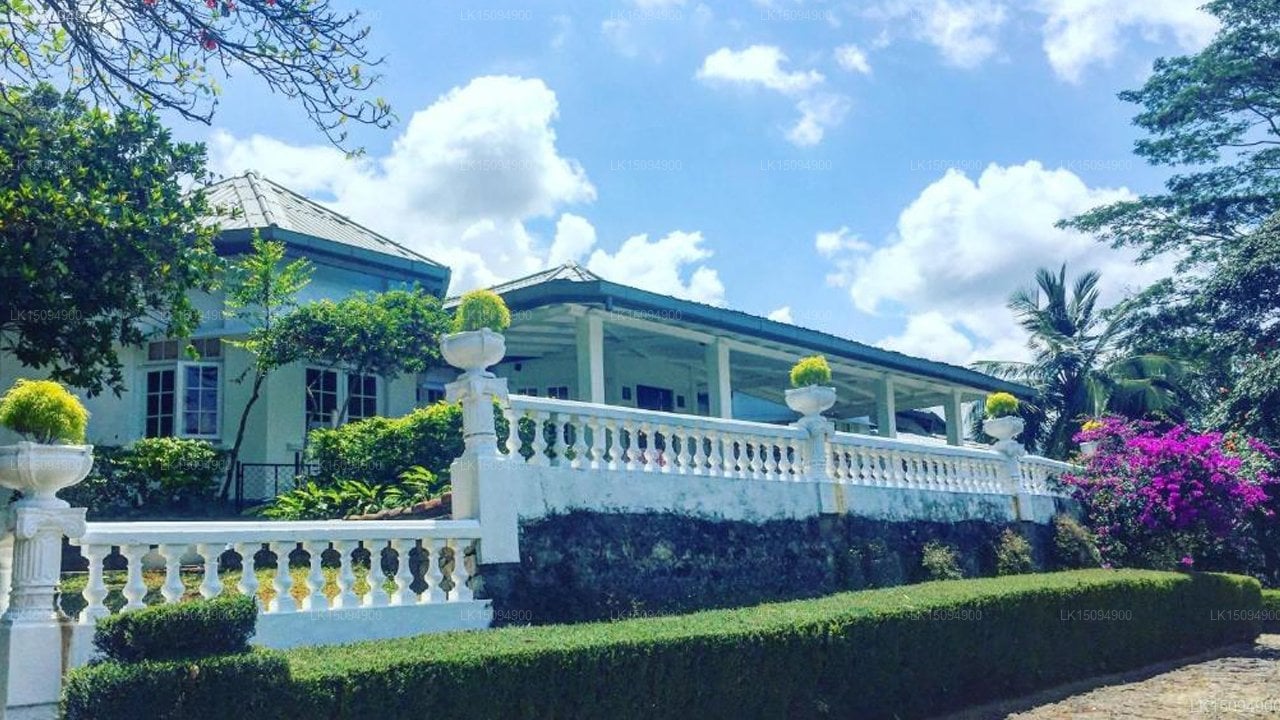
Holyrood Estate sits in the hill country between Talawakelle and Nanu Oya, at an elevation of 1,341 metres above sea level. This is some of the most productive tea-growing terrain in Sri Lanka — a landscape of rolling green slopes, cool mist, and deep red laterite soil that together produce a distinctly bright, full-bodied cup. For anyone serious about understanding how Ceylon Tea is made from leaf to liquor, Holyrood is one of the more instructive estates to visit in the western high-grown region.
What makes Holyrood Estate significant in Sri Lanka's tea industry?
The Holyrood factory was established in 1922, making it one of the older continuously operating tea-processing facilities in the country. Its longevity reflects both the quality of the terroir and a consistent commitment to manufacturing standards. The estate covers 331.44 hectares and maintains an annual yield that typically exceeds 1,500 kilograms of made tea per hectare — a figure that places it among the higher-performing estates at this altitude.
Perhaps the most notable credential Holyrood holds is its HACCP (Hazard Analysis and Critical Control Points) certification. At the time of writing, only two factories in Sri Lanka carry this accreditation, which is an internationally recognised food-safety management standard. For buyers sourcing premium western high-grown teas, this certification provides an added layer of confidence in traceability and processing hygiene.
What type of tea does Holyrood Estate produce?
Holyrood specialises in western high-grown black tea. Teas grown above 1,200 metres in Sri Lanka's central highlands are classified as high-grown (or "high-altitude") and are prized for their light colour, brisk character, and delicate aroma. The combination of cool temperatures, low humidity, and the particular aspect of the Talawakelle slopes slows leaf growth, concentrating the flavour compounds that give highland teas their trademark brightness.
The western high-grown designation is distinct from the more widely marketed Nuwara Eliya or Uva styles — it tends toward a softer, rounder liquor with a clean finish, often described as medium-bodied with a floral note. Holyrood's output is sought after both by blenders and by single-estate buyers looking for a reliable, quality-certified source.
Where exactly is Holyrood Estate located, and how do I get there?
The estate lies in the Talawakelle-Nanu Oya corridor, in the Nuwara Eliya District of the Central Province. This stretch of the A7 hill road — and the scenic railway line that shadows it — connects Hatton to Nanu Oya, passing through some of Sri Lanka's most photographed tea country. Talawakelle itself is roughly 160 kilometres from Colombo by road, typically a four-to-five-hour drive depending on traffic through Kandy.
The most atmospheric approach is by train on the Colombo–Badulla line. The section from Hatton to Nanu Oya is considered one of the great rail journeys in Asia, with the track winding through tea fields, across stone viaducts, and into tunnels cut through the escarpment. Nanu Oya station is the closest railhead; from there, tuk-tuks and taxis cover the short distance to the estate.
What can visitors expect to see and do at Holyrood Estate?
A visit to Holyrood centres on understanding the full production cycle of high-grown black tea. The estate offers a window into the field-to-factory process that is more hands-on than many heritage properties in the highlands:
- Plucking fields: Walking the terraced rows of Camellia sinensis with estate workers gives a clear sense of the labour behind each harvest. Skilled pluckers select only the top two leaves and a bud — a standard that directly determines cup quality.
- Factory tour: The 1922 factory retains much of its original character while meeting modern food-safety requirements. Visitors can observe withering, rolling, oxidation, and drying in sequence — processes that have changed relatively little in principle since the Victorian era.
- Tea tasting: Sampling freshly made tea at source is a different experience from drinking packaged product. The liquor is typically fresher, the aroma more pronounced, and the character of the specific lot more apparent.
The surrounding landscape also rewards those who take time to walk it. The elevation means temperatures stay cool even at midday, and on clear mornings the views across the valley toward Horton Plains are considerable. The Horton Plains National Park lies within a half-day excursion of the estate, making it a practical addition to an itinerary based in this part of the hill country.
What is the best time of year to visit Holyrood Estate?
The western high-grown region receives its primary rains from the south-west monsoon, which typically runs from May through August. The months between January and April, and again from September through December, generally offer drier, clearer conditions more suited to walking the estate and enjoying unobstructed views. However, the climate at this altitude can shift quickly, and mornings are cool throughout the year — a light layer is advisable regardless of season.
From a tea-quality perspective, the finest teas from this region are often produced during the dry inter-monsoon periods when leaf growth slows and flavour concentration increases. Visiting during these windows means the liquors being tasted and purchased at source are likely to be among the best of the year.
How does Holyrood fit into a broader hill-country itinerary?
Talawakelle sits roughly midway between Hatton — the gateway to Adam's Peak — and Nanu Eliya. An itinerary combining Holyrood with a morning at the Ella area, a walk in Horton Plains, and the iconic train journey through the highlands covers the essential character of Sri Lanka's tea country without feeling rushed. The Bluefield Tea Gardens near Nuwara Eliya offer a complementary perspective on the industry, making a two-estate visit in the same trip entirely practical.
For those travelling from Colombo, combining Holyrood with the cultural sites of Kandy — including a Kandy city tour — creates a natural circuit through the Central Province that balances history, nature, and food culture.
Is there anything else worth knowing before visiting?
Access to working tea estates in Sri Lanka typically requires coordination in advance. Independent visitors arriving unannounced may find the factory floor closed to the public, particularly during processing shifts. Arranging a guided visit through a destination management company ensures entry to the factory, an informed guide who can contextualise what you are seeing, and a tasting experience that goes beyond the standard tourist tea stop.
Photography of the landscape and plucking fields is generally welcomed. Inside the factory, it is courteous to ask before photographing workers or machinery. The estate operates year-round, but processing activity is seasonal — if watching the full manufacturing cycle is a priority, confirm the schedule before arriving.
Nearby places
11 places within about 25 km, nearest first.
- St Clairs Fallsunder 1 km
- Talawakelle Cityunder 1 km
- Talawakele Railway Stationunder 1 km
- Devon Fallsunder 1 km
- High Forest Estate1 km
- Dessford Estate2 km
- Watawala Railway Station3 km
- Maha Eliya Estate (Calsay)3 km
- Mlesna Tea Castle St Claire3 km
- Kotagala Railway Station3 km
- Weddemulle Estate3 km
Related reading
3 pages on closely related subjects.