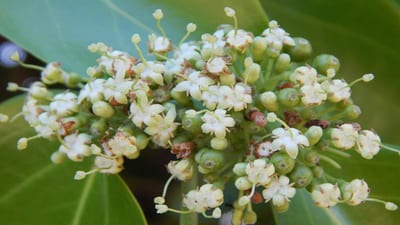
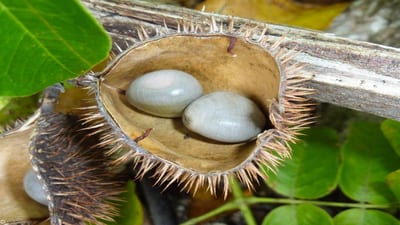
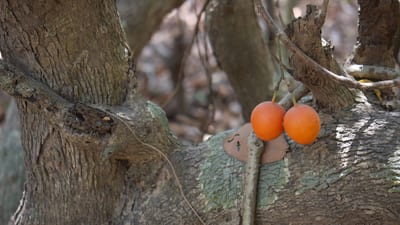
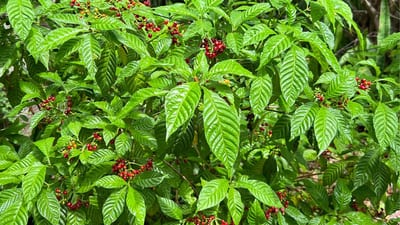
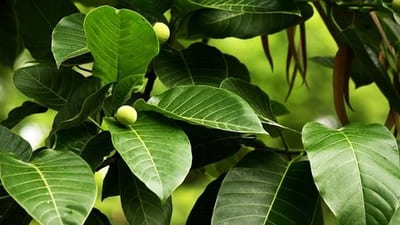
Gardenia crameri is a shrub or small tree endemic to Sri Lanka, belonging to the coffee family, Rubiaceae. Known locally as Galis, it is listed as Vulnerable on Sri Lanka's National Conservation Status list. The species is notable for its pale lemon-yellow flowers and globular fruit, which is recorded as an edible wild fruit.
What does Gardenia crameri look like?
The species grows as a large shrub reaching 2 to 4 metres, or as a tree up to 8 to 10 metres tall. Its bark is scaly and pale grey, flaking off in small round pieces to reveal a green inner bark. The stipules are tubular, up to 7 mm long, and four-lobed.
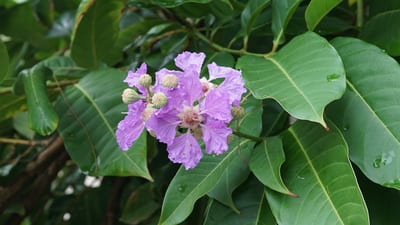
Leaves measure 10-15 cm (occasionally up to 25 cm) by 5.5-9 cm, smooth above and sparsely hairy on the veins beneath, carried on petioles 0.5-1.5 cm long. Flowers are solitary on short pedicels up to 1 cm, with a corolla tube 2.5-7 cm long and lobes 3-5 cm by 1.5-2 cm, coloured pale lemon yellow. The fruit is globular, 2-2.5 cm in diameter, and contains numerous seeds each about 3.5 by 5 mm.
Where does Gardenia crameri grow?
As an endemic species, Gardenia crameri occurs naturally only within Sri Lanka and nowhere else in the wild. Like many members of Rubiaceae in the region, it is part of the island's broader native woody flora.
What is its conservation status?
The National Conservation Status list of Sri Lanka (2012) assesses Gardenia crameri as Vulnerable. This designation reflects concern over the long-term survival of the species in its natural range.
What is it called in Sinhala, and is the fruit used?
The local Sinhala name recorded for this species is Galis. Its fruit is noted as an edible wild fruit, one of several lesser-known wild fruits found on the island.
Recorded facts at a glance
| Attribute | Detail |
|---|---|
| Scientific name | Gardenia crameri |
| Family | Rubiaceae |
| Sinhala / local name | Galis |
| Status in Sri Lanka | Endemic |
| Conservation status | Vulnerable (NCS, 2012) |
| Edible parts | Fruit (wild fruit) |
| Growth form | Large shrub 2-4 m, or tree 8-10 m |
| Bark | Scaly, pale grey, flaking in small round pieces; inner bark green |
| Stipules | Tubular, up to 7 mm, 4-lobed |
| Leaves | 10-15(-25) x 5.5-9 cm, glabrous above, sparsely pubescent on veins below |
| Petiole | 0.5-1.5 cm |
| Flowers | Solitary, pedicels up to 1 cm; corolla tube 2.5-7 cm, lobes 3-5 x 1.5-2 cm, pale lemon yellow |
| Fruit | Globular, 2-2.5 cm diameter |
| Seeds | Numerous, 3.5 x 5 mm |
Other species in this genus
1 more, sharing the same genus.